How to Build a Successful Social Business

A successful social business does more than publish occasional updates from an official company account. It brings employees, leaders, customers, sales teams, and marketing professionals together through open communication and useful online interactions.

Employees can be some of the most credible voices connected to an organization because they understand its products, services, culture, and customers. When they are properly supported, they can share knowledge, participate in industry conversations, and help people see the human side of the company.

However, businesses cannot simply ask employees to promote the brand and expect meaningful results. They need a clear social business strategy, practical tools, leadership support, and a workplace culture that encourages authentic participation.

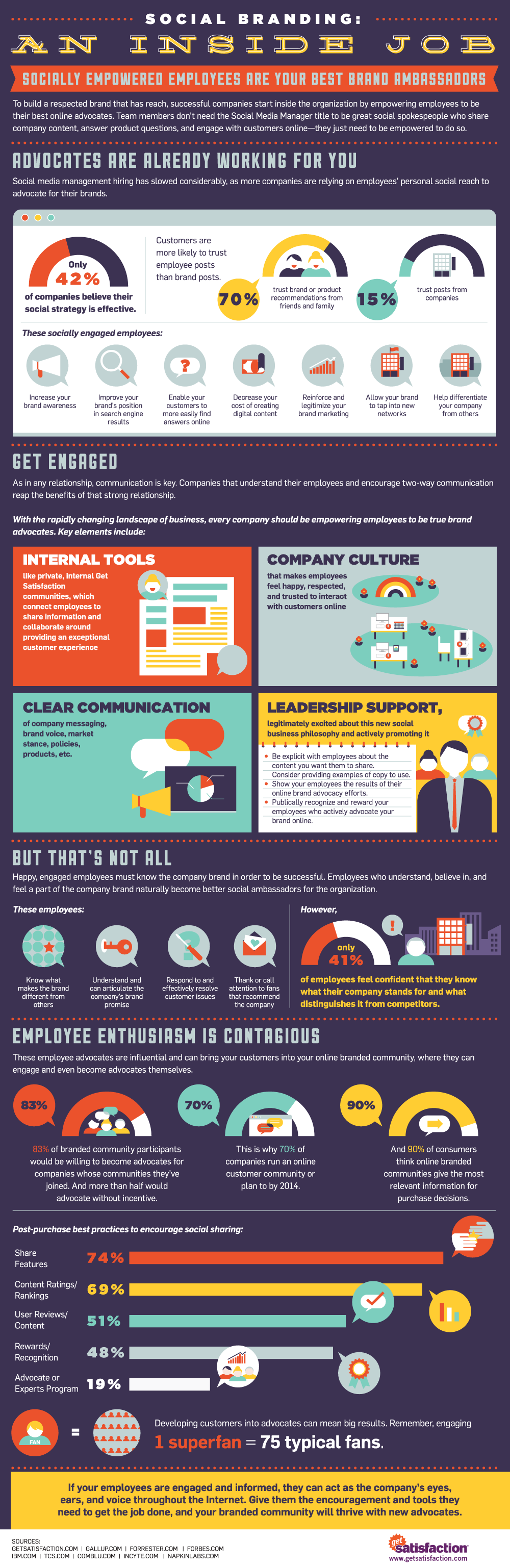
The infographic on this page reflects an earlier period of social media marketing, so its statistics should be treated as historical rather than current benchmarks. Its central message remains relevant: informed and engaged employees can become valuable advocates for the organizations they represent.

What Is a Social Business?

A social business is an organization that uses social media across multiple areas of its operations. Social platforms may support marketing, customer service, sales, recruitment, employee communication, reputation management, and industry networking.

This approach is different from assigning all social media responsibilities to one marketing employee. A genuinely social organization creates systems that allow different teams to listen, contribute knowledge, respond appropriately, and share relevant information.

Employees might answer common industry questions, explain how a product works, discuss lessons from a project, or share useful company resources. Customer service teams may resolve concerns, while business leaders can communicate the company’s direction and values.

The objective is not to turn every employee into a full-time content creator. It is to create an environment in which people who want to participate have the confidence, information, and support needed to represent the organization responsibly.

Why Employee Advocacy Matters

Employee advocacy happens when employees voluntarily share company content, professional insights, workplace experiences, or industry knowledge through their personal networks. Their participation can help a brand reach audiences that may never follow an official company page.

People often connect more naturally with individuals than with corporate accounts. An employee can explain a technical subject, describe a professional experience, or provide useful context in a voice that feels more personal and approachable.

Trust must still be earned through consistent behaviour and accurate communication. The 2025 Edelman Trust Barometer reported that “my employer” remained the most trusted institution among employees, demonstrating the importance of the relationship between organizations and the people working within them. (Edelman)

Employee advocacy should therefore begin inside the organization. Employees who do not understand the brand, trust leadership, or feel connected to the company are unlikely to become convincing advocates for it.

Define the Purpose of Your Social Business Strategy

Before asking employees to participate, the company must identify what it wants its social business strategy to accomplish. Publishing frequently without a clear objective can create activity without producing meaningful business value.

Some organizations use employee advocacy to increase brand awareness and reach new audiences. Others focus on building professional authority, supporting recruitment, generating leads, strengthening customer relationships, or improving the company’s reputation.

Each campaign should have one primary objective, even when social media supports several business goals. The purpose will influence which employees participate, what content is created, which platforms are selected, and how success is measured.

Companies struggling to connect social activity with wider growth plans may need to consider when digital marketing consulting services become valuable. Strategic guidance can help align content, employees, technology, and performance measurement around shared priorities.

Understand the Audience Before Creating Content

A successful social business must understand the people it wants to reach. The organization should know what its audience cares about, which challenges they face, and what information they need before making a decision.

Audience knowledge should influence the subjects discussed and the language employees use. A technical buyer may expect detailed explanations and evidence, while a consumer audience may respond better to demonstrations, practical advice, and concise answers.

Developing accurate customer avatars for lead generation can help teams understand customer goals, concerns, behaviours, and preferred communication channels. These profiles should be based on genuine research rather than broad assumptions.

Customer conversations are another valuable source of content ideas. Reviews, sales calls, emails, support requests, direct messages, and social comments can reveal the questions and concerns that repeatedly influence purchasing decisions.

Learning how to identify and solve customer pain points allows employees to share information that is genuinely useful. Content built around real customer problems is more likely to earn attention than general promotional messages.

Create a Supportive Company Culture

Employee advocacy cannot succeed when people feel disconnected from the company or uncertain about its values. Employees need to understand what the organization represents and how their work contributes to its wider purpose.

A supportive culture encourages people to share ideas, ask questions, and communicate openly. Employees should feel respected and trusted rather than treated as additional advertising channels.

Leadership behaviour plays an important role in building this environment. When senior leaders communicate openly, recognize employee contributions, and participate appropriately themselves, advocacy becomes part of the culture rather than another task imposed by management.

Internal communication should also provide employees with regular information about company developments. People cannot confidently discuss a new service, campaign, or announcement when they receive little context or learn about it at the same time as the public.

Develop a Clear Social Media Policy

Employees need clear guidance before representing the organization online. A practical social media policy explains what they may share, which information is confidential, and how they should handle difficult or sensitive conversations.

The policy should distinguish personal opinions from authorized company statements. Employees must know when they can respond independently and when an issue should be passed to marketing, customer service, human resources, legal advisers, or senior management.

Guidance should also address privacy, copyright, security, disclosure, respectful communication, and the use of company logos or branded materials. These expectations protect employees as well as the organization.

The policy should not be so restrictive that employees become afraid to participate. Its purpose is to provide confidence and boundaries, not to control every sentence an employee writes.

Social media guidance should also be reviewed whenever the company’s identity changes. Understanding the main factors involved in rebranding can help businesses maintain consistent messaging across employee profiles, official accounts, advertising, and website content.

Provide Practical Social Media Training

Employees should not be expected to understand every social platform automatically. Social media training can help them communicate professionally while preserving their individual voices.

Training should explain how different platforms work and which audiences use them. Employees may also need support with profile optimization, content planning, professional networking, visual content, and responding to comments.

The organization should provide examples of appropriate and inappropriate posts without relying only on warnings. Practical demonstrations help employees understand how to turn their professional knowledge into useful content.

Training should also show employees how to recognize risky situations. Complaints, confidential information, misinformation, legal concerns, and media enquiries may require escalation rather than an immediate public response.

Employees who understand both the opportunities and responsibilities of participation are more likely to become confident advocates. They can contribute naturally without needing approval for every routine post or interaction.

Make Employee Participation Voluntary

Employee advocacy should not become forced promotion. Requiring employees to copy identical company captions can produce content that feels unnatural and may reduce the trust the program is intended to build.

Participation should remain voluntary whenever possible. Some employees will enjoy creating original posts, while others may prefer commenting on industry discussions, sharing approved resources, or contributing ideas behind the scenes.

The company can reduce barriers by providing optional captions, images, article summaries, and topic suggestions. Employees should still be encouraged to adapt the material and explain why it matters to their individual networks.

Different employees can contribute in different ways. A technical specialist may explain a common problem, a salesperson might discuss customer questions, and a project manager could share lessons learned during implementation.

These personal perspectives provide something an official company account cannot easily reproduce. They show the knowledge, experiences, and personalities of the people behind the brand.

Build a Consistent Content Strategy

A successful social business needs a reliable flow of relevant content. Posting only when the company has a promotion or product announcement will not create a strong and engaged community.

The content strategy should balance company information with educational and audience-focused material. Employees might share useful articles, industry observations, customer success stories, workplace insights, demonstrations, or answers to frequently asked questions.

A structured social media content calendar can help coordinate these themes without making every employee publish the same message. It also allows marketing teams to prepare resources around campaigns, events, and business priorities.

The calendar should provide direction while leaving room for timely participation. Employees need the flexibility to respond to relevant conversations, customer questions, company developments, and changes within their industries.

Content quality is more important than constant activity. A thoughtful post that starts a relevant conversation can provide greater value than several rushed updates that add little to the audience’s understanding.

Listen Before Joining Conversations

Social media is not only a publishing channel. It is also a source of customer feedback, competitor insights, market questions, product concerns, and changes in audience behaviour.

Social listening involves monitoring discussions related to the company, its services, competitors, and wider industry. These conversations can reveal the language customers use and the issues they consider most important.

Teams should understand why people use each platform before deciding how to participate. Reviewing the activities customers perform on social networks can help businesses match their content with audience expectations.

The company should not respond to every mention simply because it is possible. Employees should first understand the context and decide whether their contribution will answer a question, solve a problem, or improve the discussion.

Insights gathered through social listening should also be shared internally. Product, sales, customer service, and leadership teams may all benefit from understanding recurring questions or changes in customer sentiment.

Respond to Customers Consistently

Customers may contact a company publicly because they need information, assistance, or reassurance. Delayed or inconsistent responses can create frustration and make the organization appear disconnected.

Employees should know who is responsible for different types of messages. Basic questions may be answered directly, while complaints, account issues, and sensitive matters may need to be transferred to a specialist team.

The response should reflect the situation rather than follow a generic script. Acknowledging the customer’s concern and explaining the next step is normally more useful than posting a broad apology without action.

Public conversations should move to a private channel when personal or account information is required. However, the company should still confirm publicly that it has responded so other users can see that the issue was acknowledged.

Consistent responses demonstrate that social communication is connected to real customer service. This is one of the clearest differences between a company that merely posts online and a successful social business.

Combine Organic Advocacy With Paid Social Media

Employee advocacy can strengthen organic visibility, but it does not have to operate separately from paid campaigns. Strong employee content may reveal messages, customer concerns, and topics that can also inform advertising.

Businesses can use paid promotion to extend the reach of successful campaigns or target specific audiences. However, advertising should support useful content rather than replace genuine participation.

Companies considering this approach should understand how paid social media advertising can support business growth. The best results usually come when targeting, creative content, landing pages, and follow-up processes are aligned.

Organizations that require a more structured approach may also benefit from paid social media services focused on high-intent leads. Paid distribution becomes more effective when the company already understands its audience and has useful content to promote.

Select the Right Social Platforms

A company does not need to maintain an active presence on every available platform. It should prioritize the channels used by its customers, employees, partners, and potential recruits.

LinkedIn may be suitable for professional insights, recruitment, and business-to-business conversations. Visual platforms may work better for product demonstrations, customer stories, lifestyle content, or behind-the-scenes material.

The right choice depends on audience behaviour and business objectives. A useful framework for selecting the best marketing channel for your business can prevent teams from investing resources in platforms that do not support their goals.

Employee preferences should also be considered. Advocacy is easier when employees are encouraged to participate on platforms they already understand and use professionally.

The organization can expand later when it has enough content, resources, and audience demand. A focused presence on two relevant channels is often more valuable than inconsistent activity across several platforms.

Measure Social Business Performance

A social business strategy should be evaluated using measures connected to its original objectives. Follower counts and likes may show visibility, but they do not always reveal whether the program is supporting business growth.

Companies can monitor employee participation, content reach, engagement quality, website visits, lead generation, recruitment enquiries, customer response times, and assisted conversions. The most useful metrics will depend on the purpose of the program.

Qualitative outcomes also matter. Customer feedback, employee confidence, stronger professional networks, and improved internal communication may indicate progress that is not immediately visible in sales reports.

Performance should be reviewed regularly so the company can identify which topics, employees, and platforms are producing meaningful results. These findings can guide future training and content planning.

Businesses should also avoid the digital marketing mistakes that limit campaign performance. Weak measurement, unclear targeting, inconsistent communication, and disconnected campaigns can prevent employee advocacy from delivering long-term value.

Build Advocacy From the Inside Out

A successful social business is created through culture, communication, training, and trust. Employees cannot become effective brand ambassadors when they lack information, support, or confidence in the organization.

Begin by defining clear objectives and understanding the audience. Develop a practical social media policy, train employees properly, and provide useful content resources without removing their individual voices.

Leadership should support the program through participation and recognition. Employees who feel informed, respected, and connected to the company are more likely to discuss their work naturally and responsibly.

The goal is not to make every employee repeat corporate messages. It is to help knowledgeable people share authentic insights that benefit their networks while supporting the organization’s reputation and growth.

When advocacy grows from a positive internal culture, employees become more than an additional distribution channel. They become trusted participants in the conversations shaping the company’s brand.

Frequently Asked Questions

What is a successful social business?

A successful social business uses social platforms across marketing, customer service, sales, recruitment, and employee communication. It encourages useful participation while connecting social activity with clear organizational goals.

What is employee advocacy?

Employee advocacy occurs when employees voluntarily share company resources, professional expertise, workplace experiences, or industry insights through their personal networks. Their involvement can humanize the company and extend its reach.

Should every employee become a brand ambassador?

Employees should be given the opportunity and support to participate, but advocacy should not be forced. Different employees may contribute through original posts, comments, content ideas, professional networking, or sharing approved resources.

What should an employee advocacy program include?

A strong program should include clear objectives, leadership support, voluntary participation, social media training, useful content resources, a practical policy, and performance measurement.

How can businesses measure employee advocacy?

Businesses can track employee participation, relevant engagement, website visits, leads, recruitment enquiries, response times, and conversions. The measurements selected should reflect the original objectives of the advocacy program.

How can companies keep employee content authentic?

Companies should provide accurate information, optional resources, and clear guidance without requiring employees to copy identical posts. Employees should be encouraged to add their own expertise, experiences, and communication style.

Social branding infographic explaining how employee advocacy, leadership support, communication, and company culture build a successful social business

Source: www.getsatisfaction.com

About The Author