Still unsure whether social media marketing for small business is worth the time and effort? You are not alone. Many business owners have built loyal customer bases for years using flyers, posters, local sponsorships, and good old-fashioned word of mouth. None of that advice is wrong. If those methods still bring customers through your door, keep using them.
But here is the reality: your customers are already spending hours every day scrolling through Facebook, Instagram, TikTok, and YouTube. Word of mouth has not disappeared, it has simply moved online, and it now spreads faster and farther than a conversation between neighbors ever could. A single shared post, a tagged friend, or a positive comment can introduce your business to hundreds of new people in the time it takes to read this sentence.
This guide is not about replacing what already works for you. It is about showing you how social media marketing for small business can extend everything you are already doing, so your best customers help you find new ones without you having to ask.
Why Social Media Marketing for Small Business Actually Matters
A lot of small business owners assume social media is only useful for big brands with big budgets. That is one of the most common and costly misconceptions in modern marketing. In reality, small businesses often see stronger engagement rates than large corporations because their audiences are local, niche, and personally invested in the business’s success.
Here is what makes social media marketing for small business so valuable:
- It is affordable. Creating a business profile on Facebook, Instagram, or Pinterest costs nothing. Even paid advertising can start with a few dollars a day and still generate measurable results.
- It reaches people where they already are. People are not waiting to be advertised to, but they are constantly checking their feeds. A well-timed post can reach someone exactly when they are deciding where to spend their money.
- It multiplies your reach organically. When someone likes, comments, or shares your post, that action appears in front of their entire network. Your marketing message travels through personal recommendations, which carry far more weight than a traditional ad.
- It builds trust before the first purchase. Consumers research businesses on social media before they ever visit a website or walk through a door. An active, well-maintained profile signals that your business is legitimate, current, and worth their attention.
Referral traffic data consistently shows how much influence social platforms have on e-commerce and local business traffic. A meaningful share of monthly visits to online stores and service websites comes directly from social platforms like Facebook, Instagram, Pinterest, and YouTube, and that share continues to climb every year as more shopping and discovery activity shifts to social feeds.
Blogging, Selling, and Storytelling Across Platforms
If you enjoy writing or already run a blog, you have an advantage many businesses do not: original content. A blog post about your products, your process, or your industry expertise gives you something valuable to share across every social channel. Instead of only posting product photos, you can publish helpful articles, behind-the-scenes stories, and how-to guides, then use social media to distribute that content to a wider audience.
Different platforms suit different types of storytelling:
- Facebook works well for community building, event promotion, and customer service through comments and messages.
- Instagram is built for visual storytelling, making it ideal for product photography, short videos, and behind-the-scenes content.
- Pinterest drives long-term traffic for businesses with visually appealing products, recipes, home goods, fashion, or design-related services.
- YouTube allows you to go deeper with tutorials, product demonstrations, and customer testimonials.
- TikTok rewards authenticity and creativity, giving even brand-new accounts a chance to reach large audiences without an existing following.
You do not need to master every platform at once. Choose one or two where your target customers already spend their time, and focus on doing those well before expanding further.
Consistency Is the Real Growth Engine
One of the most overlooked truths about social media marketing for small business is that consistency, not virality, drives long-term results. A single viral post can bring a temporary spike in attention, but a steady publishing schedule builds the kind of familiarity and trust that turns casual followers into paying customers.
Here is why frequency matters so much:
There is no ceiling on reach. Once you publish a post, you lose control over how far it travels. A follower can like it, comment on it, and share it with their own network, and each of those actions introduces your business to new people who were never directly targeted by your marketing. This is the multiplying effect that makes social media fundamentally different from traditional advertising.
Algorithms reward active accounts. Most platforms are designed to favor businesses that post regularly and generate engagement. An account that goes quiet for weeks at a time will naturally show up less often in followers’ feeds, even among people who already follow you.
Audiences expect regular updates. When someone follows a business page, they are signaling interest in hearing from that business. A daily or near-daily posting habit, even something as simple as a status update, a photo, or a quick tip, keeps your business visible and top of mind.
Global reach happens naturally. A well-timed, shareable post is not limited to your local community. It can reach potential customers, partners, or collaborators anywhere in the world, expanding your visibility far beyond what local advertising could ever achieve.
A practical way to maintain consistency without burning out is to build a simple content calendar. Plan a mix of promotional posts, educational content, customer spotlights, and behind-the-scenes moments so you always have something ready to share, even during your busiest weeks.
Building a Social Media Strategy That Actually Converts
Posting consistently is important, but posting with a purpose is what actually drives business results. A strong social media strategy for small business connects every post back to a specific goal, whether that is brand awareness, website traffic, lead generation, or direct sales.
Start With Clear, Measurable Goals
Before creating content, decide what success looks like. Are you trying to increase foot traffic to a physical location? Drive newsletter signups? Generate inquiries for a service? Each goal calls for a different content approach, posting frequency, and platform choice.
Know Your Audience’s Language
Successful social content mirrors the way your customers actually talk about your industry. Instead of generic descriptions, use the specific words and phrases your customers use when searching for or discussing your products and services. This makes your content feel more relevant and improves discoverability within social search.
Mix Content Types Strategically
Relying on a single content format limits your reach and engagement. A well-rounded content mix typically includes:
- Educational posts that answer common customer questions
- Behind-the-scenes content that builds authenticity and trust
- Customer testimonials and user-generated content
- Short-form video, which consistently outperforms static images in engagement
- Promotional posts for offers, new products, or services
Engage, Don’t Just Broadcast
Social media rewards two-way conversation. Responding to comments, answering direct messages promptly, and engaging with customer content builds the kind of relationship that traditional advertising simply cannot replicate. Businesses that respond quickly and authentically to customer interactions consistently see stronger loyalty and repeat business.
Track Performance and Adjust
Every major platform provides built-in analytics that show which posts perform best. Reviewing this data regularly helps you understand what resonates with your audience so you can refine your approach over time rather than guessing at what might work.
Organic Growth vs. Paid Social Media Advertising
Many small business owners assume they have to choose between organic content and paid advertising. In reality, the strongest results come from combining both.
Organic social media builds your brand’s voice, community, and long-term credibility. It costs nothing beyond your time and is essential for establishing an authentic presence that customers trust.
Paid social media advertising accelerates results by putting your content in front of highly targeted audiences based on location, interests, behaviors, and demographics. Even a modest daily budget can generate meaningful data and measurable leads, especially when campaigns are built around a clear objective rather than boosted at random.
For small businesses ready to move beyond organic reach alone, working with a team that understands paid social media services for high-intent lead generation can help turn social engagement into a consistent, trackable source of qualified leads.
Choosing the Right Platforms for Your Business
Trying to maintain a strong presence on every single platform often leads to burnout and inconsistent quality. Instead, focus your energy on two or three platforms where your ideal customers are most active. For a deeper breakdown of how each major platform serves different business goals, our guide to the top social media platforms to elevate your brand walks through the strengths of Facebook, Instagram, LinkedIn, TikTok, Pinterest, and YouTube in more detail.
Local service businesses, restaurants, and community-focused brands often see the strongest results on Facebook, where groups and local targeting make it easier to reach nearby customers. Visually driven businesses, such as retail, home goods, and beauty brands, tend to perform best on Instagram and Pinterest. B2B companies and professional service providers typically find their strongest audience on LinkedIn.
Creating Content That Actually Gets Shared
Not all content is created equal. Some posts fade quietly into the feed, while others spark real engagement and get passed along to new audiences. If you want your content to have genuine staying power, our guide on creating social media content that blows up breaks down the specific formats, hooks, and storytelling techniques that consistently drive shares and comments.
In general, content that performs well tends to:
- Trigger a genuine emotional response, whether that is humor, surprise, or inspiration
- Reflect a relatable, everyday experience your audience recognizes in their own lives
- Offer something unexpected or novel rather than a predictable promotional message
- Encourage participation through polls, questions, or calls to share personal experiences
Should You Manage Social Media In-House or Outsource It?
As your social media presence grows, so does the time commitment required to manage it well. Consistent posting, prompt responses to comments and messages, content creation, and performance tracking add up quickly, especially for a small team already juggling day-to-day operations.
This is why many growing businesses eventually consider outsourcing their social media management to a dedicated team. A professional social media management partner brings consistency, faster response times, and access to a broader network of expertise, without requiring you to hire and train an in-house team from scratch. For businesses that want to maintain authenticity while freeing up internal resources, outsourcing is often a practical middle ground between doing everything yourself and stepping away from social media entirely.
How Social Media Fits Into a Broader Marketing Strategy
Social media marketing for small business works best when it is not treated as a standalone effort. Pairing your social content with search engine optimization, email marketing, and a strong website creates a connected system where each channel reinforces the others. A visitor who discovers your business through a shared Instagram post is far more likely to convert if your website loads quickly, clearly explains your services, and makes it easy to take the next step.
If you are evaluating how social media should fit alongside other marketing channels based on your specific business goals, our breakdown of choosing digital marketing services by business goal offers a clear framework for deciding where to invest first. And if you are still weighing whether a broader digital marketing investment makes sense for your business right now, why businesses invest in digital marketing services breaks down the return on investment across SEO, paid ads, content, and social channels working together.
Common Mistakes That Hold Small Businesses Back on Social Media
Even well-intentioned social media efforts can stall out due to a few recurring mistakes:
- Posting inconsistently. A burst of activity followed by weeks of silence confuses followers and reduces algorithmic visibility.
- Focusing only on promotion. An account that only posts sales offers feels transactional rather than trustworthy. Balance promotional content with educational and community-focused posts.
- Ignoring comments and messages. Slow or absent responses signal to potential customers that your business may not be reliable or attentive.
- Trying to be everywhere at once. Spreading effort across too many platforms often results in weak, inconsistent content everywhere rather than strong content anywhere.
- Skipping analytics. Without reviewing performance data, it is easy to keep repeating strategies that are not actually working.
Avoiding these pitfalls is often simpler than it sounds. A clear content calendar, a defined posting schedule, and regular performance reviews solve most of these issues without requiring a complete overhaul of your strategy.
Frequently Asked Questions
Is social media marketing worth it for a small business with a limited budget? Yes. Organic social media is free to start, and even small paid advertising budgets can generate meaningful data and leads when campaigns are targeted correctly.
How often should a small business post on social media? Most businesses see the best results posting at least three to five times per week, though daily activity, including comments and story updates, tends to perform even better.
Which social media platform is best for small businesses? There is no single best platform. The right choice depends on where your target audience spends their time and the type of content your business naturally produces.
Should I handle social media myself or hire help? This depends on your available time and internal resources. Many small businesses start by managing social media in-house and later choose to outsource as their audience and content demands grow.
Final Thoughts
Social media marketing for small business is not about abandoning what already works. It is about extending your existing reach, building trust with new customers before they ever contact you, and giving your happiest customers an easy way to introduce your business to their own networks.
Start with one or two platforms, post consistently, engage genuinely, and track what resonates. Over time, that steady effort compounds into a real, measurable source of traffic, leads, and sales for your business.
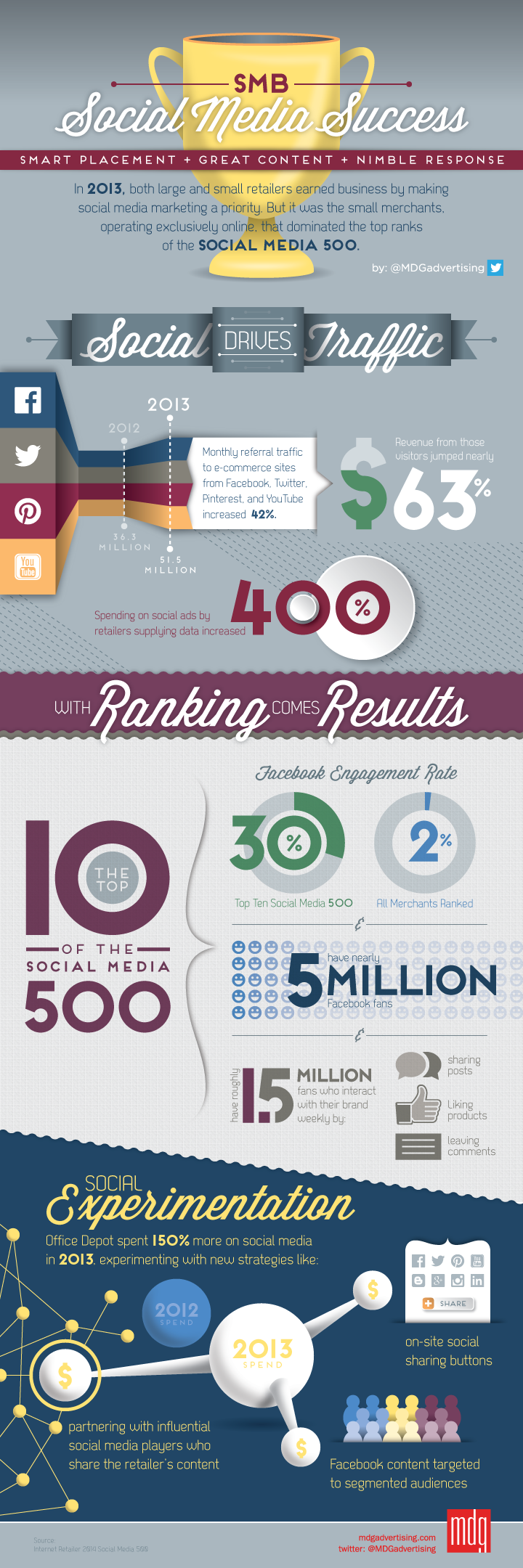
Infographic by MDG Advertising
About The Author