Mobile commerce has changed the way people shop, compare products, read emails, and make buying decisions. Customers no longer wait until they are sitting at a desktop computer to browse products or complete a purchase. They use smartphones and tablets throughout the day, whether they are at home, commuting, watching TV, or standing inside a physical store.
The infographic above shows how quickly mobile commerce started reshaping ecommerce. It highlights that 1 in 10 ecommerce dollars were being spent through smartphones or tablets, while mobile commerce growth was outpacing traditional ecommerce growth by 200%. Even though the numbers come from an earlier stage of mobile shopping, the message is still highly relevant: mobile users are valuable, active, and ready to buy when the experience is easy.
For retailers, service businesses, and ecommerce brands, this creates a major opportunity. Mobile commerce marketing is no longer just about having a mobile-friendly website. It includes mobile search, email marketing, social media, paid ads, landing pages, checkout experience, and conversion rate optimization. If your mobile experience is slow, confusing, or difficult to navigate, customers can leave before they buy.
What Is Mobile Commerce Marketing?
Mobile commerce marketing is the process of attracting, engaging, and converting customers who shop or research products using smartphones and tablets. It includes mobile-friendly websites, email campaigns, paid ads, social media, landing pages, product pages, and checkout flows designed to make buying easier on mobile devices.
Mobile commerce, also called mcommerce, is a natural extension of ecommerce. The difference is that the customer journey happens on a smaller screen and often in shorter moments. People may check prices while walking through a store, open an email during lunch, tap a social media ad in the evening, or complete a purchase after seeing a limited-time offer.
This means businesses need to design every part of the experience around speed, clarity, and convenience. A strong website design strategy should make mobile pages easy to scan, buttons easy to tap, product details easy to understand, and checkout simple enough to complete without frustration.
Why Mobile Commerce Matters for Retailers
Consumers love their mobile devices because they are personal, convenient, and always nearby. The infographic shows that many customers had a better opinion of brands that offered a good mobile experience. That is a key point for modern marketing. A poor mobile experience does not only reduce conversions, it can also damage how people feel about your brand.
When a customer visits your website from a phone, they expect the page to load quickly and display correctly. They also expect images, product descriptions, forms, buttons, and payment options to work smoothly. If something feels slow or broken, they may assume the business is outdated or unreliable.
This is why mobile readiness matters. Businesses can use a tool like the Mobile Readiness Grader to understand whether their website is prepared for today’s mobile-first customers. A mobile audit can reveal problems with layout, speed, usability, calls to action, and conversion paths.
Email Marketing Is Still Powerful on Mobile
One of the most interesting points in the infographic is that email marketing was not dead. In fact, it was rising again because customers were reading emails on mobile devices. The graphic notes that many decision-makers were reading email through mobile, and for every $1 spent, the average return on email marketing investment was shown as $44.25.
The exact return will vary by business, industry, list quality, and campaign strategy, but the overall lesson remains important. Email is still one of the most direct ways to reach customers. The difference is that email campaigns must now be designed for mobile first.
A mobile email should have a clear subject line, simple layout, short paragraphs, strong visuals, and a direct call to action. Buttons should be easy to tap, and the landing page should match the message in the email. If the email looks good but the landing page is slow or confusing, the campaign can lose conversions.
Businesses that want to improve customer communication should review their email marketing strategy and make sure every campaign works well on mobile devices. This includes newsletters, promotions, abandoned cart emails, product launches, appointment reminders, and customer follow-ups.
Mobile UX Can Make or Break the Sale
Mobile users are often impatient because they are browsing in short sessions. They may be comparing options quickly, checking reviews, or looking for the easiest place to buy. A weak mobile user experience creates friction, and friction reduces sales.
Good mobile UX starts with clean navigation. Customers should not have to pinch, zoom, or hunt for important information. Product categories, service pages, pricing details, contact forms, and checkout buttons should be visible and easy to use.
Mobile content also needs to be easier to scan. Long blocks of text can feel overwhelming on a small screen. Short paragraphs, helpful headings, product highlights, FAQs, and strong calls to action can improve engagement. A strong web content strategy helps businesses present the right information at the right time without overwhelming the user.
The checkout process is especially important. Every extra field, confusing step, or unexpected cost can increase abandonment. Mobile shoppers want a fast path from interest to purchase. Businesses should test their forms, payment options, cart experience, and confirmation pages regularly.
Mobile Commerce and Conversion Rate Optimization
Traffic alone is not enough. If people visit your site but do not buy, book, call, or request a quote, there is a conversion problem. This is where conversion rate optimization becomes essential.
Conversion rate optimization, or CRO, focuses on improving the percentage of visitors who take action. For mobile commerce, this may include improving page speed, simplifying navigation, testing button text, improving product images, rewriting calls to action, reducing checkout steps, and making trust signals more visible.
Trust signals are especially important on mobile because screen space is limited. Customers need quick reassurance that the business is legitimate. Reviews, secure checkout icons, return policies, shipping details, guarantees, and contact information can all support conversions when placed correctly.
For ecommerce brands, even a small improvement in mobile conversion rate can have a major impact on revenue. If a website already receives mobile traffic, improving the experience can often produce better results than simply spending more on advertising.
Paid Ads Need Mobile-Friendly Landing Pages
Mobile commerce growth also changes how businesses should think about advertising. Customers who click mobile ads expect a smooth experience after the click. If the ad promises a product, discount, service, or offer, the landing page should deliver that message immediately.
A common mistake is sending all paid traffic to the homepage. This can work in some cases, but it often creates extra steps for the user. A focused landing page is usually better because it matches the campaign goal and removes distractions.
For example, a retailer running Google Ads for a product category should send users to a relevant page with clear product options, strong visuals, trust signals, and a simple call to action. A business running paid social media campaigns should make sure the landing page matches the creative, tone, and offer used in the ad.
Strong landing page development can help turn mobile ad clicks into leads or sales. The goal is to reduce confusion and make the next step obvious.
Social Media Fuels Mobile Shopping
Social media and mobile commerce are closely connected. Many customers discover products through platforms they use on their phones. They may see a product video, influencer post, customer review, carousel ad, or brand story before visiting a website.
This makes social media an important part of the mobile commerce journey. It can build awareness, create demand, answer questions, and drive traffic to product pages. But social media traffic must still lead to a strong mobile experience. If users click from a mobile app to a slow website, the sale can be lost.
Businesses should connect their social media management strategy with mobile ecommerce goals. This includes creating mobile-friendly visuals, writing clear captions, using strong calls to action, and sending users to pages that are ready to convert.
What Businesses Can Learn from Top Mobile Commerce Brands
The infographic highlights Apple, Amazon, QVC, Walmart, and Groupon Goods as top companies taking advantage of mobile commerce at the time. These brands succeeded because they made mobile shopping easier, faster, and more familiar for customers.
Apple focused on a premium product experience. Amazon made product discovery and checkout extremely convenient. Walmart connected mobile behavior with retail scale. Groupon Goods used deals and urgency to drive action. QVC showed how content, shopping, and customer engagement could work together.
Smaller businesses do not need the same budget as these brands, but they can learn from the principles. Make the experience simple. Reduce friction. Use strong visuals. Keep messaging clear. Make checkout easy. Follow up through email. Test what works.
A useful way to start is by reviewing your mobile customer journey from beginning to end. Search for your business on a phone, click your ads, open your emails, browse your product or service pages, complete a form, and test checkout. The issues you find are often the same issues customers experience.
How to Build a Strong Mobile Commerce Strategy
A strong mobile commerce strategy should include website performance, content, advertising, email, social media, and CRO. These channels should not work separately. They should support one complete customer journey.
Start by improving the website. Make sure it loads quickly, looks professional, and works well on phones. Then review your content. Product pages and service pages should answer common customer questions and make the next step clear. Helpful content creation can improve both search visibility and conversions.
Next, review your traffic sources. Search ads, social ads, organic search, email, and referral traffic should all lead to relevant pages. If a campaign is getting clicks but not conversions, the issue may be the landing page, offer, audience, or mobile experience.
Finally, track results. Look at mobile traffic, bounce rate, conversion rate, checkout abandonment, form submissions, calls, and revenue. Good data helps you understand where customers are dropping off and where improvements can produce the biggest return.
Final Thoughts
Mobile commerce is not a temporary trend. It is now one of the most important parts of digital marketing and ecommerce growth. Customers use smartphones and tablets to research, compare, read emails, engage with brands, and complete purchases. Businesses that make this process easy have a better chance of earning trust and increasing sales.
The key is to treat mobile as a complete customer experience, not just a smaller version of your desktop website. Your website, email campaigns, paid ads, landing pages, social media content, and checkout process should all be designed with mobile users in mind.
If your business wants more mobile traffic, better engagement, and stronger conversion rates, start by reviewing the full journey. A mobile-ready website, clear content, strong email campaigns, focused ads, and ongoing CRO can help turn mobile visitors into customers.
For more digital marketing guidance, explore the latest resources from AOK Marketing or request a free growth proposal to identify opportunities for improving your mobile marketing performance.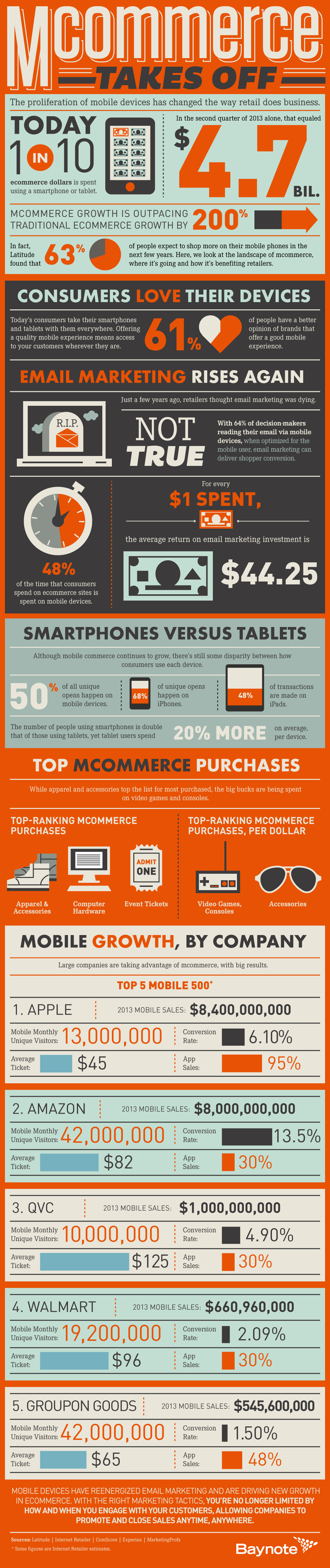
Source: http://www.baynote.com/infographic/mcommerce-takes-off
About The Author