Brands have been dealing with shrinking Facebook organic reach for over a decade now, and the trend hasn’t reversed. What started as algorithm changes years ago has evolved into something bigger: Facebook is now shaped by AI-curated feeds, engagement-based ranking, and a growing preference for private, group-based interaction over public brand pages. External data shows organic reach on Meta platforms can drop below 5% of followers, though it can still drive meaningful engagement when the content is genuinely worth interacting with.
The good news is this isn’t a new problem. Marketers have been adapting to Facebook’s declining organic reach since it first became a concern, and the strategies that worked then still hold up today, just with a few updates for how the platform behaves now. Here’s a practical playbook for reclaiming visibility without depending entirely on paid spend.
Why Organic Reach Keeps Shrinking
A few forces are driving this, and understanding them makes the fixes below make a lot more sense:
- Feed real estate is finite. As more brands and creators compete for the same news feed slots, each individual page’s share of visibility naturally shrinks.
- Facebook is shifting toward private engagement. Group discussions and comments now carry more algorithmic weight than standard page posts, pushing brands to think beyond the traditional page-post model.
- AI-driven personalization is more aggressive. Feeds increasingly prioritize content based on predicted individual relevance rather than simple chronological reach, which rewards genuinely engaging content and quietly buries generic posts.
- Paid inventory keeps expanding. Every additional ad placement Facebook sells is, in effect, organic reach it no longer has to give away for free.
None of this means organic Facebook marketing is dead. It means the old approach of posting and hoping doesn’t work anymore.
1. Optimize What You’re Actually Posting
Before spending anything on ads, get the fundamentals right. This still matters more than most brands assume:
- Test content formats deliberately. Status updates, photos, video, and links all perform differently depending on your audience. Track results instead of guessing.
- Connect posts to real outcomes. Use analytics to trace which posts actually drive click-through traffic and conversions, not just likes.
- Post at the right time for your audience. Engagement patterns vary by page and industry, so pull your own data rather than relying on generic “best time to post” advice.
- Lean into formats the algorithm currently favors. Long-form video content and posts that spark genuine discussion in comments tend to get more algorithmic weight than static image posts right now.
This is the same principle behind a strong Facebook and Instagram marketing strategy: know your platform’s current preferences and build content around them instead of fighting the algorithm.
2. Spark Sharing Instead of Waiting for It
Word-of-mouth remains one of the most trusted forms of marketing, and Facebook’s algorithm still rewards content that people choose to share on their own. A few reliable ways to encourage that:
- Create promotions worth sharing. People are far more likely to share a genuinely good offer with friends than a plain announcement.
- Run photo or video contests. User-generated content tends to outperform brand-produced content in both trust and reach.
- Partner with influencers and complementary brands. A well-matched partnership extends your content into an audience that already trusts the person sharing it.
If you’re building this into a repeatable system, our checklist on how to go viral breaks down the mechanics of shareable content in more detail.
3. Go Beyond Facebook With a Multi-Network Strategy
Relying on a single platform means you’re fully exposed to whatever that platform’s algorithm decides to do next. A stronger approach spreads reach across channels while keeping messaging consistent:
- Run campaigns that work across multiple networks, not just Facebook, so a single algorithm change doesn’t sink your entire strategy.
- Promote a consistent campaign hashtag across every channel, from email to other social platforms, to widen the funnel back to your content.
- Use Facebook’s paid tools to extend reach beyond your own page, including the Facebook Audience Network, which can display ads across other apps and websites using the same targeting data.
Understanding how Facebook advertising and Meta’s broader ad ecosystem work makes this step far more effective, especially once organic alone isn’t carrying the full load.
4. Use Paid and Organic Together, Not as Rivals
One of the more persistent myths in social media marketing is that brands have to choose between organic and paid Facebook strategy. In practice, the two work best paired together: organic content builds trust and community over time, while paid social scales reach quickly and drives faster conversions. A blended approach typically looks like this:
- Organic content earns attention and builds relationships through consistent, value-driven posts, stories, and community engagement.
- Paid social accelerates the process, putting your best organic content in front of the right audience instead of waiting for it to be discovered naturally.
- Retargeting closes the loop, bringing back people who already engaged with your organic content but haven’t converted yet.
For a deeper breakdown of how to balance the two, see our full guide on organic and paid social tactics.
5. Learn From What’s Already Working
Studying real ad examples and current platform behavior is one of the fastest ways to shortcut the trial-and-error process. Reviewing a range of Facebook ad examples can reveal formats and messaging approaches worth testing on your own page, especially when paired with an understanding of how social media algorithms currently rank and prioritize content across platforms.
A Quick Framework for Rebuilding Reach
If organic reach on your page has flatlined, this is a reasonable order of operations:
- Audit your last 90 days of posts to see what actually drove engagement and clicks.
- Shift content mix toward formats the algorithm currently favors: long-form video, discussion-driving posts, and group content where relevant.
- Layer in a modest paid budget to extend your best-performing organic content rather than boosting everything equally.
- Diversify distribution across at least one additional platform so you’re not fully dependent on Facebook’s algorithm.
- Revisit the data monthly. Algorithm behavior shifts often enough that a strategy from six months ago may already need adjusting.
Frequently Asked Questions
Is Facebook organic reach still worth investing in?
Yes, though expectations need to be realistic. Organic reach can drop below 5% of followers, but engagement on the content that does get seen is often stronger than what paid alone produces, especially for building long-term trust.
Should small businesses focus on paid ads instead of organic content?
Not exclusively. A blended approach tends to outperform either strategy on its own. Organic content builds the trust that makes paid ads convert better, while paid extends reach beyond what organic alone can achieve.
Why does video content perform better than static posts right now?
Facebook currently gives more algorithmic weight to long-form video and posts that generate real comment activity, since these signal genuine engagement rather than passive scrolling.
How often should a Facebook content strategy be reevaluated?
At minimum, monthly. Platform algorithms change frequently enough that a strategy built even six months ago can lose effectiveness without regular review.
What’s the fastest way to recover from a drop in Facebook engagement?
Start with a content audit to identify what’s actually working, then shift budget and effort toward those formats rather than spreading resources evenly across everything you post.
Ready to Rebuild Your Facebook Strategy?
Facebook’s algorithm will keep evolving, but a strategy built on real data and a blended organic-paid approach holds up regardless of the next update. Explore AOK Marketing’s paid social media services to build a strategy that keeps working even as the platform changes around you.
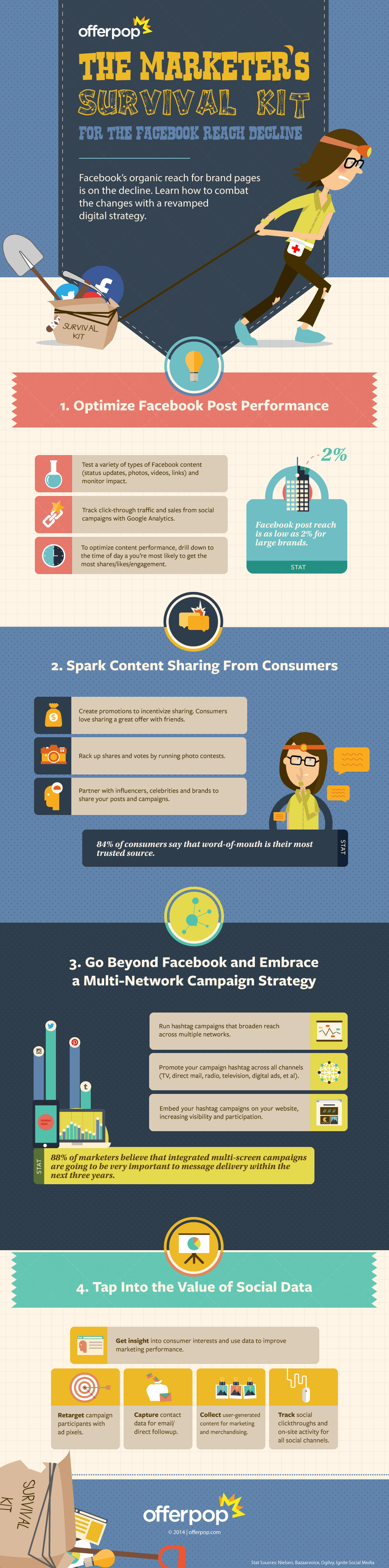
Source: www.offerpop.com
About The Author