A Day in the Life of a Successful Social Media Manager

A successful social media manager does much more than publish posts. Their day usually includes content planning, community management, trend monitoring, reporting, creative testing, customer communication, and campaign strategy. It can look simple from the outside, but social media management requires a mix of creativity, organization, analytics, and people skills.

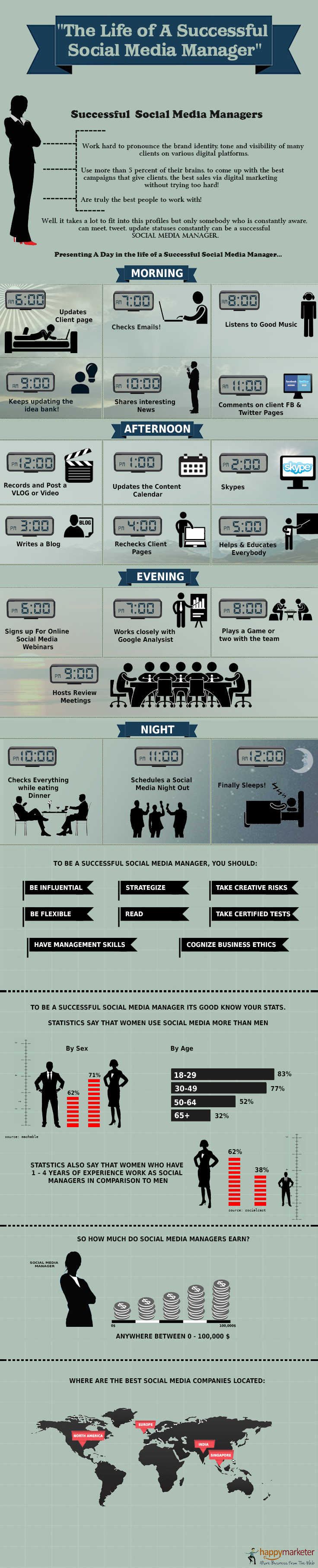
The infographic below gives a fun look at the daily routine of a social media manager. Some parts are exaggerated, so it should be taken with a grain of salt. Still, the main message is accurate: a good social media manager needs to stay active, flexible, and focused throughout the day.

For brands, this role is important because social media is often one of the first places customers see, question, judge, and interact with a business. A strong social media manager can help build trust, increase visibility, support customer relationships, and guide users toward the next step. That is why social media should be part of a wider digital marketing strategy, not treated as a separate task.

What Does a Social Media Manager Do?

A social media manager is responsible for planning, creating, publishing, and managing content across social platforms. This may include Facebook, Instagram, LinkedIn, X, TikTok, Pinterest, YouTube, and other channels depending on the business.

Common social media manager duties include:

  • Creating a social media strategy
  • Planning a content calendar
  • Writing captions and post copy
  • Designing or coordinating visuals
  • Scheduling posts
  • Replying to comments and messages
  • Monitoring brand mentions
  • Tracking engagement and reach
  • Reviewing analytics and reports
  • Testing new content ideas
  • Supporting paid social campaigns
  • Working with designers, writers, and marketing teams

A strong social media manager does not just post content. They make sure each post has a purpose, fits the brand voice, and supports business goals.

Businesses that need a more consistent approach can benefit from professional social media management, especially when they do not have the time or team to manage daily content and engagement.

Morning: Check Updates, Emails, and Trends

The day often starts with checking what happened overnight. Social media does not stop when the workday ends. Customers may leave comments, ask questions, mention the brand, or share feedback at any time.

In the morning, a social media manager may review:

  • New comments and direct messages
  • Brand mentions
  • Customer questions
  • Reviews or complaints
  • Scheduled posts
  • Platform updates
  • Industry trends
  • Competitor activity
  • News that may affect planned content

This early check helps prevent missed opportunities or reputation issues. If a customer complaint is ignored for too long, it can create a negative impression. If a trend is relevant to the brand, responding quickly can increase visibility.

This is also where competitive monitoring can help. By watching competitors, brands can understand what topics are getting attention and where they can create better content.

Mid-Morning: Plan and Create Content

After checking updates, the next focus is often content creation. A social media manager may write captions, plan visuals, record short videos, review graphics, or update the content calendar.

Good social media content can include:

  • Educational tips
  • Product or service updates
  • Blog post promotions
  • Customer stories
  • Behind-the-scenes content
  • Short videos
  • Infographics
  • Polls and questions
  • Industry insights
  • Case study highlights

The goal is not to post just for the sake of posting. Every piece of content should have a reason behind it. Some posts may build awareness. Others may educate the audience, start conversations, drive website traffic, or support lead generation.

Strong content development is important because social media works better when there is useful content behind it. A brand with blogs, guides, service pages, and case studies has more valuable material to share.

Afternoon: Engage With the Audience

Social media is not only about publishing content. It is also about conversation. A successful social media manager spends time replying to comments, answering questions, thanking followers, and joining relevant discussions.

Audience engagement may include:

  • Replying to comments
  • Answering direct messages
  • Responding to customer concerns
  • Thanking users for positive feedback
  • Sharing user-generated content
  • Asking questions to encourage replies
  • Joining industry conversations
  • Supporting customer service teams

Engagement helps humanize the brand. People are more likely to trust a business that responds clearly and respectfully. A brand that ignores comments or only posts sales messages may struggle to build a loyal audience.

This is why social media managers need communication skills. They must know how to stay professional, helpful, and calm, even when dealing with negative feedback.

Afternoon: Update the Content Calendar

A content calendar keeps social media organized. Without a calendar, brands often post randomly or repeat the same type of content too often.

A useful content calendar should include:

  • Posting dates
  • Platforms
  • Captions
  • Visuals or video notes
  • Target audience
  • Campaign goals
  • Links
  • Hashtags
  • Approval status
  • Performance notes

The calendar helps the team see what is coming next. It also makes it easier to balance different content types, such as educational posts, promotional updates, customer stories, and thought leadership.

For campaigns that send users to a specific page, strong landing page development is also important. A good post can bring traffic, but the landing page must help convert that traffic into leads or customers.

Late Afternoon: Review Analytics

A successful social media manager does not rely only on creativity. They also review data to understand what is working.

Important social media metrics may include:

  • Reach
  • Impressions
  • Engagement rate
  • Link clicks
  • Follower growth
  • Video views
  • Saves and shares
  • Comments
  • Website traffic
  • Leads or conversions

These numbers help answer important questions. Which posts are getting attention? Which platforms are sending traffic? Which topics are creating engagement? Which campaigns are supporting business goals?

If social media brings traffic but users do not take action, the issue may be the website, offer, or call-to-action. This is where conversion rate optimization can help improve results after the click.

Paid Social and Campaign Support

Many social media managers also support paid campaigns. Organic content is useful, but paid social media can help brands reach a larger or more targeted audience.

Paid social campaigns may be used to:

  • Promote a service
  • Increase website traffic
  • Generate leads
  • Retarget past visitors
  • Promote an event
  • Grow brand awareness
  • Test new offers
  • Support product launches

Before spending on ads, brands should understand which organic content already performs well. Strong organic posts can often be turned into paid campaigns because they have already shown audience interest.

Professional paid social media advertising can help with targeting, testing, creative strategy, and campaign tracking.

Skills Every Successful Social Media Manager Needs

The infographic highlights several traits of a successful social media manager. These are still relevant today.

A successful social media manager should be:

  • Influential
  • Strategic
  • Creative
  • Flexible
  • Curious
  • Organized
  • Analytical
  • Good at communication
  • Comfortable with testing
  • Able to manage time well

They should also understand business ethics and brand reputation. Social media managers represent the company in public, so they need to be careful with tone, timing, and messaging.

Certification tests and ongoing learning can also help. Social platforms change often, so managers need to keep learning about new features, content formats, algorithms, and advertising options.

Why Reading and Learning Matter

A strong social media manager keeps learning. The best ideas often come from reading industry updates, studying competitors, reviewing customer questions, and understanding platform changes.

Useful learning sources may include:

  • Marketing blogs
  • Platform updates
  • Industry newsletters
  • Analytics reports
  • Customer feedback
  • Competitor posts
  • Case studies
  • Training courses

Real-world examples are especially useful. Reviewing case studies can help marketers understand what worked, why it worked, and how similar ideas can be applied to future campaigns.

Connecting Social Media With SEO and Paid Search

Social media should not work alone. It can support SEO, paid search, content marketing, and lead generation.

Social media can help brands:

  • Promote blog posts
  • Share service pages
  • Drive traffic to landing pages
  • Support retargeting campaigns
  • Build brand awareness
  • Generate content ideas
  • Share proof and case studies
  • Increase audience engagement

A complete marketing approach may connect social media with SEO marketing and Google Ads. SEO can bring long-term organic traffic, Google Ads can capture high-intent search demand, and social media can keep the brand visible and active.

Final Thoughts

A day in the life of a successful social media manager can be busy, creative, and demanding. The role requires more than posting updates. It includes planning, writing, engagement, analytics, campaign support, reporting, and constant learning.

The best social media managers are strategic and flexible. They understand the brand, listen to the audience, create useful content, test new ideas, and use data to improve results.

For businesses, investing in social media management can help build stronger brand visibility, better customer relationships, and more consistent online growth. The infographic below gives a fun overview of the role, but the real lesson is simple: successful social media management takes skill, planning, and daily attention.

the life of a social media manager

Source: http://happymarketer.com


About The Author