Is Google Going After Yelp? How Google Business Profile Reviews Work Today
Google reviews have become one of the first things people see when they search for a local restaurant, retailer, contractor, professional service or nearby business. A customer may compare ratings, read recent feedback and examine owner responses before visiting the company’s website or making contact.
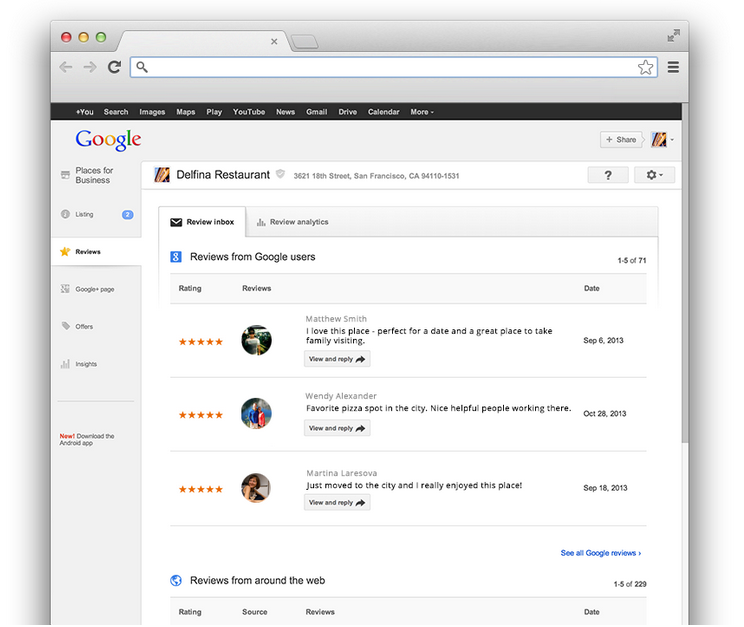
That was already becoming clear when Google introduced a review inbox within Google Places for Business. At the time, the feature allowed owners to view customer feedback and respond without moving between several screens.
The original question was simple: Was Google trying to compete with Yelp?
The answer today is more nuanced. Google and Yelp overlap in local business discovery, ratings and customer reviews, but they serve users in different ways. Google places reviews directly inside Search and Maps, while Yelp remains a dedicated local discovery platform where people can read reviews, request quotes, join waitlists, reserve tables and connect with service providers.
For businesses, the important question is no longer which platform will “win.” It is how to manage Google Business Profile reviews properly while maintaining a trustworthy presence wherever customers research the company.
From Google Places to Google Business Profile
The screenshots in the original article capture an earlier stage of Google’s local business platform. Google Places eventually became part of Google My Business, which was later renamed Google Business Profile in 2021. Google also shifted profile management away from the old mobile app and encouraged smaller businesses to make updates directly through Google Search and Google Maps.
The names and interfaces have changed, but the basic purpose remains familiar. A Business Profile helps a company control how important information appears across Google, including its name, category, address or service area, telephone number, hours, website, images and customer reviews.
Our earlier guide to Google Plus Local optimization offers historical context, but businesses should now use the current Google Business Profile tools rather than looking for Google Places, Google+ Local or the former Google My Business app.
Is Google Really Competing With Yelp?
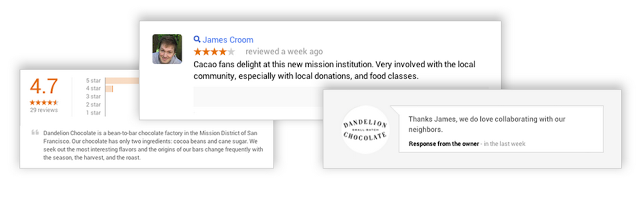
Google and Yelp both help consumers evaluate local businesses, so competition between them is unavoidable. Both platforms display ratings, written reviews, photos and business information. Both also help customers move from research to a real-world action.
The main difference is where that discovery happens.
Google reviews appear within Google Search and Maps. Someone searching for “Italian restaurant near me,” “emergency plumber” or a specific company name can see local listings and reviews without visiting a separate review website. Yelp is built specifically around local business discovery and continues to offer tools such as quotes, reservations, waitlists, appointments and purchases.
This means Google is competing for some of the same local-search attention, but it has not made Yelp irrelevant. Many customers still compare information across several platforms before making a decision.
Businesses should therefore avoid treating reputation management as a Google-only task. A negative experience can appear on Google, Yelp, Facebook, industry directories or other review sites. Our guide to online reviews management explains why companies need a consistent response process instead of managing each platform only when a problem appears.
The best approach is to keep major profiles accurate, monitor new feedback and respond in a recognisable brand voice.
How Google Business Profile Reviews Work Now
Customers can leave a star rating and written review on an eligible business profile through Google Search or Maps. The business’s displayed Google review score is calculated from ratings published on Google for that place or company. Google notes that a new review may take time to affect the displayed average.
Google may also show review information from selected third-party websites. However, those third-party reviews do not become ordinary Google reviews, and concerns about their content generally need to be taken to the original review platform.
That distinction corrects one possible misunderstanding in the original article. Google may bring information from across the web into a Business Profile, but it does not simply move every Yelp review into a Google review inbox or use those reviews to calculate the main Google star rating.
Reviews matter because they can influence how confident a potential customer feels about a company. A profile with recent, detailed feedback provides more context than one with no reviews or several unexplained complaints.
They can also support local visibility. Google explains that local results are mainly determined through relevance, distance and prominence. Review quantity and positive ratings can contribute to prominence and may help a business’s local ranking, although reviews are only one part of the wider system.
Reviews should therefore be connected to a complete local strategy. Our guide to using social media to support local SEO looks at how reputation, content and local visibility can work together.
Claim and Verify the Correct Business Profile
A business should claim and verify its profile before trying to build a review strategy. Verification helps Google confirm that the person managing the listing is authorised to represent the company.
Verification is no longer limited to receiving a postcard with a PIN. Google automatically decides which verification methods are available based on the business, region and other information. Depending on the profile, options may include phone, text, email, video recording, live video or mail. Some businesses may be asked to complete more than one step.
Before starting verification, check that the following details match the real business:
- Business name
- Primary category
- Physical address or service area
- Telephone number
- Website
- Opening hours
- Location information
Avoid adding extra keywords to the business name unless they are genuinely part of the company’s real-world name. The information should reflect how the organisation identifies itself on signage, official documents and customer-facing materials.
Verification does not automatically guarantee a top position in local results. It does, however, give the owner access to important management features and helps Google understand that the profile has an authorised representative. Google also recommends keeping business information complete and accurate because incomplete information can reduce the profile’s ability to appear for relevant searches.
Consistency is an important part of building Google trust. Customers and search platforms should encounter the same core details wherever the business appears online.
How to Respond to Google Reviews Naturally
Once a profile is verified, authorised owners and managers can respond to reviews. These replies appear publicly under the business name, so they should be written for both the reviewer and anyone who may read the exchange later.
A good response does not need to be long. It should show that the business has read the feedback and understands the customer’s experience.
For a positive review, thank the customer and mention one relevant detail:
Thank you for choosing us, Sarah. We are pleased that the team was able to complete the repair quickly and keep you updated throughout the process.
For a critical review, stay calm and avoid arguing:
Thank you for sharing this feedback. We are sorry that the wait was longer than expected. Please contact our team directly so we can review what happened and help resolve the issue.
Avoid copying the same response beneath every review. Repeated templates can make the business look uninterested, even when the wording is polite.
It is also important not to reveal private details about the customer, transaction or dispute. A public reply should acknowledge the concern and move sensitive discussions to a private channel.
Thoughtful responses support stronger customer lifecycle management because they show that the relationship continues after the purchase or appointment.
How to Ask Customers for More Google Reviews
Businesses are allowed to ask genuine customers to share their experience. Google provides a review link and QR code that can be added to receipts, thank-you emails, printed materials and post-service messages.
The request should feel like a natural part of the customer journey. Good moments include:
- After a successful purchase
- When a service has been completed
- After a support issue has been resolved
- Following a repeat order
- When a customer voluntarily gives positive feedback
Keep the message simple:
Thank you for choosing our business. Your feedback helps us improve and helps other customers make informed decisions. You can share your experience using this link.
Do not ask only customers who appear likely to leave five stars. Avoid wording that pressures people to give a positive score, and never offer money, discounts, gifts or free services in exchange for a review.
Google classifies incentivised reviews as fake engagement. Its policies prohibit benefits offered in return for posting, changing or removing a review. Businesses that violate these rules may lose reviews or face restrictions on their profiles.
A sustainable review process should form part of a broader small-business marketing strategy rather than being treated as a one-week campaign to collect as many ratings as possible.
What to Do About Negative or Fake Google Reviews
Not every negative review should be reported. A customer is allowed to describe an unsatisfactory experience, even when the business disagrees with the criticism.
Respond professionally, address any genuine problem and look for patterns. Several reviews mentioning slow replies, unclear pricing or missed appointments may reveal an operational issue that needs attention.
A review should be reported when it appears to violate Google’s content rules. Possible reasons may include spam, profanity, fake engagement, irrelevant content, harassment or personal information.
Google states that only policy-violating reviews are eligible for removal. It does not normally remove a review simply because the company dislikes it or disputes the customer’s interpretation. Businesses can report a review, track its status and, in eligible cases, submit a one-time appeal.
Avoid posting an emotional response while waiting for a decision. A short, measured reply is usually safer than accusing the reviewer publicly.
Companies should also document suspicious activity, particularly when several reviews arrive suddenly or someone threatens to post negative reviews unless they receive money or another benefit.
Review problems can quickly become wider reputation issues, so staff responsible for social profiles should also understand the principles covered in social media business law.
Google Reviews Matter for B2B and Multi-Location Companies Too
The original article suggested that reviews were mainly important for consumer businesses such as restaurants, shops and entertainment venues. That may have reflected how local reviews were commonly used at the time, but Google Business Profile reviews now matter across many industries.
A potential B2B customer may search for an accountant, marketing agency, commercial contractor, IT provider, legal practice or office supplier. Reviews can provide reassurance about communication, reliability, expertise and ongoing support.
For multi-location businesses, each eligible location generally needs its own accurate profile. Reviews normally relate to the specific location where the customer had the experience. This makes it important to monitor performance by location rather than relying only on an overall brand reputation.
Local managers should know who is responsible for:
- Checking new reviews
- Approving responses
- Escalating serious complaints
- Correcting inaccurate profile details
- Reporting policy violations
- Requesting feedback from genuine customers
Central guidelines can protect the brand voice, but responses should still reflect the details of each location. A franchise with twenty branches should not paste the same generic sentence beneath every review.
Our guide to working with a franchise SEO company explains why central brand control and individual location visibility need to support one another.
Measure the Business Impact of Your Reviews
A higher review count can look encouraging, but review activity should be connected to meaningful business outcomes.
Track changes in:
- Calls from the Business Profile
- Website visits
- Direction requests
- Booking or order activity
- Lead quality
- Local search visibility
- Average rating
- Response rate
- Common customer concerns
Do not assume every increase or decline is caused by reviews. Seasonal demand, competitors, advertising, website changes and search behaviour may also influence performance.
Look for patterns over time. For example, a service business may notice that detailed reviews mentioning punctuality and communication are followed by more qualified enquiries. A restaurant may find that recent photos and owner responses improve engagement even when the average rating remains unchanged.
Google reviews can also provide useful language for content planning. Repeated customer questions may reveal information that should be added to service pages, FAQs or Business Profile updates. Compliments may show which features customers value most.
The process should support the wider approach described in our guide to setting digital marketing benchmarks and measuring growth. The objective is not simply to collect stars. It is to understand how reputation affects discovery, trust and customer action.
Frequently Asked Questions About Google Business Profile Reviews
Is Google Places for Business still available?
No. Google Places and Google My Business have been replaced by Google Business Profile. Smaller businesses now manage their profiles mainly through Google Search and Google Maps.
Does Google show Yelp reviews?
Google may display information from selected third-party review websites on some Business Profiles. However, the main Google review score is calculated from ratings published directly on Google.
Can a business respond to Google reviews?
Yes. Verified businesses can reply through their Business Profile. The response is public and appears as a reply from the business.
Do Google reviews affect local SEO?
Google states that review quantity and positive ratings can contribute to local prominence and may help local ranking. Relevance, distance, business information and other signals also affect results.
Can I offer a discount for a Google review?
No. Google prohibits incentives such as discounts, payments, free goods or services in exchange for posting, changing or removing reviews.
Can a business remove a negative review?
A business cannot remove a review simply because it is negative. It can report content that violates Google’s policies. Google reviews the report and decides whether the content qualifies for removal.
How can I get a Google review link?
Open the Business Profile and use the option to request more reviews. Google allows businesses to create a shareable link or QR code that can be included in messages, emails, receipts and printed materials.
Google Has Changed Local Reviews, but Yelp Still Matters
Google has clearly expanded into territory once strongly associated with Yelp. Reviews are now built directly into the search and navigation tools people use every day, giving Google a powerful position in local discovery.
That does not mean businesses should ignore Yelp or other industry-specific review platforms. Customers may move between several sources before making a decision, and each profile contributes to the wider picture of the company.
The practical priority is to keep business information accurate, make it easy for genuine customers to share feedback and respond in a way that shows the company is listening.
The interface will continue to change. Trust, clarity and good customer service remain the parts that matter most.
Happy Marketing!
Dave Burnett
Click Here to Connect with Dave on Google+: www.google.com/+DaveBurnett
About The Author