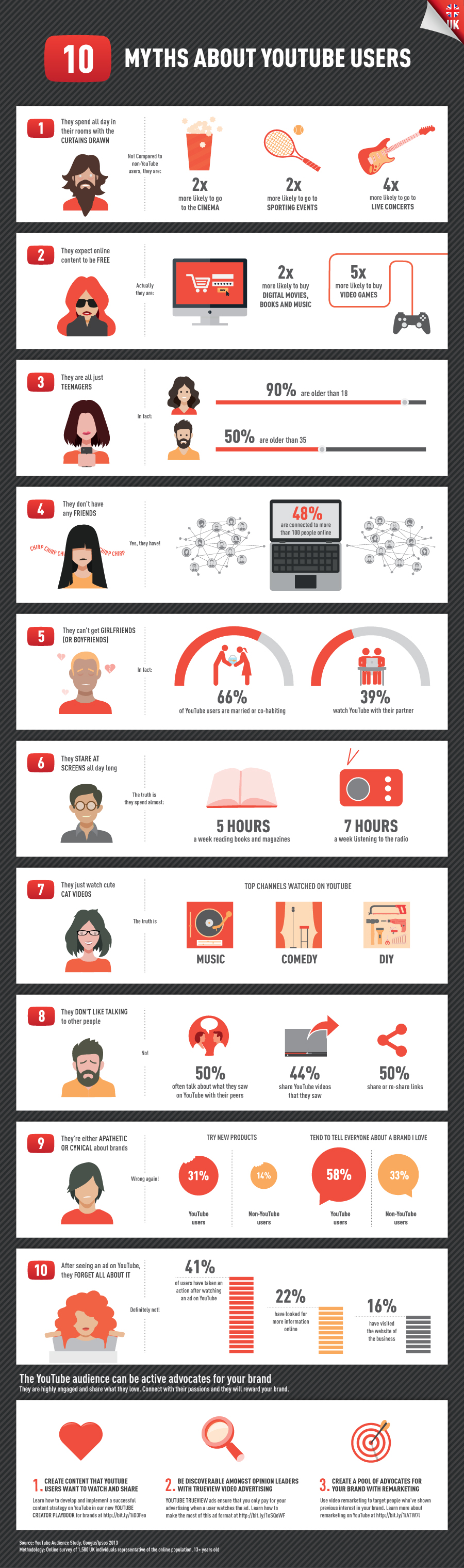
10 Myths About YouTube Users
YouTube is more than a video-sharing platform. It is one of the biggest online spaces where people discover content, follow creators, learn new skills, compare products, and connect with brands. For businesses, this makes YouTube marketing a powerful part of any modern digital marketing strategy.
Many brands still misunderstand YouTube users. They may assume that YouTube audiences are young, passive, distracted, or only interested in entertainment. In reality, YouTube users can be highly engaged, influential, social, and willing to share brands they enjoy.
A strong video marketing strategy can help businesses use YouTube to build awareness, increase engagement, educate customers, and turn viewers into brand advocates. This infographic explores 10 common myths about YouTube users and shows why brands should take the platform seriously.
1. Myth: YouTube Users Spend All Day With the Curtains Drawn
One common myth is that YouTube users spend all day indoors watching videos. The reality is very different. Many YouTube users are active, social, and interested in real-world experiences such as cinema, sporting events, and live concerts.
This matters for brands because YouTube audiences are not disconnected from the world. They are people with interests, hobbies, routines, and spending habits. Businesses can connect with them by creating content that supports their lifestyle, passions, and buying decisions.
2. Myth: YouTube Users Expect Everything Online to Be Free
Another common belief is that YouTube users do not pay for online products or digital content. However, many YouTube users are comfortable buying digital movies, books, music, games, subscriptions, and other online products.
This makes YouTube valuable for ecommerce marketing, product launches, online services, and digital advertising. Brands can use YouTube videos to explain products, answer objections, and guide viewers toward the next step.
When YouTube is connected with a wider digital marketing strategy, it can support both awareness and conversions.
3. Myth: YouTube Users Are Only Teenagers
Many people assume that YouTube is mainly for teenagers. In reality, YouTube attracts a wide age range. Adults use YouTube to watch tutorials, reviews, news, entertainment, fitness content, educational videos, product comparisons, and business advice.
This means brands should not dismiss YouTube as a youth-only platform. Whether a business targets consumers, professionals, parents, homeowners, students, or decision-makers, YouTube can often support audience engagement and brand visibility.
The key is to create content that matches the audience’s intent.
4. Myth: YouTube Users Do Not Have Real Connections
Some people believe YouTube users are isolated or disconnected. The truth is that YouTube users are often connected through comments, subscriptions, communities, creators, and shared interests.
This makes YouTube a strong platform for community building. Brands can use video content to start conversations, answer questions, invite feedback, and encourage people to share their own experiences.
A brand that listens to its audience and responds with helpful content can build trust over time.
5. Myth: YouTube Users Are Not in Relationships
The infographic also challenges the idea that YouTube users are socially disconnected or not in relationships. Many YouTube users are married, cohabiting, or watch content with a partner.
This is important for brands because purchase decisions are often shared. A person may watch a product review, tutorial, or brand video and then discuss it with someone else before making a decision.
YouTube content can therefore influence more than one viewer, especially when videos are helpful, clear, and easy to share.
6. Myth: YouTube Users Stare at Screens All Day
YouTube users may watch online videos, but that does not mean video is the only media they consume. Many also read books and magazines, listen to radio, follow social media, and use search engines.
For brands, this means YouTube should not work alone. It should be part of a broader multichannel marketing strategy that includes SEO, social media, paid ads, email marketing, and content marketing.
The strongest campaigns usually meet customers across more than one channel.
7. Myth: YouTube Users Only Watch Cute Cat Videos
Entertainment is popular on YouTube, but users watch far more than funny clips. Music, comedy, DIY, tutorials, product reviews, educational content, and how-to videos are all important categories.
This creates opportunities for almost every type of business. A brand can create helpful videos that teach, explain, demonstrate, compare, or inspire. For example, a company can publish how-to guides, customer stories, product demos, expert interviews, or behind-the-scenes videos.
Useful video content can also support SEO by keeping visitors engaged and increasing the value of a page.
8. Myth: YouTube Users Do Not Talk to Other People
YouTube users often talk about what they watch. They may share videos with friends, discuss content with peers, post links on social media, or recommend creators and brands they like.
This is why YouTube can be powerful for word-of-mouth marketing. When people enjoy a video, they may become active promoters of the content and the brand behind it.
Businesses can support this by creating videos that are easy to understand, useful, emotional, entertaining, or worth sharing.
9. Myth: YouTube Users Are Apathetic About Brands
Some businesses assume YouTube users are cynical about brands. However, many YouTube users are willing to try new products and tell others about brands they love.
This makes YouTube useful for customer advocacy, influencer marketing, brand awareness, and product education. Brands that create honest, helpful, and audience-focused videos can build stronger relationships with viewers.
YouTube also works well when combined with paid social media services because paid campaigns can help the right people discover the right video content faster.
10. Myth: YouTube Users Forget Everything After Watching
Some people believe YouTube viewers watch a video and forget about it immediately. In reality, many viewers take action after seeing content on YouTube. They may search for more information, visit a website, compare products, or look for a business online.
This is why every YouTube marketing campaign should include a clear next step. Brands should guide viewers toward a website page, product page, contact form, free resource, email signup, or consultation.
To improve results, businesses should also focus on conversion rate optimization so that website visitors are more likely to become leads or customers after watching a video.
How Brands Can Use YouTube More Effectively
YouTube works best when brands create content around audience intent. People often visit YouTube because they want to learn something, solve a problem, compare options, or understand a topic better.
Businesses can improve YouTube marketing results by creating videos that:
- Answer common customer questions
- Explain products or services clearly
- Show real examples or demonstrations
- Share customer stories and results
- Teach useful tips related to the industry
- Include clear calls-to-action
- Match the audience’s search intent
YouTube can also support blog content, landing pages, email campaigns, paid social media, and search engine optimization. When video content is planned properly, it can strengthen the entire online marketing funnel.
Why YouTube Users Matter for Brand Advocacy
YouTube users can be valuable advocates because they are often engaged, curious, and willing to share content they enjoy. A helpful video can influence how people think about a brand before they ever speak to a sales team.
This is especially important for businesses that want to build trust. Video allows brands to explain their value, show personality, demonstrate expertise, and make complex topics easier to understand.
Instead of treating YouTube as only an entertainment platform, brands should see it as a place for education, trust-building, lead generation, and long-term customer engagement.
Source: www.mediatel.co.uk
About The Author