The future is here, and as much as I embrace new technology on a daily basis to help our clients market their businesses, it doesn’t detract from tech’s potential to be more than a little creepy at times.
That’s the conclusion I gleaned from an odd encounter in my backyard recently, one that reminded me that even the most seemingly indispensable new technological or business innovations need to be properly packaged and sold if they’re to gain widespread adoption.

So, let me explain.
There I was enjoying a beautiful spring day on my back patio when a high-pitched buzzing sound cut through the air. I figured it was a bee or wasp until it grew louder.
I looked around and eventually up to the sky where I was able to discern a small dot high in the air. It was a drone hovering overhead. The controller was nowhere to be found. The drone hung there for a minute or two, then slowly travelled back the way it came until it was out of sight and out of ear shot.
Was someone playing with a new toy? Were they filming my moments of backyard bliss?
I’ll never know, but what I can confirm is that the whole experience left me feeling a little violated, a little anxious—what would have happened if the battery died suddenly and it fell out of the sky?—and reminded me of an earlier high-tech encounter that also produced mixed emotions.
That was the first time I encountered someone wearing Google Glass. Watching someone not only watch you, but potentially record your every movement without consent is disconcerting—cool in concept, but strange and unnerving when applied in the real world, leaving more questions than answers.
That’s where we are now with drone technology. We’re either going to have to adjust to its invasiveness and embrace its utility, or the technology is going to have to change. What I do know is that drones aren’t going anywhere.
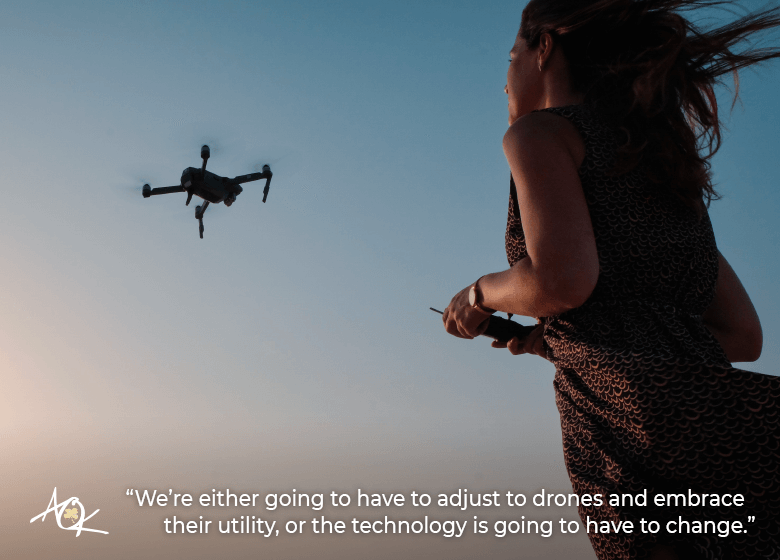
That’s because drone technology has the potential to change the world. Think about package delivery, alone. It’s now possible to deliver life-saving medicines to remote areas in extreme conditions using these unmanned vehicles.
We’ve already seen Amazon.com experiment with drones to make rapid deliveries. Think about the cost savings and efficiencies. While drones are currently too small and weak to make a huge difference in our lives, their potential payloads will only increase over time.
Soon drones will be able to carry the weight of a human or heavier, over long distances, on a single charge. Perhaps your business will benefit from these devices, potentially even allowing you to augment—or replace—an existing delivery team or employees engaged in basic, labour-intensive work. The possibilities are endless.
But here’s the catch: unless we take the time to communicate the benefits of a new technology such as this one to our clients and the masses, it could take far longer than is reasonably necessary for these tools to be adopted and put to good use.
The simple reason is that people are generally resistant to change. Technological advancements can move forward at a lighting pace, but humans’ ability to keep up is limited by everything from our capacity to understand and accept the new tools at our disposal, to the time needed to regulate their appropriate use.
Despite rapid advancements in e-commerce technology, for example, only 3.1 per cent of the retail goods sold in Canada this past January were bought online, according to Statistics Canada. That represents a year-over-year increase of 14.8 per cent, but only underscores the fact that despite huge e-commerce investments on the part of leading retailers, many of us simply prefer to shop at the mall.
Will online giants such as Amazon.com eventually supplant traditional brick-and-mortar retailers? Bet on it—but in the meantime, remember that old habits die hard.
Artificial intelligence is another emerging technology that’s causing huge changes in everything from consumer interactions to marketing. As rapid as advancements in AI are, however, machine learning software still has the potential to alienate customers who recoil at the thought of interacting online with a bot rather than a live human, or having their data mined and shared in even more intrusive ways.
Some companies will likely try to shun AI technology and leverage an old-school approach to their advantage—‘Email us for a quote and we’ll guarantee you’ll speak to a real, live sales agent!’
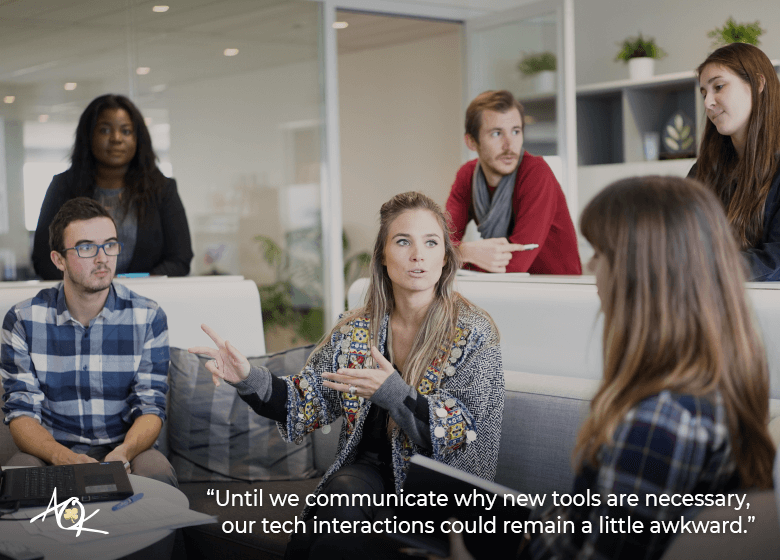
So, until we spend the time to communicate why new tools such as drones are necessary, market their benefits and make customer interactions seamless and comfortable—not to mention implementing rules and regulations to protect privacy, among other key considerations from both a business and social perspective—our tech interactions could remain a little awkward.
Final Thoughts: AI Drones Are About More Than Technology
AI drones show how quickly emerging technology can move from an interesting experiment to something that affects businesses, consumers, and everyday life. Their potential stretches across delivery, logistics, agriculture, security, emergency response, infrastructure inspection, and many other industries. The real challenge, however, is not simply developing better drones—it is earning public trust and demonstrating why the technology is useful.
Businesses introducing technologies such as AI-powered drones also need to understand how customers move from initial awareness to acceptance. Looking at the broader awareness-to-purchase journey can help companies communicate benefits at the right stage rather than expecting customers to immediately embrace an unfamiliar innovation.
The same principle applies to digital transformation more broadly. Whether a company is adopting drones, AI, automation, or new e-commerce technology for small businesses, successful adoption depends on making the experience useful, understandable, and trustworthy. Technology will continue moving forward, but businesses that explain its value clearly will have a much better chance of bringing their customers along with them.
Frequently Asked Questions
What are AI drones?
AI drones are unmanned aerial vehicles that use artificial intelligence and automated systems to perform tasks with less direct human control. Depending on their capabilities, they may analyze surroundings, identify objects, plan routes, avoid obstacles, collect information, or make limited decisions while operating.
How could AI drones affect everyday life?
AI drones could become increasingly useful for deliveries, emergency services, infrastructure inspections, agriculture, mapping, security, and other applications. Their impact will depend on technological progress as well as safety standards, privacy expectations, regulations, and how comfortable consumers become with drones operating around them.
How can businesses use AI drones?
Businesses may use drones for activities such as inventory monitoring, aerial photography, site inspections, deliveries, surveying, agricultural monitoring, and collecting information from difficult-to-reach locations. The right application depends on the industry, operating environment, regulations, and whether drones can provide a measurable efficiency or service benefit.
What are the biggest concerns surrounding AI drones?
Privacy, safety, cybersecurity, accountability, and regulation are among the main concerns surrounding drone adoption. Businesses should consider not only what drone technology can accomplish but also how its use may affect customers and communities. Clear communication and responsible implementation can help reduce uncertainty around unfamiliar technology.
How should companies market emerging technologies such as AI drones?
Companies should focus on practical benefits instead of simply emphasizing how advanced the technology is. Explain the problem being solved, show how the technology works, address customer concerns, and provide evidence of its value. A coordinated paid, owned, and earned media strategy can also help businesses educate audiences and build credibility as new technologies enter the mainstream.
About The Author