What gets cited in ChatGPT / Perplexity for “best {category}” queries?
A practical breakdown of what these answer engines tend to cite, and why.
When someone types “best {category}” (or “best {category} for {use case}”) into ChatGPT Search or Perplexity, they’re not really asking for content, they’re asking for a decision.
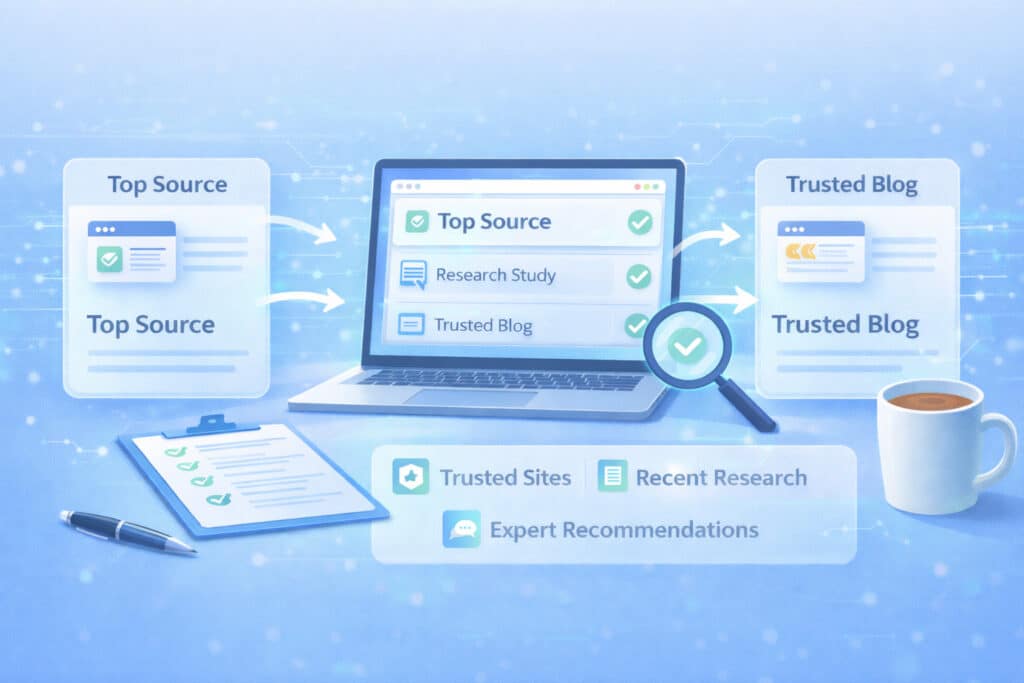
Decision queries force these tools to do three jobs:
- Interpret intent (Are they buying? comparing? researching?)
- Retrieve evidence (web pages, reviews, lists, specs, etc.)
- Choose a few sources worth showing as receipts (citations)
This is what tends to get cited, and why it wins.
Quick recap
ChatGPT Search
- Shows inline citations and a Sources panel when it uses the web.
Perplexity
- Is built around “answer + citations” and searches the live web in real time.
- For “best” queries, citations skew toward comparison-ready pages: lists, tables, structured reviews, and big aggregators, plus a few “spec/proof” sources.
- A big driver is extractability: if a page makes the answer obvious (early and structured), it gets pulled more often.
1) ChatGPT Search: what it wants to cite on “best” queries
ChatGPT will cite when it uses web search
OpenAI’s help documentation describes ChatGPT Search showing inline citations and letting you open a Sources view to see what it used. [1]
How sources get chosen (the official part)
OpenAI describes search results as being influenced by relevance, intent, and recency signals, and that citations are provided so people can verify information. [5]
The practical part: it often tracks classic search rankings
In practice, ChatGPT Search citations frequently resemble what a mainstream search engine would surface. One industry experiment reported that a large share of SearchGPT citations overlapped with Bing’s top results for the same queries. [4]
If the query smells like shopping, citations shift toward structured product data
OpenAI’s shopping-related documentation describes product results relying on structured metadata (like price and descriptions) and third-party content such as reviews. [6][7]
2) Perplexity: what it wants to cite on “best” queries
Perplexity positions itself as an answer engine that always includes citations so you can verify the response. [2]
Real-time web search + citation-first outputs
Perplexity’s help pages emphasize searching the live web for up-to-date information and attaching sources directly to the answer. [8]
What tends to win citations (observed patterns)
Third-party analyses of Perplexity citation behavior suggest it strongly prefers pages that answer fast (the “BLUF”), use structured formats (lists/tables), and show clear freshness cues like dates. [3]
Shopping-style “best” queries
Coverage of Perplexity’s shopping experiences suggests it pulls from structured product information, reviews, and credible sources to build comparisons. [10][11]
3) The sources that get cited most for “best {category}” queries
A useful way to think about citations on “best” queries is a simple evidence stack. Most answers borrow from multiple layers:
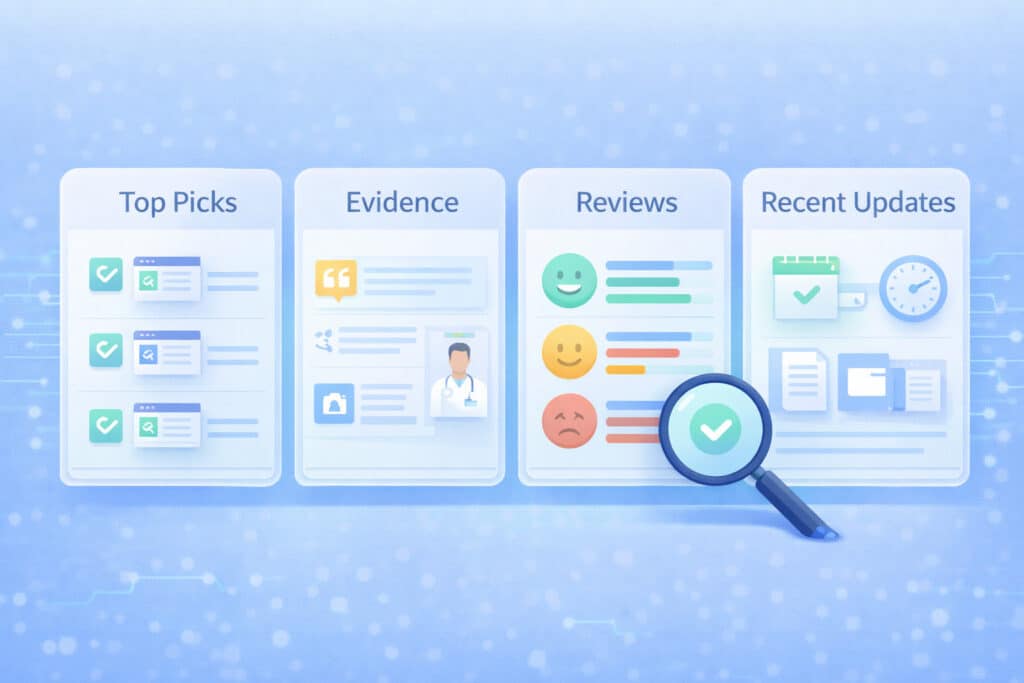
Layer 1: “The shortlist page”
This is the page that already did the comparison work (e.g., “best X for Y” roundups, “top tools” lists, or X vs Y vs Z comparisons). These win because they match the job of the query: helping you choose. [3]
Layer 2: “The proof page”
These sources confirm specs, definitions, pricing, policies, or criteria: official documentation, standards bodies, primary research, or reputable reporting. [1][2]
Layer 3: “The sentiment page”
These sources capture real-user experiences (pain points, pros/cons): review platforms, community Q&A, forums, and discussion hubs. Shopping-oriented systems explicitly mention reviews as inputs. [6]
Layer 4: “The freshness page”
For fast-moving categories (software, gadgets, pricing, rules), newer sources become tie-breakers because recency is part of modern search ranking and presentation. [5]
4) What this means for your placeholder: “best {category}”
The word {category} changes the citation pool a lot. Here’s a practical cheat sheet for how “best” citations tend to shift by niche:
| If {category} is… | What typically gets cited | Why it gets cited |
| Consumer products (headphones, vacuums, etc.) | Structured reviews + roundups, specs, retailer/price sources, review sentiment | “Best” needs comparisons + up-to-date details; shopping systems can use structured metadata and reviews. [6] |
| B2B SaaS / tools (CRM, email, analytics) | Comparison pages, “best tools” lists, plus docs and pricing pages | Feature tables and “best for” positioning are easy to extract from structured pages. [3] |
| Local services (dentist, plumber, restaurants) | Directories, maps, reputable local publications, review signals | Location relevance + consensus signals; freshness can matter if businesses change quickly. [5] |
| Regulated / high-stakes (health, finance, legal-ish) | Authoritative institutions, major publishers, official docs | Higher trust and verification pressure; citations function as “receipts.” [1][2] |
5) The simplest way to find your “citation winners” fast
If you want the real answer for your exact {category}, do this:
- Write 10 prompts like:
- Best {category} for {specific use case}
- Best {category} under {price}
- {category} alternatives to {competitor}
- Best {category} for beginners
- Run them in ChatGPT Search and Perplexity.
- Copy the cited domains into a sheet.
- Sort by frequency.
What you’ll end up with is your “Citation SERP” (different from Google’s SERP): the short list of domains these tools keep using as evidence.
6) So… what gets cited?
For “best {category}” queries, ChatGPT and Perplexity mostly cite pages that are already discoverable in their retrieval layer and easy to extract: clear answer up top, structured comparisons, visible freshness, and credible proof. [3][5]
The “best” answer is rarely about having the longest article. It’s about being quotable, verifiable, and easy to pull into a comparison.
If you share your actual {category} (e.g., “best CRM,” “best hair dryer,” “best math tutoring site,” “best restaurants in Athens”), you can map which source types dominate and build a realistic target list: pages you should become, or sites you should get listed on.
Related guides
- ChatGPT citations: how ChatGPT chooses sources
- Perplexity citations: why the first 100 words matter
- The evidence: Stack for best {category} pages
- Shopping intent: structured data + reviews
- How to build a ‘Citation SERP’ in your niche
- Write for extractability (BLUF + tables + labels)
- Keep best {category} pages fresh in 2026
References
[1] OpenAI Help Center: ChatGPT Search
[2] Perplexity Help Center: How does Perplexity work?
[3] LLMClicks: Perplexity SEO reverse-engineering (analysis)
[4] Seer Interactive: Study on SearchGPT citation overlap with Bing
[5] OpenAI: Transparency & content moderation (search systems overview)
[6] OpenAI: ChatGPT shopping research
[7] Perplexity Help Center: Tips for getting better answers
[8] Perplexity Docs: Search API quickstart
[9] BigCommerce: Perplexity Shopping overview
[10] The Verge: Coverage of Perplexity shopping experience / PayPal
About The Author