Companies rarely struggle with marketing because they lack tools or platforms. More often, the real problem is that they do not understand their audience well enough to communicate clearly. The phrase audience discussion keywords for company strategy refers to the words, questions, concerns, needs, and topics people use when talking about a business, its market, and the problems it solves.
These conversations appear in search queries, sales calls, customer reviews, support tickets, social comments, online communities, and AI-generated answers. Studying that language helps a company create messaging that feels relevant instead of generic.
The objective is not to collect keywords and repeat them across a website. It is to understand what people want, what is stopping them, what evidence they need, and what would help them take the next step.
Quick Answer: What Is Audience Discussion Research?
Audience discussion research is the process of studying how potential and existing customers talk about their needs, frustrations, priorities, alternatives, and buying decisions. Companies use these insights to improve messaging, content, SEO, advertising, product positioning, customer experience, and sales conversations.
In simple terms, it connects customer language with business strategy.
Why Audience Discussions Matter
Every customer conversation contains clues. A prospect comparing two services has a different need from someone searching for a quick solution. A customer leaving a complaint reveals different information from a loyal buyer recommending a brand.
A structured target audience analysis helps a company identify common problems, objections, desired outcomes, trusted channels, and decision-making language. It can also strengthen audience engagement because the company begins discussing topics people already care about.
A business may describe its service as “integrated digital transformation,” while customers simply say, “We need more qualified leads.” Both phrases may be accurate, but only one reflects the immediate customer need. Effective marketing connects the company’s expertise with the words the audience naturally uses.
Begin With a Clear Business Question
Research becomes useful when it starts with a decision the company needs to make. It may ask why qualified visitors do not request a consultation, which objections delay a purchase, what information prospects need before comparing providers, or why customers continue, upgrade, or cancel.
This turns market research for companies into a practical business tool. The findings should influence messaging, offers, content, campaigns, product decisions, or customer experience.
Businesses that need an outside perspective can examine when digital marketing consulting services are worth the investment before committing resources to a major campaign.
Build Audience Research From Multiple Sources
Reliable audience research combines several forms of evidence. One source can suggest a pattern, but multiple sources help confirm whether that pattern is meaningful.
Search Behaviour
Search queries reveal what people want at a specific moment, whether the intent is educational, comparative, local, problem-solving, or commercial. Useful sources include Search Console, site search, keyword tools, autocomplete suggestions, competitor headings, and common AI prompts.
Sales and Support Conversations
Sales calls, forms, live chats, support tickets, and onboarding records contain strong customer audience insights. Sales teams hear objections, support teams see confusion, and account managers understand what creates satisfaction. These insights should be collected regularly.
Reviews and Communities
Reviews, social comments, industry forums, and niche communities show how people discuss problems in their own words. Look for recurring themes, emotional language, unmet expectations, and decision criteria.
Surveys and Interviews
Surveys identify patterns, while interviews explain why those patterns exist. Ask what the customer wanted to achieve, what nearly stopped the purchase, which alternatives were considered, and what information was difficult to find. These questions support identifying customer needs without leading the respondent.
Turn Raw Information Into Audience Segments
An audience is rarely one uniform group. Different customers may buy the same product for different reasons, use different language, and require different proof before making a decision.
Effective audience segmentation groups people according to meaningful differences such as industry, company size, role, location, use case, urgency, awareness level, purchasing authority, or customer value.
Basic customer demographics may help, but demographics alone are often too broad. Two people of the same age and income can have completely different motivations. Behaviour, context, and desired outcomes usually provide stronger marketing direction.
A B2B software company, for example, may serve several decision-makers:
| Segment | Primary Concern | Helpful Content |
| Business owner | Revenue and operational impact | ROI guides and business cases |
| Department manager | Ease of implementation | Timelines and process explanations |
| Technical evaluator | Security and integration | Technical documentation |
| End user | Daily usability | Demonstrations and tutorials |
This form of business audience analysis helps the company create useful content for the actual buying process instead of publishing one generic message for everyone.
Create Customer Personas Based on Evidence
Customer personas are useful when they summarize real patterns. They become misleading when teams fill templates with invented details that do not affect marketing decisions.
A practical persona should explain the person’s role, desired outcome, main problem, common objections, required evidence, preferred channels, and likely next step.
The purpose is not to create a fictional biography. It is to help the team decide what message to use, which content to create, and how to reduce uncertainty for a particular audience.
Study What People Do, Not Only What They Say
Interviews and surveys provide valuable information, but stated preferences do not always match actual behaviour. This is why audience behavior analysis matters.
Review pages visited before conversion, repeat visits, video completion, email clicks, form abandonment, search refinements, product usage, retention, and cancellation behaviour.
If visitors repeatedly reach a pricing page and leave, the problem may involve cost, unclear value, missing proof, or an unexpected commitment. Changing one headline may not solve it. The company should examine the complete journey and understand how website optimization can improve user experience and performance.
Understand Audience Preferences Across the Journey
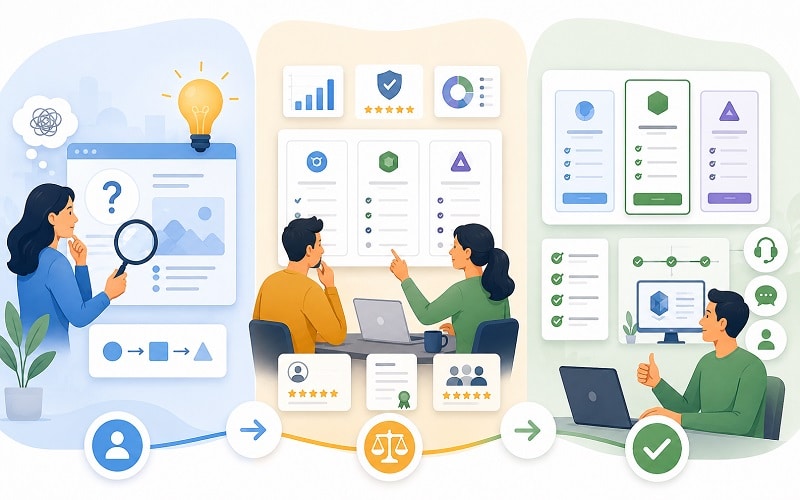
Audience preferences change with context. Someone discovering a problem may want a simple explanation, while a buyer comparing providers may need evidence, pricing context, implementation details, and clear FAQs.
Awareness content can include definitions and diagnostic guides. Consideration content may use comparisons, webinars, and case studies. Decision content should reduce risk and make the next step clear. After purchase, onboarding and education support retention.
Mapping content to the journey helps teams choose the best marketing channel for each business goal instead of selecting platforms simply because they are popular.
How to Use Audience Discussion Keywords for Company Content
The most useful keywords are connected to genuine questions and business needs. Organize them by topic, intent, audience segment, and decision stage.
A marketing consultancy might identify themes such as:
| Theme | Example Discussion | Content Opportunity |
| Uncertainty | “Which marketing service do we need?” | Service selection guide |
| Cost | “Is SEO worth the investment?” | ROI explanation |
| Comparison | “SEO or paid ads?” | Comparison article |
| Trust | “How do I evaluate an agency?” | Agency selection checklist |
| Performance | “Why is traffic not converting?” | Conversion guide |
| Planning | “What should we publish monthly?” | Content calendar |
This system helps the company build connected topic clusters instead of publishing isolated articles. It also prevents a common SEO problem: targeting several different intentions on one page.
A comparison query needs a comparison. A how-to query needs instructions. A commercial query needs a clear service explanation.
Companies planning an organic and paid strategy can support these discussions with content comparing SEO and paid ads for small businesses and explaining why SEO can become a long-term business investment.
Create an Audience Communication Strategy
An audience communication strategy defines what the company should say, who needs to hear it, where the message should appear, and what action should follow.
A strong strategy connects four elements:
- Message: What problem, goal, or question is being addressed?
- Evidence: What proof makes the message credible?
- Channel: Where is the audience most likely to receive and trust it?
- Action: What realistic next step matches the person’s readiness?
A first-time visitor may download a guide, while a qualified prospect may request a consultation. The call to action should match the stage of the relationship.
Paid campaigns should also reflect intent. Businesses comparing search platforms can review the differences between Microsoft Ads and Google Ads, while brands building awareness can learn how display advertising works.
Make Audience Feedback an Ongoing System
Audience feedback should not be collected once and forgotten. Markets change, competitors introduce new offers, platforms evolve, and customer expectations shift.
A practical feedback loop is simple:
- Collect questions, objections, reviews, and behavioural data.
- Group recurring themes.
- Prioritize issues by business impact.
- Update content, offers, or processes.
- Measure the response.
- Share findings across teams.
This loop can reveal product problems, pricing confusion, service delays, training gaps, or unmet demand. It also keeps keyword planning aligned with what customers currently care about rather than what the company assumes they care about.
Turn Audience Interaction Into Stronger Relationships
Meaningful audience interaction happens when a company contributes something useful. It may answer a specific question, acknowledge a concern, share an example, ask a thoughtful follow-up question, or direct someone to the right resource.
These actions support building relationships with customers because they demonstrate attention and accountability. A social media content calendar can help teams balance educational, promotional, and community-focused posts. Understanding why content goes viral can also improve reach without relying on empty trends.
Effective customer engagement strategies begin with better questions: What information is missing? Which result matters most? What would make the decision easier? Engagement should support awareness, understanding, qualified traffic, product adoption, retention, or advocacy—not simply more clicks or comments.
Align the Brand Audience With Positioning
A brand audience is not everyone who could buy. It is the group most likely to value the company’s approach, expertise, and point of view.
Clear positioning shows who the company serves, which problems it solves, how its approach differs, and why its claims are credible. Trying to appeal to everyone creates vague messaging, while specificity makes a business easier to understand and recommend.
Connect Audience Insights With SEO, AEO, and GEO
Audience insights improve SEO because they reveal the topics, phrases, and intentions behind searches. They also support answer engine optimization and generative engine optimization by helping companies create clear, structured, quotable answers.
A strong page should define the topic early, answer the main question directly, use descriptive headings, explain related concepts, include practical examples, and address likely follow-up questions.
AI systems and answer engines need context. A page filled with repeated keywords offers little value. A well-structured page explains the relationship between the audience, the problem, the company’s solution, and the expected outcome.
Companies developing this capability can explore AI-driven strategies for SEO and use AI visibility scorecards and reporting to connect content quality with measurable visibility.
Measure Whether Audience Understanding Improves Results
The right metrics depend on the business question. For content, review qualified visits, assisted conversions, branded search growth, and topic visibility. For campaigns, examine lead quality, landing-page conversion, acquisition cost, and return on advertising spend. For customer experience, monitor onboarding, retention, referrals, and recurring support themes.
No single metric represents the entire relationship. High traffic with weak lead quality may mean the content attracts the wrong audience. Reviewing common digital marketing mistakes can help teams identify gaps between research, execution, and measurement.
A Practical Audience Development Strategy

An effective audience development strategy can be built through five repeating stages:
- Listen to search queries, customer questions, objections, reviews, and behaviour.
- Organize the findings by topic, segment, intent, and journey stage.
- Create content and offers that answer important needs clearly.
- Distribute each message through the most appropriate channel.
- Measure the response and refine the strategy.
This process gives understanding your target audience a practical role in daily marketing. It becomes an ongoing business capability rather than a one-time exercise.
Common Mistakes to Avoid
Do not treat a keyword as a complete customer profile, rely only on internal opinions, create more segments than the team can use, or collect research without acting on it.
Using audience discussion keywords for company pages should never mean repeating an awkward phrase in every paragraph. Natural language, complete topical coverage, useful structure, and clear answers matter more than mechanical repetition.
Existing customers should not be ignored. They often provide the clearest information about expectations, friction, results, retention, and advocacy.
Frequently Asked Questions
What are audience discussion keywords for company marketing?
They are the words, questions, concerns, and topics customers use when discussing a company’s market, services, products, and related problems. They can be collected from search data, reviews, sales conversations, support interactions, social media, communities, interviews, and surveys.
How does a company identify its target audience?
Analyse existing customers, market demand, search behaviour, buying patterns, decision roles, pain points, desired outcomes, and channel preferences.
What is the difference between audience research and keyword research?
Keyword research studies the phrases people enter into search platforms. Audience research examines the wider context behind those phrases, including motivations, behaviours, objections, preferences, experiences, and buying decisions.
How often should audience research be updated?
Monitor audience signals continuously. Use monthly reviews for immediate changes and deeper quarterly or annual research for strategic planning.
How can audience insights improve content marketing?
Audience insights help companies choose relevant topics, match content to intent, answer real questions, use familiar language, select suitable formats, and create clearer calls to action.
Why is audience segmentation important?
Segmentation helps a company adapt its message to groups with different needs, roles, priorities, and levels of awareness. It improves relevance without requiring completely separate marketing for every individual.
What should a company do with audience feedback?
Categorize recurring feedback, assess its business impact, assign responsibility, make changes, and measure the response across marketing, sales, product, service, and customer experience.
Conclusion
When audience discussion keywords for company planning is treated as customer intelligence rather than a list of phrases, it can improve nearly every part of marketing. It helps businesses understand demand, clarify positioning, create relevant content, select suitable channels, strengthen engagement, and measure meaningful outcomes.
The process should be continuous. Listen to what the audience says, compare it with what people do, organize the findings, act on the strongest patterns, and measure the result.
AOK Marketing helps companies connect audience insight with SEO, paid media, content strategy, AI visibility, and conversion-focused execution. A structured audience strategy can turn scattered conversations into clearer decisions and measurable growth.
About The Author