Blogging remains one of the most effective ways to attract organic traffic, demonstrate expertise, answer customer questions, and build long-term visibility online. However, successful blogging in 2026 looks very different from the tactics that worked a decade ago.
Modern blogs need more than frequent publishing. They must satisfy search intent, provide useful and original information, offer a strong user experience, demonstrate expertise, and make content easy for both traditional search engines and AI-powered search experiences to understand.
Whether you are launching a new blog or improving an established website, these 70 blogging tips can help you create stronger content, improve SEO performance, grow your audience, and turn your blog into a more valuable marketing asset.
Plan Your Blogging Strategy
- Define the purpose of your blog. Decide what you want blogging to achieve before creating content. Goals may include organic traffic, leads, brand awareness, customer education, authority building, or supporting products and services.
- Understand your target audience. Learn what your ideal readers need, what problems they are trying to solve, and what questions they ask. Developing a clear buyer persona can make content planning more focused.
- Choose topics related to your expertise. Build your blog around subjects your business genuinely understands. Consistent topical focus helps readers recognize your expertise and creates a clearer overall content identity.
- Research search intent before selecting keywords. A keyword alone does not reveal what users expect. Look at whether searchers want a guide, definition, comparison, tutorial, product, service, checklist, or quick answer.
- Build topic clusters. Organize related articles around larger subjects instead of publishing disconnected posts. Supporting articles can strengthen broader cornerstone content through relevant internal links.
- Create an editorial calendar. Plan evergreen topics, seasonal opportunities, industry updates, and content refreshes in advance. A calendar helps maintain consistency without forcing unnecessary publishing.
- Study competing content. Review what already ranks for important topics and identify information competitors have missed. Your goal should be to create something more useful, not simply rewrite what already exists.
- Prioritize quality over volume. Publishing more often does not automatically produce better results. A thoughtful content marketing strategy should prioritize usefulness and relevance over arbitrary publishing quotas.
- Cover different stages of the customer journey. Some readers are discovering a problem while others are comparing solutions or preparing to buy. Create content that supports each stage naturally.
- Review your strategy regularly. Audience needs, competitors, search behavior, and business priorities change. Revisit your blogging plan throughout the year and adjust it when necessary.
Create Better Blog Content
- Answer the main question early. Avoid making visitors read several paragraphs before reaching useful information. Give them a concise answer near the beginning and provide additional depth afterward.
- Write clear, specific headlines. Strong headlines communicate exactly what readers will learn. Avoid vague titles or exaggerated clickbait that fails to match the actual article.
- Add something original. Include firsthand experience, expert observations, examples, case studies, original data, screenshots, or practical insights that make your article different from generic content.
- Keep introductions focused. Introductions should establish context without delaying the answer. Remove unnecessary background information that does not help readers understand the subject.
- Keep paragraphs readable. Shorter paragraphs make long articles easier to scan, particularly on mobile devices. Break complex ideas into manageable sections without making the writing feel fragmented.
- Use descriptive headings. Good headings help readers understand the structure of an article and quickly locate the information they need.
- Match content length to search intent. Do not expand a simple answer purely to reach a word count. At the same time, complex topics deserve enough depth to satisfy readers. Understanding short-form versus long-form content can help determine the right approach.
- Explain difficult concepts with examples. Realistic examples make complicated ideas easier to understand and give readers practical context.
- Maintain a consistent brand voice. Your content should sound recognizably connected to your organization while remaining clear and useful to the audience.
- Edit before publishing. Review every article for factual accuracy, repetition, broken links, readability, formatting, and unnecessary wording. Useful blog content techniques can help improve the final result.
Optimize Blog Posts for SEO
- Give every article one clear primary topic. Trying to rank one page for several unrelated subjects often weakens relevance. Keep the page focused on one central search intent.
- Use keywords naturally. Include important phrases where they make sense, but avoid repeating exact-match keywords unnaturally. Related terminology and entities can provide context without keyword stuffing.
- Optimize your SEO title. Write a unique title that accurately describes the page and encourages searchers to click. Include the primary topic naturally.
- Write a useful meta description. Summarize what readers will gain from the page in clear language. A strong description should support clicks rather than simply list keywords.
- Use clean URLs. Keep URLs short, descriptive, and easy to understand. Avoid unnecessary numbers, dates, parameters, or complicated folder structures when possible.
- Build useful internal links. Connect related pages where they genuinely help users continue their journey. Use descriptive anchor text rather than generic phrases such as “click here.”
- Cite credible external sources when needed. When discussing research, statistics, platform policies, or technical recommendations, link to authoritative primary sources whenever possible.
- Optimize images for performance and accessibility. Compress large files, use modern image formats where appropriate, specify suitable dimensions, and add descriptive alt text to meaningful images.
- Review important meta tags. Check titles, descriptions, canonical tags, and robots directives on important pages. This guide to essential SEO meta tags explains the signals worth reviewing.
- Avoid creating multiple pages for the same intent. Similar articles can compete against one another. When pages substantially overlap, consider consolidating them into a stronger resource.
Improve Technical SEO and User Experience
- Make your blog mobile friendly. Visitors should be able to read, navigate, and interact with your content comfortably on phones and tablets.
- Monitor Core Web Vitals. Loading speed, responsiveness, and visual stability affect the user experience. Improve performance problems that make pages frustrating to use.
- Simplify site navigation. Make important categories, services, and related resources easy to discover without requiring visitors to return to a search engine.
- Use HTTPS. Secure websites are a basic expectation for users, particularly when collecting contact information, account details, or payments.
- Fix broken links. Regularly identify internal and external links that return errors or lead to outdated destinations.
- Create a helpful 404 page. Instead of leaving visitors at a dead end, guide them toward popular resources, categories, search functionality, or important service pages.
- Maintain an accurate XML sitemap. Include canonical URLs that you actually want search engines to discover and avoid unnecessary redirects, errors, or non-indexable pages.
- Avoid intrusive design elements. Excessive pop-ups, advertisements, overlays, and sticky elements can make otherwise useful content difficult to consume.
- Run regular technical audits. Plugin updates, redesigns, migrations, and template changes can introduce unexpected SEO problems. Periodic technical SEO audits help uncover them.
- Maintain your CMS and plugins. Keep WordPress, plugins, themes, and security systems updated, and maintain dependable backups before major changes.
Optimize Content for AI Search and AEO
- Give direct answers to important questions. Concise answers near relevant headings make information easier for users and search systems to interpret.
- Use real questions as headings when appropriate. Customer questions can make excellent subtopics when they match actual search intent.
- Make entities clear. Use accurate names for companies, products, people, locations, services, technologies, and concepts instead of relying excessively on vague references.
- Demonstrate firsthand expertise. Include practical experiences, lessons, processes, opinions, and examples that show why the author is qualified to discuss the topic.
- Support factual claims. Cite original research, official documentation, recognized organizations, or primary sources when making important factual statements.
- Structure information clearly. Definitions, concise paragraphs, comparisons, tables, and descriptive headings can make important information easier to locate and understand.
- Write for people first. Do not create unnatural content purely to target AI search systems. Content still needs to solve a genuine problem for the reader.
- Use FAQs where they provide real value. Frequently asked questions can capture additional search intent and give users concise answers, but avoid adding generic questions simply for SEO.
- Keep information current. Update old statistics, software recommendations, screenshots, terminology, platform features, and references when they become outdated.
- Build authority across related topics. One article rarely demonstrates comprehensive expertise. Create a connected body of useful content around your core subjects.
Promote and Distribute Blog Content
- Promote content on relevant channels. Choose platforms based on where your audience actually spends time rather than automatically sharing everything everywhere.
- Repurpose your strongest articles. Turn useful blog content into LinkedIn posts, videos, email newsletters, social graphics, presentations, or other formats suited to your audience.
- Build an email audience. Email provides a direct way to reconnect with people who have already shown interest in your business or content.
- Continue promoting evergreen content. A useful article can remain valuable long after publication. Reshare it when the subject becomes relevant again.
- Test different publishing times. Audience behavior varies between industries and platforms. Use your own performance data while considering research into the best times to post on social media.
- Participate in useful communities. Industry groups, professional networks, forums, and niche communities can introduce your expertise to new audiences when participation is genuine.
- Create content worthy of digital PR. Original studies, expert surveys, unique statistics, useful tools, and strong data-driven resources are more likely to attract coverage and backlinks.
- Collaborate with knowledgeable experts. Expert contributions can add credibility, firsthand insight, and additional perspectives to your content.
- Connect informational content with relevant services. When appropriate, guide readers from educational articles toward services or solutions that help solve the problem discussed.
- Use social promotion to attract qualified visitors. The goal should be relevant traffic rather than vanity metrics. Strategic social posts can increase website traffic when the audience and content are aligned.
Measure, Refresh and Improve Your Blog
- Use Google Search Console. Monitor search queries, impressions, clicks, indexing, and page performance to understand how your content appears in Google Search.
- Use GA4 to understand visitor behavior. Track traffic sources, engagement, important events, and conversions after visitors reach your website.
- Measure conversions as well as traffic. High traffic is not always valuable if visitors never take meaningful actions. Track leads, sales, downloads, bookings, or other outcomes connected to business goals.
- Identify articles losing organic visibility. A previously successful page may decline because information becomes outdated, competition improves, or search intent changes.
- Watch for content decay. Even strong articles have a limited competitive lifespan. Understanding the half-life of content can help identify when a refresh is needed.
- Refresh strong pages instead of always publishing new ones. Updating a relevant established URL can sometimes provide more value than creating another article targeting the same topic.
- Consolidate thin or overlapping content. Merge weak pages when several URLs answer essentially the same question, and redirect obsolete versions where appropriate.
- Audit internal links after major updates. A refreshed article often creates new opportunities to link to newer resources and remove old or redirected destinations.
- Measure performance over meaningful periods. Avoid making major SEO decisions based on a few days of data. Look for longer-term changes in clicks, rankings, conversions, and audience behavior.
- Keep improving your strongest content. Successful articles should not be forgotten. Add new insights, updated examples, better visuals, stronger internal links, and clearer answers as the topic evolves.
Conclusion
Blogging in 2026 is not about publishing as many articles as possible or following outdated SEO checklists. Sustainable results come from understanding your audience, creating genuinely useful content, maintaining strong technical foundations, optimizing for search intent, and continuously improving the pages that already perform.
The rise of AI-powered search makes clarity, originality, expertise, and trustworthy information even more important. Content that simply repeats what already exists has less reason to stand out, while articles built around real experience, useful examples, credible sources, and clear answers can continue earning visibility across search, social media, and emerging discovery platforms.
Treat every blog post as a long-term marketing asset. Research it carefully, make it easy to navigate, connect it to relevant resources, promote it beyond publication day, measure how it performs, and refresh it when information changes.
A successful blog is rarely built by one viral article. It grows through a consistent collection of useful resources that earn trust, answer important questions, and help readers take the next step.
Frequently Asked Questions About Blogging in 2026
What is the most important blogging tip for 2026?
The most important blogging tip is to create content that genuinely satisfies the reader’s intent. Answer the main question clearly, add original expertise or examples, and make the page easier to understand and use than competing resources.
Is blogging still good for SEO in 2026?
Yes. Blogging can still support SEO when articles address relevant search demand, demonstrate expertise, build topical coverage, earn internal and external links, and guide visitors toward important business pages. Publishing generic content simply to increase page count is much less effective.
How often should a business publish blog posts?
There is no universal publishing frequency. A business should publish as often as it can consistently produce useful, accurate, and well-researched content. One strong article can provide more long-term value than several thin posts created only to meet a schedule.
How do you optimize a blog for AI search and answer engines?
Provide clear answers, use descriptive headings, identify important entities, include reliable sources, add firsthand expertise, and keep information current. Structure important sections so they can be understood without requiring excessive context from elsewhere on the page.
Should old blog posts be updated or replaced?
Update an existing post when the URL still targets the correct search intent and has useful content, links, rankings, or historical value. Consolidate or redirect pages when several articles substantially overlap or when an older page no longer deserves to exist independently.
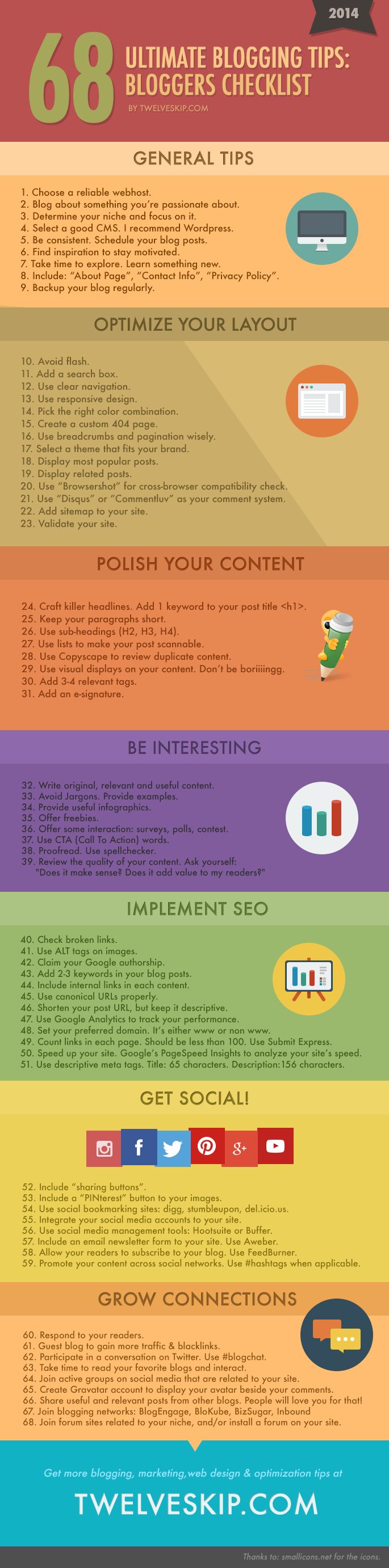
Source: http://www.twelveskip.com/
About The Author