Snapchat for brands can be a powerful way to connect with younger audiences through short, visual, and highly personal content. Unlike traditional social platforms where content stays visible for a long time, Snapchat was built around quick updates, temporary posts, and casual communication. This makes it especially useful for brands that want to feel more human, direct, and entertaining.
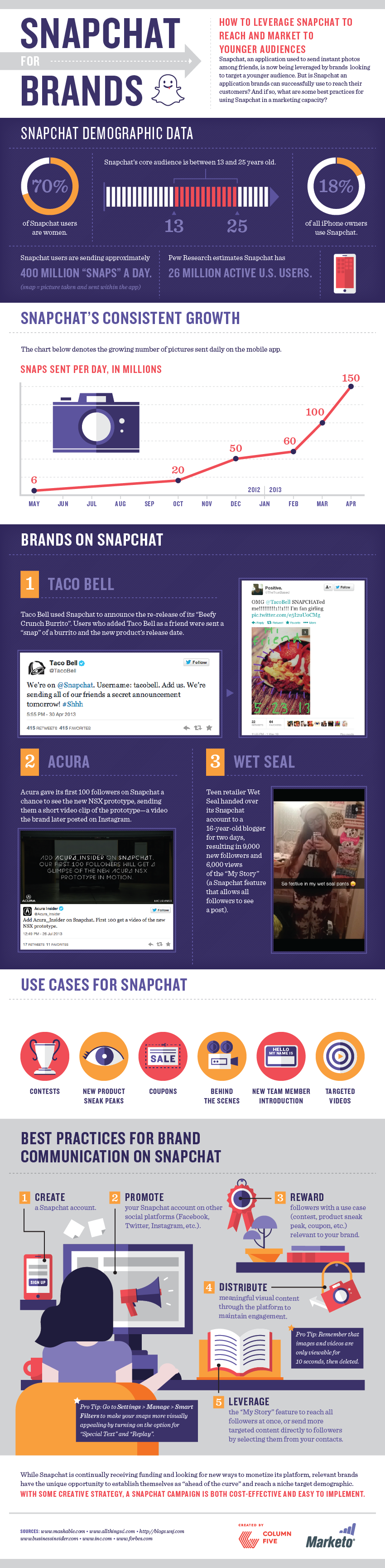
The infographic above explains how brands started using Snapchat to reach younger users through contests, sneak peeks, coupons, behind-the-scenes content, product previews, and targeted videos. While the platform has evolved since the early days shown in the infographic, the core marketing lesson is still relevant: younger audiences respond well to content that feels authentic, immediate, and created for the platform.
For businesses, the challenge is not just creating a Snapchat account. The real challenge is giving people a reason to follow, watch, and engage. A strong Snapchat strategy needs creative ideas, consistent promotion, mobile-friendly messaging, and a clear link to the wider marketing funnel.
What Makes Snapchat Different for Brands?
Snapchat is different because it is fast, visual, and personal. People do not usually open Snapchat to read long posts or formal brand messages. They open it to see quick updates, stories, videos, and content that feels real. This means brands need to avoid sounding too polished or corporate.
Snapchat works best when the content feels casual and immediate. A product sneak peek, a short behind-the-scenes clip, a quick discount code, or a limited-time announcement can feel more natural on Snapchat than a long promotional post.
This is why Snapchat marketing should be part of a broader social media management plan. Each platform has a different role. Instagram may support visual branding, LinkedIn may support authority, Facebook may support community, and Snapchat can help brands create quick, direct moments with younger users.
Why Snapchat Appeals to Younger Audiences
The infographic highlights Snapchat’s early audience as being heavily focused on younger users. That matters because younger audiences often expect brands to communicate in a more visual, informal, and mobile-first way. They are less likely to engage with slow, generic, or overly sales-focused content.
For younger users, brand trust is often built through personality. They want to see what a brand stands for, how it behaves, and whether it understands their lifestyle. Snapchat gives brands a chance to show this through short content instead of long explanations.
A clothing brand can show how a product looks in real life. A restaurant can show a behind-the-scenes kitchen moment. A college, event brand, or retail store can use Snapchat to create urgency around a limited-time offer. The goal is to make the audience feel like they are getting access to something timely and exclusive.
How Brands Can Use Snapchat Effectively
The infographic lists several strong use cases for Snapchat, including contests, new product sneak peeks, coupons, behind-the-scenes content, team introductions, and targeted videos. These ideas are still useful because they give users a clear reason to pay attention.
Contests
Contests can encourage people to follow a brand, submit content, or respond to a campaign. For example, a brand might ask users to send a snap using a product, answer a question, or participate in a limited-time challenge.
New product sneak peeks
Snapchat is a good place to reveal something before it appears elsewhere. This can make followers feel like insiders and increase excitement before a launch.
Coupons and limited-time offers
Because Snapchat content is time-sensitive, it works well for urgency. A short-lived promo code or flash sale can encourage quick action.
Behind-the-scenes content
Behind-the-scenes content helps brands feel more human. This can include staff moments, product preparation, event setup, office culture, packaging, or day-in-the-life clips.
New team member introductions
Introducing people behind the brand can build trust. This is especially useful for service businesses, agencies, schools, local businesses, and companies where personal connection matters.
Targeted videos
Short targeted videos can support awareness, engagement, and retargeting when connected with a clear campaign goal.
These content types work best when they are connected to a larger content creation strategy. Posting randomly may create activity, but it will not always create results. Each post should support a clear marketing purpose.
The Challenge of Growing a Snapchat Audience
One of the biggest challenges for brands on Snapchat is audience growth. Unlike some platforms where users can easily discover content through feeds, search, or hashtags, Snapchat has often required brands to promote their account across other channels.
That means brands should not treat Snapchat as a standalone channel. They should promote it through email, website banners, Instagram, TikTok, Facebook, X, packaging, events, and in-store signage where relevant.
For example, a business can add a Snapchat callout to its website, include it in a newsletter, or promote it during a product launch. A landing page can also explain why people should follow the brand on Snapchat, especially if the business offers exclusive discounts, early access, or behind-the-scenes updates.
A focused landing page development strategy can help turn campaign interest into measurable action. Instead of simply saying “follow us,” the page can explain what users get by joining the Snapchat audience.
Best Practices for Brand Communication on Snapchat
The infographic outlines a simple process for brand communication on Snapchat: create an account, promote it, reward followers, distribute meaningful visual content, and use relevant platform features. That framework is still useful for brands building a campaign today.
The first step is creating a clear reason for the account to exist. A brand should define what followers will receive. Will they get exclusive content, discounts, event updates, product previews, tutorials, or quick entertainment? Without a clear value, users have little reason to stay engaged.
The second step is promotion. Brands should use their existing audience to build Snapchat followers. This includes website visitors, email subscribers, social media followers, customers, and event attendees.
The third step is rewarding followers. This does not always need to be a discount. A reward can be early access, insider content, recognition, entertainment, helpful tips, or participation in a campaign.
The fourth step is distributing content consistently. Snapchat should not be abandoned after one campaign. If people follow a brand and nothing happens, the channel loses value.
The fifth step is testing and learning. Brands should track what types of content create views, replies, screenshots, traffic, and conversions.
Snapchat and Mobile-First Marketing
Snapchat is a mobile-first platform, so brands need to think in mobile-first terms. Content should be vertical, fast, visual, and easy to understand without long explanations. This is different from repurposing a desktop ad or long video.
Mobile-first marketing also means the customer journey after Snapchat needs to work well. If users swipe, tap, search, or visit a page after seeing Snapchat content, the website must load quickly and display properly on a phone.
A poor mobile experience can waste the attention created by Snapchat. Brands should review their website design and make sure mobile users can easily find information, complete forms, redeem offers, or buy products.
How Snapchat Supports Brand Awareness
Snapchat can be especially useful for brand awareness because it allows businesses to show personality. A brand does not always need a hard sales message. Sometimes the goal is simply to become familiar and memorable.
For example, a retail brand might show outfit ideas. A food brand might show short preparation clips. A fitness brand might show quick workout moments. A college or training provider might show campus life. A digital marketing agency might show campaign tips or behind-the-scenes work.
The content should match the brand’s voice. If the business is fun and youthful, the content can be playful. If the brand is more professional, the content can still be simple, helpful, and human without becoming too casual.
This is where web content and social content should support each other. Social content can create attention, while website content can provide deeper answers when users want more information.
Snapchat, Influencers, and Partnerships
Snapchat can also work well with influencer and partnership campaigns. Younger audiences often trust creators who already have a strong relationship with their followers. A brand can work with influencers to show products, share offers, host takeovers, or promote campaigns.
However, influencer campaigns need to be planned carefully. The creator should match the audience, values, and tone of the brand. The campaign should also have a clear goal, such as awareness, traffic, sign-ups, sales, or event attendance.
A strong affiliate and influencer marketing strategy can help brands avoid random partnerships and focus on creators who can actually support business goals.
How Snapchat Fits Into a Full Digital Marketing Strategy
Snapchat should not be isolated from the rest of the marketing plan. It should connect with paid ads, organic social content, email, landing pages, website content, and conversion tracking.
For example, a brand might launch a product teaser on Snapchat, promote the offer through paid social, send an email campaign, and direct users to a landing page. Each part of the campaign supports the same message, but the format changes based on the platform.
This is how businesses can get more value from Snapchat. The platform can create attention and engagement, while other channels help capture leads, build trust, and drive conversions.
Businesses that want to connect multiple channels can review AOK Marketing’s digital marketing services to see how social media, paid ads, content, SEO, and conversion strategy can work together.
Measuring Snapchat Marketing Success
A Snapchat campaign should be measured against clear goals. Views are useful, but they are not the only metric. Brands should also look at engagement, replies, screenshots, link clicks, coupon redemptions, website visits, leads, and sales where tracking is possible.
The right metrics depend on the campaign. If the goal is awareness, views and reach may matter most. If the goal is sales, traffic and conversions matter more. If the goal is customer loyalty, replies, repeat views, and engagement may be more useful.
Brands should also pay attention to qualitative feedback. If people respond positively, ask questions, or share content, that can reveal what the audience cares about.
Final Thoughts
Snapchat for brands works best when businesses understand the platform’s strengths. It is fast, visual, mobile-first, and well-suited for younger audiences. It is not the best place for long explanations or generic corporate messaging. It is a place for timely, creative, and personal communication.
The infographic shows that early brand use cases included contests, coupons, product sneak peeks, behind-the-scenes content, and targeted videos. These ideas remain useful because they give audiences a reason to engage.
To make Snapchat work, brands need more than an account. They need a clear content strategy, audience promotion plan, mobile-friendly website, creative campaign ideas, and a way to measure results. When Snapchat is connected to the full digital marketing funnel, it can support awareness, engagement, trust, and conversions.
For more guidance, explore AOK Marketing’s resources or request a free growth proposal to identify better ways to reach and convert your audience.
Source: www.mashable.com
About The Author
Khalid Essam
Khalid is the Chief of Staff at AOK. He collaborates with a team of specialists to develop and implement successful digital campaigns, ensuring strategic alignment and optimal results. With strong leadership skills and a passion for innovation, Khalid drives AOK’s success by staying ahead of industry trends and fostering strong client and team relationships.