Your company blog should do more than publish updates, event recaps, and general company news. A strong blog should support business blog lead generation by attracting the right audience, building trust, improving search visibility, and guiding visitors toward the next step. When done well, your blog becomes one of the most useful assets in your marketing strategy because it helps turn traffic into qualified leads over time.
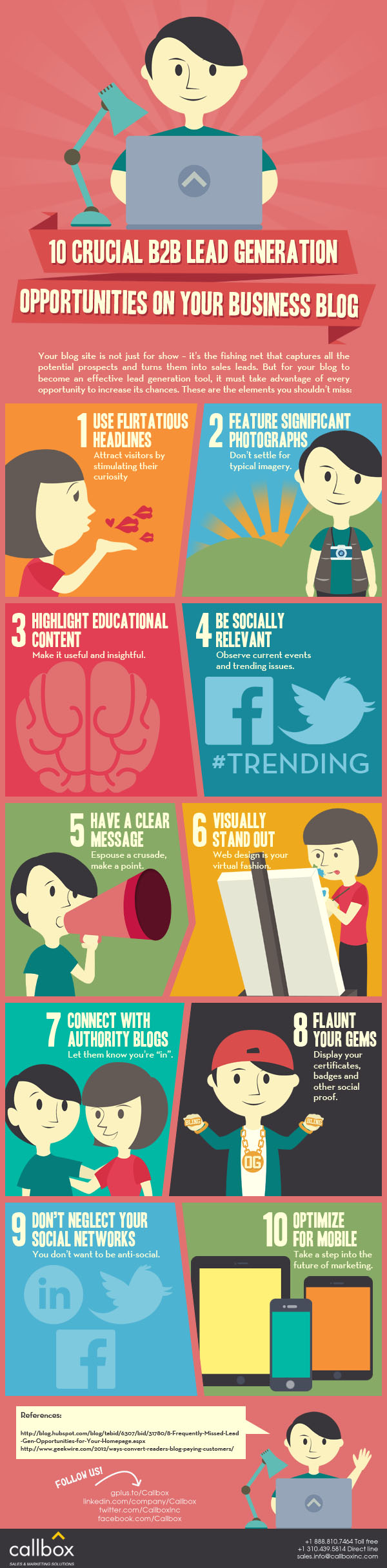
The infographic above highlights 10 important blog elements that can improve your chances of generating leads. These include stronger headlines, more educational content, better visuals, relevant social content, clear messaging, mobile optimization, and stronger authority signals. None of these tactics work in isolation. Together, they help your blog become a more valuable part of your digital marketing funnel.
If your goal is to increase leads, improve engagement, and get more value from your content, your blog needs to be built for more than visibility alone. It needs to be built for conversion.
Why Business Blog Lead Generation Matters
A business blog can support every stage of the buyer journey. At the top of the funnel, it helps people discover your brand through search and social media. In the middle of the funnel, it helps educate visitors, answer questions, and build trust. At the bottom of the funnel, it can drive users toward contact forms, service pages, demos, consultations, or other conversion points.
That is why lead generation blog strategy matters. Without a clear strategy, a blog may bring traffic but fail to produce business value. With the right approach, it can support long-term content marketing lead generation by bringing in relevant visitors who are already interested in your topic, solution, or service.
A better blog starts with better structure, better messaging, and better intent. Helpful web content plays a major role here because the quality of the writing often determines whether a visitor keeps reading or leaves.
1. Use Strong Headlines That Spark Curiosity
The infographic refers to “flirtatious headlines,” but the core idea is clear: write headlines that attract attention and make readers want to learn more. A good blog title is one of the most important parts of blog lead generation strategies because it affects click-through rates from search, social media, and email.
A weak headline can cause a strong article to be ignored. A better headline creates curiosity while still staying clear and relevant. For example, instead of using a vague title like “Our Thoughts on Marketing,” a more useful headline would be “10 Ways to Improve Business Blog Lead Generation.”
Strong blog titles often include:
- A clear benefit
- A number or structure
- A pain point or challenge
- A target audience
- A keyword phrase people are searching for
This is where smart content creation can make a difference. Great content starts before the first paragraph. It starts with a headline that earns the click.
2. Feature More Compelling Visual Content
Blogs that rely only on text can feel flat, especially when the topic is complex or competitive. Good visuals help break up content, improve readability, and make key ideas easier to understand. They can also make your blog more shareable and memorable.
Visual content for business blogging for leads can include:
- Custom graphics
- Infographics
- Screenshots
- Charts
- Product images
- Team photos
- Branded illustrations
- Videos and embedded demos
The goal is not decoration alone. Visuals should support the message and help the visitor stay engaged. Good website design also helps here, because layout, spacing, and visual hierarchy affect how users interact with blog content.
3. Highlight Educational Content
Educational content is one of the strongest drivers of B2B blog lead generation. People visit blogs because they want answers, ideas, and guidance. If your content teaches them something useful, they are more likely to stay, return, and trust your brand.
Educational blog topics might include:
- How-to articles
- Step-by-step guides
- Industry explainers
- Strategy breakdowns
- Best practice articles
- FAQs
- Mistake-avoidance content
- Comparison posts
Educational content works because it meets search intent. It also positions your business as knowledgeable and helpful instead of purely promotional. If your blog solves problems, readers begin to see your brand as a credible source.
This is also where your blog can support your wider services. Educational articles can naturally guide readers toward relevant solutions when they are ready to take the next step.
4. Be Socially Relevant
A blog does not exist in a vacuum. To support lead generation opportunities more effectively, your content should connect with what your audience is already talking about. That includes current trends, industry news, seasonal changes, platform updates, and common customer concerns.
Being socially relevant does not mean chasing every trend. It means paying attention to conversations that matter to your audience and using those topics to create timely content.
For example, your business blog can:
- Comment on industry shifts
- Explain how a new update affects customers
- Share insights on trending topics
- Link current events to customer challenges
- Repurpose blog content across social channels
A strong social media management strategy can help your business distribute relevant blog content more effectively and bring social traffic back to your site.
5. Have a Clear Message
A blog post should always have a clear purpose. If readers finish an article and still do not understand what point you were making or what they should do next, the content is not doing enough for blog traffic conversion.
Clear messaging means:
- Staying focused on one main topic
- Matching the article to search intent
- Explaining ideas in plain language
- Avoiding unnecessary filler
- Providing a logical next step
Every post should answer a specific question or solve a specific problem. It should also align with your brand’s overall message. If your business helps clients improve digital performance, your blog should reinforce that through each article, not wander without direction.
6. Visually Stand Out
In competitive industries, average content gets ignored. If your blog looks outdated or hard to scan, visitors may leave before reading. Visual differentiation matters for both engagement and conversion.
To visually stand out, your blog should have:
- Clean formatting
- Clear headings
- Short paragraphs
- Consistent branding
- Readable fonts
- Strong featured images
- Helpful design elements like callout boxes or bullets
These details improve the reading experience and make it easier for users to engage with the content. Strong formatting also supports blog conversion optimization because users are more likely to continue reading and click through when the experience feels professional.
If your blog is getting traffic but not enough conversions, it may be worth reviewing both the design and user flow as part of a conversion rate optimization strategy.
7. Connect With Authority Blogs and Trusted Sources
Authority matters in lead generation. When your blog content references respected sources, connects with trusted publications, or earns mentions from relevant industry websites, it becomes more credible. This can also support SEO and brand trust.
Connecting with authority blogs can happen in several ways:
- Referencing credible sources
- Quoting useful data
- Collaborating on content
- Writing guest posts
- Building relationships with industry voices
- Creating content worthy of backlinks
Authority also grows when your content is consistently useful. Over time, readers and search engines begin to see your site as a trusted source. That is one reason why many businesses invest in a long-term blog and resource strategy instead of treating content as a one-time task.
8. Flaunt Your Gems With Social Proof
Your blog should not only educate. It should also reinforce why readers should trust your business. Social proof helps bridge that gap. It shows that other people value your work, your service, or your expertise.
Examples of social proof include:
- Testimonials
- Client logos
- Certifications
- Awards
- Case studies
- Results data
- Reviews
- Trust badges
For lead generation, this matters because visitors often need reassurance before they convert. If your content is helpful and your credibility is visible, readers are more likely to move forward. This is especially effective when blog content links naturally to relevant case studies or supporting pages.
9. Do Not Neglect Your Social Networks
A blog can generate leads more effectively when it is supported by distribution. Publishing great content is only part of the job. You also need to get that content in front of the right audience.
Social media helps extend the reach of your blog by:
- Driving traffic from organic posts
- Increasing visibility for new content
- Supporting retargeting campaigns
- Encouraging sharing and engagement
- Building repeat audience behavior
When someone reads a useful article and then sees more helpful content from your brand on social media, trust grows. That is why blog content and social promotion should work together instead of being treated separately.
10. Optimize for Mobile
Mobile optimization is no longer optional. Many users will read your blog on their phones, and if the experience feels slow, cluttered, or difficult to navigate, they are likely to leave.
For business blog lead generation, mobile optimization affects both engagement and conversion. If calls to action are hard to tap, forms are hard to complete, or content is hard to read, you will lose potential leads.
A mobile-friendly blog should include:
- Fast page speed
- Responsive design
- Readable text
- Optimized images
- Easy navigation
- Clear CTAs
- Simple forms
This is especially important if your blog sends visitors to service pages, contact forms, or campaign offers. For lead-focused campaigns, strong landing page development can help create a smoother path from blog visit to conversion.
Turn Blog Traffic Into Real Leads
Many businesses are happy when blog traffic increases, but traffic is not the final goal. The real goal is to turn that traffic into meaningful action. That means every article should support a next step, whether that is downloading a guide, requesting a proposal, visiting a service page, or contacting your team.
A lead-focused blog usually includes:
- Internal links to relevant service pages
- Strategic calls to action
- Related articles that keep users engaged
- Trust-building proof points
- Helpful content upgrades or offers
- Simple paths to contact or conversion
When these elements work together, your blog stops being just a publishing platform and starts becoming a real part of your lead generation funnel.
Final Thoughts
A business blog can become one of your most valuable lead generation tools, but only if it is built with purpose. The infographic above highlights several practical ways to improve business blog lead generation, from better headlines and educational content to social relevance, mobile optimization, and stronger authority signals.
If your blog is currently publishing content without producing enough business value, the answer is not to stop blogging. The answer is to make your blog more strategic. Focus on helpful content, stronger design, clearer messaging, and better conversion paths. That is how you turn a basic company blog into a real lead generation asset.
If you want to improve your content strategy, explore AOK Marketing’s resources or request a free growth proposal to find better ways to turn your website content into leads.
Source: www.callboxinc.com
About The Author