If you haven’t read the core framework yet, start there. This piece goes deep on one angle: long-tail queries and how to win them in AI-driven search.
You can write the best long-tail page on the planet and still be invisible.
Because AI can’t cite what it can’t find. In 2026, “indexing” is still the foundation underneath AI answers.
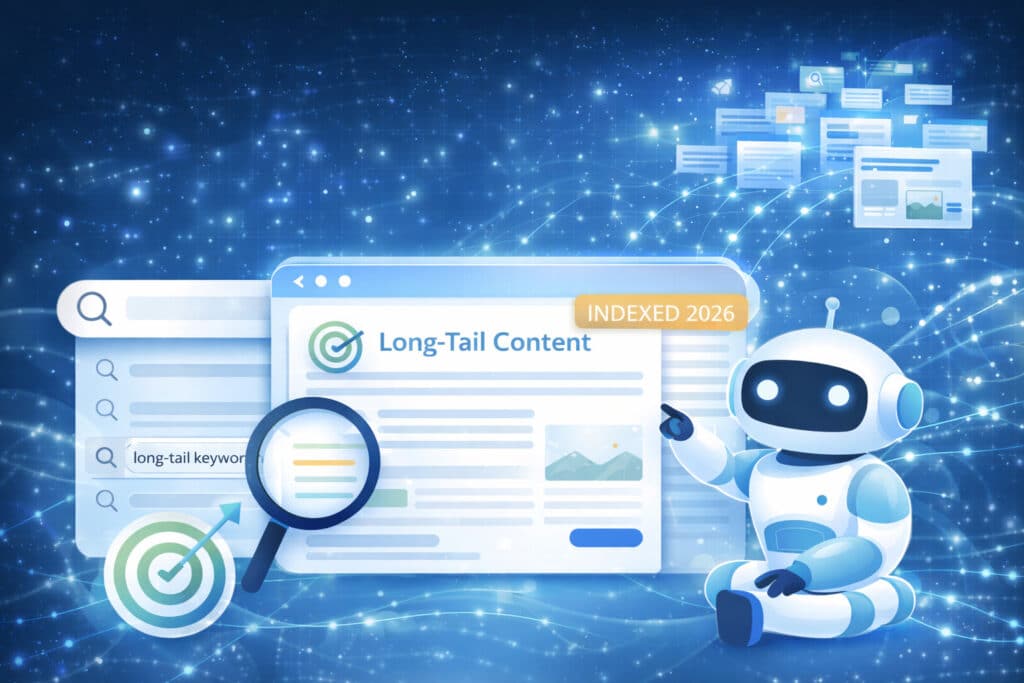
1) Long-tail content is indexed the same way – but selected differently
Crawling and indexing fundamentals still apply. What changed is selection: AI answers are assembled from sources, so your content has to be retrievable and quotable.
2) The snippet gate: indexing eligibility still matters
To show up as a supporting link in AI answers, your page must be indexed and eligible to show a snippet. If you fail this gate, you’re out.
3) Why long-tail triggers AI features more often?
Longer, informational queries give systems more context. Many analyses show AI answers are more likely to appear on long-tail informational queries.
4) Extractability is the hidden indexing multiplier
Indexing is storage. Selection is extraction.
Format your long-tail pages so machines can “chunk” them into usable parts:
- Short paragraphs
- Descriptive headings
- Bullets and numbered steps
- Definitions
- Key takeaways blocks
- FAQs with direct answers
5) Structured data and long-tail indexing
Structured data can reinforce what’s on the page, but it must match visible content. Use it to clarify entities and reduce ambiguity.
6) Images, alt text, and machine understanding
If you use diagrams or screenshots, write descriptive alt text and avoid keyword stuffing. Surround images with clear text that explains what the image demonstrates.
7) Crawl controls: robots.txt is not invisibility
Robots.txt can control crawling, but it’s not a perfect shield. Disallowed URLs can still be indexed if other pages link to them, and different crawlers interpret directives differently.
8) Timing: indexing and recrawl aren’t instant
Crawling and recrawling can take days to months. Plan long-tail publishing as a system: publish, link, and refresh over time.
9) The 2026 long-tail indexing checklist
Discovery
- Link from pillar pages and hub pages
- Link from relevant category/service pages
- Build a glossary/FAQ hub that points to deep pages
Eligibility
- Ensure indexability (no accidental blocks)
- Keep core answers in text
- Use structured data that matches visible content
Extractability
- Add a quick answer block near the top
- Use headings, bullets, definitions, and FAQs
Maintenance
- Monitor impressions and updates
- Refresh quarterly or when questions change
See Also: How to Optimize for Long-Tail Keywords in AI Search Engines (2026)
Key takeaways
- Indexability and snippet eligibility are the gate for AI visibility.
- AI systems assemble answers from sources, so write content that’s easy to extract.
- Internal links help discovery, especially for deep long-tail pages.
- Structured data and alt text help machines understand what you mean.
Sources
- AOK Marketing – “How To Get Found In AI Search”:
- Google Search Central – “AI Features and your website”:
- Google Search Central – SEO Starter Guide:
- Google Crawling Infrastructure – “How Google interprets the robots.txt specification”:
- Google Search Central – Intro to structured data:
- Google Search Central – Image SEO best practices (alt text):
About The Author