AI-generated images are becoming increasingly common in digital marketing. Businesses are using them for blog covers, social media posts, advertisements, email campaigns, product concepts, presentations, and website graphics.
Their appeal is easy to understand. AI tools can produce customized visuals quickly, help teams explore creative ideas, and reduce the need to rely entirely on generic stock photography. At the same time, their use raises questions about copyright, trademarks, personal likenesses, disclosure requirements, advertising standards, and platform rules.
So, are AI-generated images safe to use in marketing?
The most accurate answer is that they can be used responsibly, but they should not be treated as automatically risk-free.
AI-generated content is not inherently legal or illegal, ethical or unethical, safe or unsafe. Much depends on how the image was created, what it contains, where it will be published, what claims it communicates, and whether a business reviews it before use.
The legal position can also differ between countries and may continue to change as courts, regulators, and technology platforms develop new rules.
For marketers, the practical goal is not to avoid every AI-generated image or publish them without concern. It is to understand the main areas of risk and establish a responsible review process.
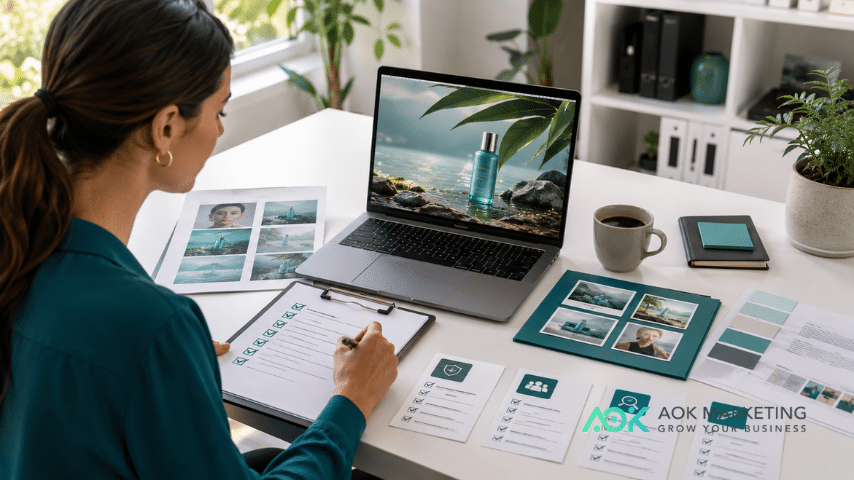
Understanding Copyright and AI-Generated Images
Copyright is one of the most discussed issues surrounding generative AI.
There are two separate questions that businesses should consider:
- Does the generated image infringe someone else’s copyright?
- Can the business claim copyright protection over the generated image?
These questions are related, but they are not the same.
Can AI-Generated Images Be Copyrighted?
In the United States, copyright protection generally depends on human authorship. The U.S. Copyright Office has stated that copyright can protect original human-created expression contained within a work that also includes AI-generated material. However, purely AI-generated material, or material created without sufficient human control over its expressive elements, may not receive copyright protection.
The Copyright Office also takes the position that prompts alone will not necessarily be enough to establish human authorship. Human selection, arrangement, modification, editing, and creative contribution may be protected when those contributions are sufficiently original. Each work must be considered according to its specific circumstances.
This does not mean that businesses cannot use AI-generated images. It means that the level of exclusive ownership they can claim may be uncertain.
For example, a marketer who generates an image and publishes it without making meaningful changes may have a weaker claim to copyright protection than a designer who combines several generated elements, edits the composition, adjusts colours, adds original typography, and integrates the image into a larger campaign design.
Copyright standards may be different in other countries. Businesses operating internationally should avoid assuming that one country’s approach applies everywhere.
Could an AI Image Infringe Existing Copyright?
A generated image may resemble existing artwork, photography, characters, or other protected material.
The fact that an image was created by an AI tool does not automatically prevent an infringement claim. A business could still face concerns if the final visual is substantially similar to an identifiable protected work or reproduces recognizable creative elements without permission.
The level of risk may increase when prompts specifically request:
- A copyrighted character
- An exact movie scene
- A recognizable advertising campaign
- A living artist’s distinctive work
- A near-copy of a particular photograph
- Protected packaging or product artwork
Asking for a general category, such as “a colourful editorial illustration,” is different from requesting an exact recreation of a named artist’s work.
A sensible approach is to use AI for original concepts rather than deliberate imitation. Marketers should also review generated images for accidental similarities, especially before using them in a major campaign.

Trademarks, Logos, and Brand Confusion
Trademarks protect signs that help consumers identify the source of products or services. These can include business names, logos, slogans, symbols, and distinctive branding.
AI image generators may sometimes introduce recognizable logos, brand-like symbols, product packaging, or text even when they were not specifically requested. These details should not be ignored.
In the United States, trademark issues often focus on whether a mark is confusingly similar to an existing mark and whether it is used in connection with related goods or services. Marks do not need to be identical to create possible confusion; similarities in appearance, meaning, sound, or overall commercial impression may matter.
For marketers, this means an AI-generated image should be checked for:
- Existing company logos
- Altered versions of recognizable logos
- Branded uniforms or signs
- Distinctive product packaging
- Trademarked characters or mascots
- Symbols that could imply sponsorship
- Unintended brand names in the background
A generated image of a café, for example, might include a fictional-looking logo that closely resembles a real coffee chain. A generated shoe might include a symbol similar to an established sportswear brand.
These details may be small, but they can still create an unwanted commercial association.
The safest practice is usually to generate products, signs, clothing, and packaging without branding, then add the business’s authorized logo during post-production.
Businesses should also avoid using another company’s trademark in a way that suggests endorsement, partnership, approval, or sponsorship when no such relationship exists.
Personal Likenesses and AI-Generated People
AI tools can create fictional people, alter photographs of real people, and produce images that resemble celebrities, employees, customers, influencers, or members of the public.
This creates several potential issues, including privacy, publicity rights, consent, misrepresentation, and reputational harm.
A person’s right to control the commercial use of their name, image, identity, or likeness varies by jurisdiction. Some locations have specific right-of-publicity laws, while others address similar issues through privacy, consumer protection, passing-off, personality rights, or unfair competition rules.
Risk may be higher when an AI-generated image:
- Clearly resembles a real person
- Places a person in a situation that never happened
- Suggests that someone uses or endorses a product
- Uses an employee’s face without permission
- Alters a customer photograph beyond the agreed purpose
- Depicts a public figure making a commercial endorsement
- Includes children or other potentially vulnerable individuals
The U.S. Copyright Office has separately examined the growing issue of digital replicas, including technology used to realistically reproduce a person’s appearance or voice. It has recognized that unauthorized digital replicas can create concerns extending beyond traditional copyright law.
Businesses should be particularly cautious when a visual could be understood as a testimonial or endorsement.
A fictional-looking person holding a product may communicate approval even when no written claim appears. The U.S. Federal Trade Commission notes that visual product placement can sometimes communicate endorsement depending on the context, and material relationships associated with endorsements may need clear disclosure.
A practical rule is simple: do not use a recognizable person’s likeness in marketing without appropriate permission, especially when the image implies that the person supports the brand.
Do AI-Generated Images Need to Be Disclosed?
There is no single global rule requiring every AI-generated marketing image to carry a label.
Disclosure requirements depend on the location, platform, type of image, industry, and risk that the content could mislead viewers.
A decorative abstract background may not raise the same transparency concerns as a realistic image showing a chief executive, doctor, political figure, customer, disaster, product result, or historical event.
Disclosure becomes more important when an image could reasonably be mistaken for documentary evidence or a real event.
Examples may include:
- A fabricated customer testimonial
- A fictional before-and-after result
- An AI-generated news photograph
- A fake event image
- A synthetic spokesperson
- A realistic product feature that does not exist
- A public figure apparently endorsing a company
- An altered image showing someone doing something they did not do
The European Union’s AI Act includes transparency requirements for certain AI-generated and manipulated content. Article 50 transparency obligations apply from August 2, 2026, including rules concerning machine-readable marking and disclosures for certain deepfakes and AI-generated material. The exact obligations and exceptions depend on the type of system, content, and user involved.
A disclosure does not necessarily need to be dramatic. Depending on the context, wording such as “AI-generated concept image,” “digitally created visual,” or “product visualization” may give audiences enough information to understand what they are viewing.
However, adding a label does not make an otherwise deceptive image acceptable. A business should not rely on a small disclosure to correct a misleading overall impression.
Advertising Claims Still Need to Be Accurate
An AI-generated image is still part of an advertisement.
This means ordinary advertising principles continue to apply. A business should not use AI to show results, features, customers, locations, endorsements, or product experiences that are materially false or misleading.
For example, an AI image may create problems if it depicts:
- A product feature that is not available
- A hotel room that does not resemble the real property
- Food that is substantially different from what customers receive
- A medical or cosmetic result that has not been substantiated
- A crowd at an event that did not occur
- A fictional customer presented as a real customer
- Packaging that differs from the item being sold
- An environmental benefit that the company cannot support
The issue is not simply whether AI was used. The more important question is whether the finished advertisement gives consumers an accurate impression.
Businesses in regulated sectors such as healthcare, finance, politics, pharmaceuticals, property, and legal services may need additional review because the consequences of misleading imagery can be greater.
Platform Policies Can Differ
Social networks and advertising platforms set their own rules for AI-generated content. These rules may be stricter than the general law, and they can change more quickly.
TikTok, for example, requires labels for certain realistic AI-generated or significantly altered content. It also restricts particular uses involving misleading public-figure depictions, fake authoritative sources, crisis events, minors, and unauthorized likenesses of private individuals. TikTok can apply creator labels or automatic labels when it detects relevant metadata or AI-generated content.
Google states that advertising content is subject to its policies regardless of how it was created. AI-generated assets can still be rejected for misrepresentation, inappropriate content, or other policy violations. Google also provides AI labelling options in its advertising products and uses technologies such as SynthID and Content Credentials for generated assets created through its tools.
As of July 2026, Google has also introduced expanded options for advertisers to label certain AI-generated or edited ad creatives. Google notes that using a platform label does not, by itself, guarantee compliance with the laws that apply to the advertiser.
The practical lesson is that marketers should check the current rules of each platform before publishing. An image accepted on a company blog may still be restricted in paid advertising or on a particular social network.
Review the AI Tool’s Commercial Terms
Not every image-generation tool provides the same usage rights.
Before using a generated image commercially, review the tool’s current terms and determine:
- Whether commercial use is allowed
- Who owns the output
- Whether rights depend on the subscription plan
- Whether the provider keeps rights to reuse the content
- Whether prompts and uploads may be used for training
- Whether users must provide attribution
- Whether the tool offers any infringement protection
- Whether certain industries or content types are restricted
- Whether uploaded reference images require permission
A paid account does not automatically guarantee complete ownership or legal protection.
Terms may also change over time. Businesses should keep records of the terms that applied when important campaign assets were created.
A Responsible Review Process for AI Marketing Images
AI-generated images should go through a review process similar to other marketing materials.
The amount of review should reflect the potential risk. A decorative blog image may need a basic visual check. A national advertising campaign featuring realistic people, health claims, or branded products may require design, legal, and compliance review.
Before publishing, ask the following questions.
1. What Is the Image Claiming?
Consider both direct and implied messages.
Does it suggest that a person is a customer? Does it show a product feature? Does it imply that an event happened? Could viewers mistake it for a real photograph?
2. Does It Contain Protected Material?
Check for logos, packaging, characters, artwork, branded clothing, distinctive product designs, and visual similarities to existing campaigns.
3. Does It Resemble a Real Person?
Review whether the image looks like a celebrity, employee, customer, influencer, or private individual. Obtain consent when appropriate.
4. Is the Product Accurately Represented?
Confirm that the shape, colour, packaging, features, quantity, and usage shown in the image match what the company actually offers.
5. Is a Disclosure Appropriate?
Add context when the image could be confused with a real person, event, testimonial, result, or documentary photograph.
6. Does It Follow Platform Rules?
Check the policies for the website, social platform, marketplace, or advertising network where the image will appear.
7. Has a Human Reviewed the Details?
Look closely at hands, faces, shadows, reflections, text, backgrounds, uniforms, equipment, cultural details, and safety practices.
8. Is There a Record of How It Was Created?
Keep the original prompt, generated file, edits, tool name, licence terms, approvals, and source materials for higher-value assets.
AI Images Do Not Need to Be Treated as All Good or All Bad
Discussions about AI-generated images often move toward one of two extremes.
One view treats AI as a harmless creative tool that can be used like any other software. The other treats every generated image as legally or ethically questionable.
Neither position fully reflects how marketing works in practice.
AI-generated imagery may be relatively low-risk when it is used for abstract concepts, generic backgrounds, fictional environments, internal brainstorming, or clearly labelled campaign mock-ups.
It may require much greater caution when it includes realistic people, recognizable brands, regulated products, factual events, customer results, endorsements, political material, or sensitive social issues.
The technology itself is only one part of the decision. Context matters.
So, Are AI-Generated Images Safe for Marketing?
AI-generated images can be used in marketing, but safety depends on the process surrounding them.
Businesses should understand that:
- Copyright protection for AI-generated material may be limited or uncertain.
- Generated images can still raise infringement concerns.
- Logos and recognizable brand elements should be reviewed carefully.
- Real people’s likenesses should not be used casually.
- Disclosures may be appropriate or legally required in some situations.
- Advertising claims must remain accurate.
- Platform policies apply even when content was generated by AI.
- Human review remains necessary.
The goal is not to make AI image creation so restrictive that it becomes impractical. It is to use the same judgement that responsible businesses already apply to photography, stock images, influencer content, testimonials, graphic design, and advertising claims.
AI can be one part of a modern creative workflow. It should not be a replacement for brand standards, consent, factual accuracy, or professional review.
Used carefully, AI-generated images can offer businesses additional creative options. Used without oversight, they can introduce avoidable legal, platform, and reputational concerns.
The most balanced approach is neither automatic approval nor automatic rejection. It is informed, case-by-case use supported by clear internal guidelines and responsible human judgement.
This article provides general marketing information and is not legal advice. Laws, regulations, and platform policies differ by location and may change. Businesses should obtain qualified legal advice for high-risk campaigns or specific legal questions.
About The Author