Content marketing can feel like chemistry. A successful campaign rarely depends on one article, one video, or one social media post. It comes from combining the right strategy, audience, format, platform, distribution method, and performance goal.
The Periodic Table of Content Marketing turns those moving parts into a visual framework. Articles, videos, images, webinars, newsletters, case studies, and other assets become individual elements that marketers can combine to create a stronger content program.
Econsultancy originally published the visual in 2014 and redesigned it in 2019. Although some of the channels and tactics reflect an earlier digital landscape, the central idea remains valuable: content works best when its elements are selected deliberately rather than produced in isolation.
Why Use a Content Marketing Framework?
A content marketing framework helps a team understand why it is creating content, who the content should serve, where it will be distributed, and how its contribution will be measured. It turns content creation from a list of disconnected assignments into a coordinated marketing process.
Without a framework, businesses often publish whatever topic feels timely or easy to produce. The blog may cover several unrelated subjects, social posts may repeat promotional messages, and valuable content may be forgotten shortly after publication.
A framework creates continuity. It connects customer questions with business objectives and gives every article, video, graphic, email, or social post a clear place within the wider customer journey.
Begin With Strategy, Not the Content Format
It is tempting to begin by deciding to write a blog, record a podcast, or launch a video series. However, the format should follow the strategy rather than determine it.
Begin by identifying the audience, the problem the business can help solve, and the result the content should support. A company that needs greater brand recognition will require a different content mix from one trying to generate qualified leads from buyers already comparing providers.
Audience understanding must also go beyond basic demographics. A useful ideal customer profile should reflect priorities, challenges, objections, purchasing triggers, and the information customers need before making a decision.
Match Content to the Customer’s Level of Awareness
Not every potential customer is ready for the same message. Some people are only beginning to recognize a problem, while others already understand the available solutions and are comparing companies.
Early-stage content should help readers understand their situation without forcing an immediate sale. Educational articles, introductory videos, research, and practical checklists can help a business earn attention while the customer is still exploring the subject.
Later-stage content should reduce uncertainty and make evaluation easier. Comparisons, product demonstrations, service explanations, case studies, pricing guidance, and FAQs can move an informed buyer closer to action. The five stages of awareness provide a useful model for planning these different messages.
Choose the Right Content Type
Content type describes the role an asset plays. It may be educational, inspirational, persuasive, entertaining, news-based, instructional, or designed to provide evidence.
A how-to guide and a case study may discuss the same service, but they perform different jobs. The guide helps readers understand a process, while the case study demonstrates that the company has produced a credible result in a real situation.
A balanced strategy often combines dependable foundational material with timely commentary and original thought leadership. This approach is explored further in content that works through base content, news, and thought leadership.
Select a Format That Fits the Message
The content format determines how the idea is presented. Common formats include articles, videos, photographs, infographics, podcasts, webinars, newsletters, reports, tools, and customer stories.
A complicated process may be easier to understand through a step-by-step article or demonstration video. Original research may work as a detailed report supported by charts, while an emotional customer story may be stronger as a short video or interview.
Format should also reflect available resources. A business should not begin a weekly podcast when it lacks the time, expertise, or audience demand needed to maintain it. A smaller number of well-produced assets is usually more valuable than an ambitious schedule that quickly becomes inconsistent.
Build Around Topics Instead of Isolated Keywords
Keyword research remains useful, but a content strategy should not create a separate page for every minor variation of a search phrase. That approach can produce repetitive content and make several URLs compete for the same search intent.
Begin with a central topic that is commercially relevant to the business. Identify the important questions within that topic, then decide whether each question requires a dedicated page or belongs within a broader resource.
Long-tail keywords can help uncover specific customer needs without breaking a subject into dozens of thin articles. This approach to long-tail keyword strategies for AI search can help businesses cover meaningful query variations while maintaining a coherent topic structure.
Choose the Right Distribution Channels
Publishing content on a website does not guarantee that the intended audience will find it. Distribution should be planned while the asset is being created, not added as an afterthought.
A detailed article may be promoted through email, discussed on LinkedIn, adapted into an Instagram carousel, shared with sales prospects, and used to answer relevant community questions. Each version should reflect the behaviour and expectations of the channel where it appears.
Helpful participation in communities can extend distribution without turning every conversation into a sales pitch. The power of useful Reddit and Quora answers shows how genuine contributions can build recognition and send interested readers toward deeper resources.
Repurpose Strong Ideas Without Repeating Them
Repurposing allows a business to gain more value from an idea that has already demonstrated relevance. It reduces the pressure to invent a completely unrelated subject for every channel and publishing date.
A research report might become a webinar, several articles, an email series, short videos, charts, and sales resources. The central findings remain consistent, but the presentation changes according to the audience and platform.
Effective repurposing is not simple duplication. Each version should have a suitable opening, level of detail, visual treatment, and call to action. This guide to repurposing content for brand visibility explains how to extend a strong asset without making the campaign feel repetitive.
Add Sharing Triggers Naturally
The original periodic table includes sharing triggers such as humour, surprise, trust, usefulness, emotion, and relevance. These elements can make content more memorable, but they should support the message rather than become artificial additions.
People may share content because it helps them explain something, reflects their identity, provides useful evidence, or makes another person’s task easier. Practical usefulness is often a stronger reason to share than an exaggerated headline designed only to attract clicks.
Emotional content also needs credibility. Fear, urgency, or controversy may generate attention, but repeatedly using them can weaken trust. The most effective trigger is the one that fits the subject, audience, and brand naturally.
Connect Every Asset to a Business Goal
Content should have a purpose before it is produced. That purpose may be increasing visibility, earning links, generating subscribers, supporting sales conversations, improving customer retention, or producing qualified enquiries.
The goal determines the call to action and measurement. An awareness article may encourage readers to explore a related guide, while a decision-stage case study may direct qualified visitors toward a consultation or service page.
Not every asset will generate immediate revenue, but its role should still be understood. A clear approach to measuring marketing return on investment can help businesses connect content activity with leads, customers, revenue, and profit.
Measure Content According to Its Purpose
A high page-view total does not automatically mean an article succeeded. Large amounts of irrelevant traffic can create little business value, while a smaller resource may influence several valuable sales conversations.
Measurements should reflect the content’s role. Awareness content may be assessed through qualified visibility and new audience reach. Educational content may be evaluated through engaged visits, saves, subscriptions, or assisted conversions.
Decision-stage content should be connected more closely with enquiries, opportunities, purchases, and revenue. Reviewing several signals together provides a more accurate picture than judging every asset through the same metric.
Keep the Framework Manageable
A periodic table contains many possible elements, but a business does not need to use all of them. Attempting to maintain every channel, format, and publishing frequency can quickly reduce quality.
Choose the elements that match the audience, internal expertise, available budget, and business objective. A specialist company may perform well with detailed articles, original research, email, and LinkedIn without operating an active presence on every social network.
The framework should create focus rather than complexity. It gives marketers a wider view of the available options while helping them select only the combination required for the current goal.
Prevent Content and Keyword Cannibalization
Keyword cannibalization occurs when several pages compete for substantially the same search intent. This can make it difficult for search engines to determine which page is the strongest result and can divide internal links, backlinks, and engagement across overlapping URLs.
Before publishing a new article, search the website for existing pages covering the same subject. When an appropriate page already exists, updating or expanding it may be more valuable than introducing another similar URL.
Google’s current AI-search guidance also advises against creating separate content for every possible query variation solely to influence rankings or generative search responses. Each page should have a distinct purpose and provide meaningful standalone value. (Google for Developers)
How This Page Avoids Cannibalization
This page focuses specifically on the content marketing framework represented by the periodic-table concept. It explains how strategy, formats, platforms, goals, triggers, and metrics work together.
It should not be optimized broadly for “content marketing,” “importance of content marketing,” or “content marketing services.” Those terms represent wider informational or commercial intentions that should be supported by separate, clearly differentiated pages.
Related pages can link to this guide when discussing content planning or campaign structure. In return, this page should link to more specialized resources without trying to rank for every individual subject it mentions.
Update Existing Content Before Creating More
A content framework should include maintenance as well as production. Even a useful article can lose value when its examples, links, screenshots, platform references, or recommendations become outdated.
Regular content reviews help teams identify pages that should be refreshed, consolidated, redirected, or removed. They also reveal high-performing assets that could benefit from additional examples, stronger internal links, or a more current call to action.
Google recommends creating substantial, reliable, people-first content and warns against publishing large amounts of material mainly to attract search traffic. Improving useful existing pages can therefore be more valuable than increasing publishing volume without a clear audience need.
Make the Framework Ready for AI Search
Content is now discovered through traditional results, AI-generated summaries, social platforms, videos, communities, and conversational search. A modern framework should prepare useful information for this broader discovery environment.
This does not require a separate AI version of every page. Clear explanations, original examples, accessible text, descriptive headings, accurate entity information, and credible evidence support both conventional SEO and AI-assisted discovery.
Google states that the same foundational SEO practices continue to apply to its AI search features. Businesses should focus on accessible, helpful, and reliable content rather than searching for a hidden set of AI-specific technical shortcuts.
A Seven-Step Content Marketing Process
The periodic table becomes more useful when its elements are turned into a repeatable process:
- Define the business goal and intended audience.
- Identify the customer question or need.
- Match the topic to the correct awareness stage.
- Select the most appropriate content type and format.
- Choose the primary distribution channels.
- Add a clear next step and measurement plan.
- Review, update, repurpose, or consolidate the asset over time.
The steps do not need to make content slow or complicated. Their purpose is to prevent teams from investing time in assets that have no clear audience, distribution plan, or connection with the business.
Once the process becomes routine, marketers can produce content more efficiently because the important decisions are made before writing, filming, or designing begins.
Bring the Right Content Elements Together
The Periodic Table of Content Marketing remains a useful way to visualize a discipline containing many interconnected decisions. Strategy, format, platform, distribution, emotion, measurement, and customer intent all influence the final result.
The strongest content does not succeed because it contains every possible element. It succeeds because the selected elements work together to provide something useful for a clearly understood audience.
Treat the infographic as a planning tool rather than a rigid formula. Choose the elements that support the customer journey, give every asset a distinct purpose, and improve the framework as performance data and customer needs evolve.
Frequently Asked Questions
What is a content marketing framework?
A content marketing framework is a structured approach to defining the audience, goals, topics, formats, distribution channels, calls to action, and measurements used within a content program.
What is the Periodic Table of Content Marketing?
The Periodic Table of Content Marketing is an Econsultancy infographic that organizes content strategy components into visual groups, including formats, content types, platforms, goals, metrics, triggers, and planning considerations.
What are the essential elements of content marketing?
The core elements include a defined audience, clear business goal, useful topic, appropriate format, distribution plan, customer-focused message, call to action, and method for measuring performance.
How do you choose the right content format?
Consider the complexity of the subject, the audience’s preferences, the intended platform, available resources, and the action the content should encourage. The format should make the idea easier to understand.
How can a business avoid content cannibalization?
Review existing pages before publishing, assign a distinct search intent to each URL, consolidate overlapping content, use descriptive internal links, and avoid creating separate pages for minor keyword variations.
How often should a content framework be reviewed?
Review the framework whenever customer behaviour, business priorities, products, search visibility, or distribution channels change. Individual high-value pages should also be checked regularly for outdated information and broken links.
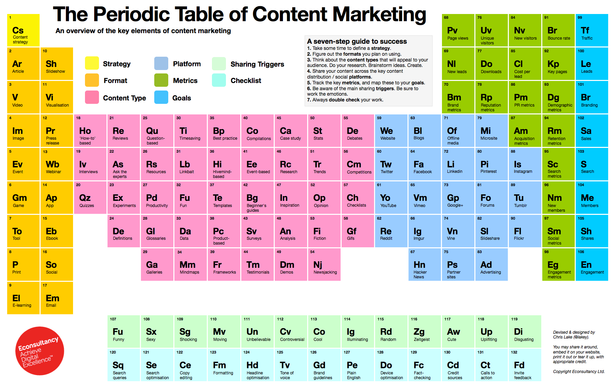
Source: www.econsultancy.com
About The Author