Running a successful internet marketing campaign requires more than posting on social media or running a few ads. Today’s customers move across search engines, websites, email, video platforms, and mobile devices before making a decision. That means your marketing needs to work across multiple channels while still delivering one clear brand message.
For small and medium-sized businesses, this can feel overwhelming. You need search visibility, strong landing pages, paid ads, social media activity, video content, email campaigns, and mobile-friendly experiences. When these pieces work together, your online presence becomes stronger, more consistent, and more effective.
A well-planned digital marketing strategy helps your business attract the right audience, build trust, and turn more visitors into customers.
Why Internet Marketing Matters for Business Growth
Internet marketing helps your business reach customers where they already spend their time. Whether someone is searching on Google, scrolling through social media, watching videos, checking emails, or browsing on a phone, your brand needs to be visible and easy to engage with.
The goal is not just to be everywhere. The goal is to be present in the right places with the right message. A strong internet marketing campaign connects your audience with helpful information, relevant offers, and clear next steps.
When managed properly, internet marketing can help your business increase website traffic, generate leads, improve brand awareness, and grow sales. It also gives you measurable data, so you can see what is working and where improvements are needed.
Start With Search Engine Optimization
Search engine optimization is one of the most important parts of long-term online growth. When your website is optimized for search, it becomes easier for potential customers to find your business when they look for products, services, or answers online.
Strong search engine optimization includes keyword research, helpful content, technical improvements, internal linking, metadata, mobile performance, and user-friendly page structure.
SEO is valuable because it helps your business attract organic traffic over time. Unlike paid ads, organic search visibility can continue bringing visitors even after the initial work is done. However, SEO requires consistency. Your website needs useful content, strong service pages, and regular updates to stay competitive.
Build Landing Pages That Convert
Getting traffic is only part of the process. Once visitors arrive on your website, they need a clear reason to take action. This is where landing pages play an important role.
A strong landing page focuses on one goal. That goal may be booking a consultation, requesting a quote, downloading a resource, signing up for emails, or purchasing a product.
Effective landing pages usually include a clear headline, benefit-focused copy, trust signals, strong visuals, customer reviews, and a simple call-to-action. They should also remove distractions and guide visitors toward the next step.
If your marketing campaigns are sending people to a weak or confusing page, you may lose potential leads. Better landing pages can improve conversion rates and make your marketing budget work harder.
Use Pay-Per-Click Advertising Strategically
Pay-per-click advertising can help your business reach customers quickly. Unlike SEO, which takes time to grow, PPC campaigns can place your business in front of high-intent users almost immediately.
Platforms like Google Ads allow you to target people based on what they are searching for. This makes pay-per-click especially useful for businesses that want to generate leads, promote offers, or compete for valuable keywords.
However, PPC works best when it is managed carefully. Your keywords, ad copy, landing pages, budget, and tracking all need to align. Without proper optimization, paid traffic can become expensive without producing strong results.
A successful PPC campaign should focus on quality traffic, clear messaging, and measurable conversions.
Strengthen Your Social Media Campaigns
Social media gives your business a direct way to connect with customers, share updates, promote content, and build trust. It is also useful for increasing brand awareness and staying top-of-mind.
Effective social media campaigns are not just about posting frequently. They need strategy, consistency, and audience understanding. Your content should educate, entertain, inspire, or help your followers solve a problem.
Social media can include organic posts, paid ads, short videos, customer stories, behind-the-scenes content, promotions, and community engagement. When used well, it supports both brand visibility and lead generation.
The key is to match your message to the platform. LinkedIn may work best for professional content, while Instagram and Facebook may be better for visual storytelling, local engagement, and product promotion.
Add Online Video to Your Marketing Mix
Online video is one of the most engaging ways to communicate with your audience. Videos can explain products, answer common questions, show customer success stories, demonstrate services, and make your brand feel more human.
Video content works well because it is easy to consume and often more memorable than text alone. It can be used on your website, YouTube, social media, email campaigns, and landing pages.
A strong content creation strategy should include video when possible. Even short videos can help improve engagement and make your message easier to understand.
For small businesses, video does not always need to be highly produced. Clear, helpful, and authentic videos can perform well when they answer real customer questions or highlight useful information.
Use Email Marketing to Stay Connected
Email remains one of the most reliable online marketing channels because it lets you communicate directly with people who have already shown interest in your business.
With email marketing, you can promote offers, share helpful content, nurture leads, announce updates, and encourage repeat purchases. Unlike social media, where algorithms control visibility, email gives you direct access to your audience’s inbox.
Good email marketing should feel useful, not spammy. Segment your audience when possible, write clear subject lines, provide value, and include a simple call-to-action.
Email works especially well when combined with content marketing, landing pages, and lead generation campaigns.
Optimize for Mobile and Tablet Users
More customers now browse, search, shop, and contact businesses from mobile devices. If your website is not mobile-friendly, you may lose visitors before they take action.
Mobile optimization includes fast loading speed, responsive design, easy navigation, readable text, clickable buttons, and simple forms. A strong mobile experience is also important for SEO and user satisfaction.
Using a mobile readiness grader can help identify issues that may be hurting your website performance.
Your marketing campaigns should always be tested on mobile devices. A page that looks good on desktop may not convert well on a phone if the layout, form, or call-to-action is difficult to use.
Track Performance and Improve Over Time
Internet marketing is not a one-time project. It requires ongoing tracking, testing, and improvement. Review your website traffic, lead sources, conversion rates, ad performance, email engagement, and social media results.
Data helps you understand what is working and what needs attention. If a campaign gets clicks but no leads, the landing page may need improvement. If emails are not being opened, the subject lines may need testing. If social posts are not getting engagement, the content may not match audience interests.
Marketing success comes from continuous improvement.
Final Thoughts
To maximize your internet marketing campaigns, your business needs a connected strategy. SEO, landing pages, PPC, social media, online video, email marketing, and mobile optimization should not work separately. They should support each other.
When your website is optimized, your ads are targeted, your content is useful, your social media is active, and your landing pages are built to convert, your business has a stronger foundation for growth.
The most effective online marketing campaigns are not built on one channel alone. They are built on a clear strategy, consistent execution, and a deep understanding of your audience.
FAQs
What is an internet marketing campaign?
An internet marketing campaign is a planned online strategy that uses channels like SEO, PPC, social media, email marketing, video, landing pages, and mobile optimization to attract customers, generate leads, and increase sales.
Why is SEO important for internet marketing?
SEO is important because it helps your website appear in search results when people look for your products or services. Strong SEO can bring consistent organic traffic, improve visibility, and support long-term business growth.
How do landing pages improve marketing campaigns?
Landing pages improve marketing campaigns by giving visitors a clear message and focused call-to-action. A well-designed landing page can turn more clicks into leads, sign-ups, purchases, or inquiries.
Should small businesses use PPC advertising?
Yes, small businesses can use PPC advertising to reach high-intent customers quickly. PPC works best when campaigns have clear targeting, strong ad copy, optimized landing pages, and proper conversion tracking.
Why is mobile optimization important for online marketing?
Mobile optimization is important because many customers browse, search, and shop from phones or tablets. A mobile-friendly website improves user experience, supports SEO, and helps more visitors take action.
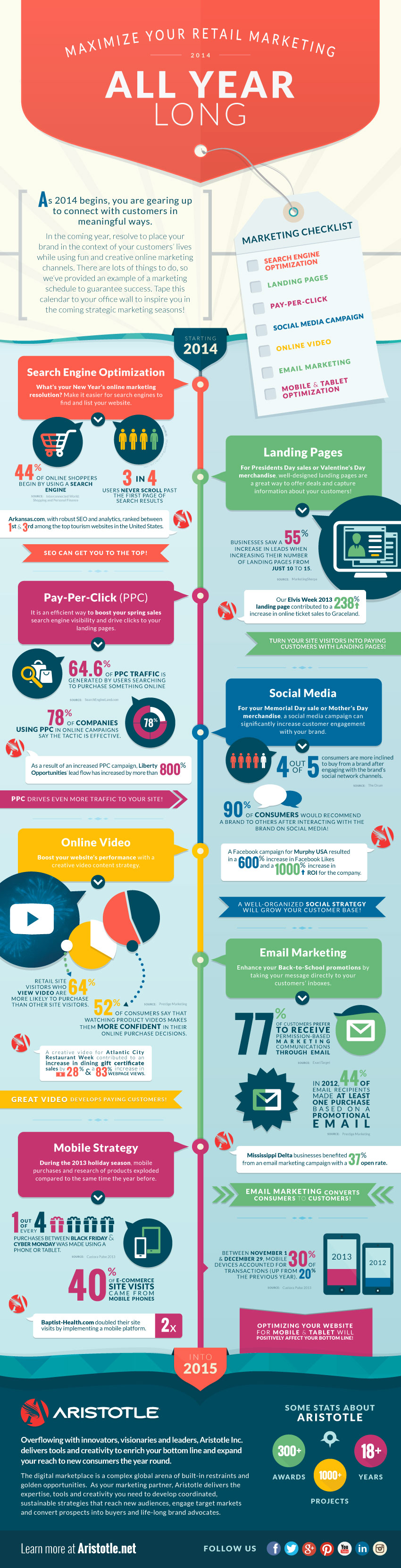
Source: aristotle.net
About The Author