If you’ve ever wished Google Ads had more context, congratulations. The future is a chat box.
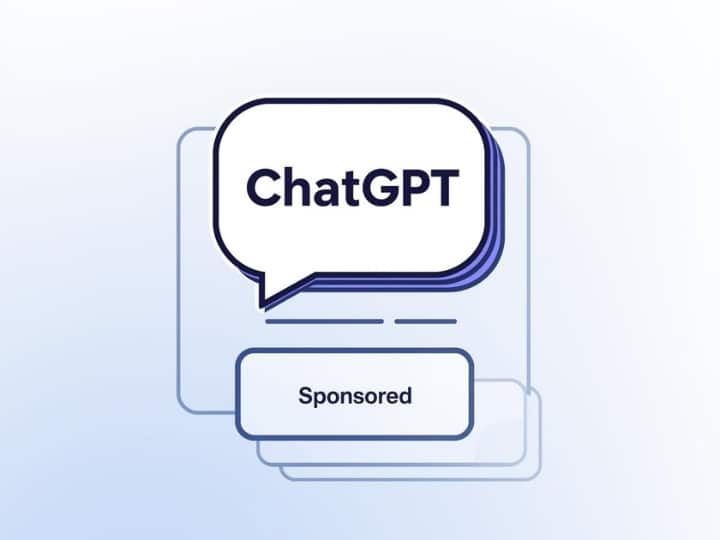
And that chat response is about to get a little longer: a clearly labeled sponsored slot sitting at the bottom of an answer.
On January 16, 2026, OpenAI published its approach to advertising and expanding access to ChatGPT. Translation: they’re planning to test ads in the U.S. soon (for the Free and Go tiers), while keeping paid plans ad-free. And they’re trying to do it without wrecking the thing people actually came for: trust.
So let’s talk about what OpenAI just promised, what it likely means for marketers, and the boring-but-profitable checklist you should start working through before this turns into another “we should’ve done this last quarter” meeting.
Here’s the deal:
- OpenAI wants more people using ChatGPT, even if they cannot pay for Plus/Pro.
- They are expanding their low-cost plan (ChatGPT Go) and using ads to help fund broader access.
- They say ads will be separate from answers, clearly labeled, and not allowed to influence the model’s response.
- They say conversations stay private from advertisers and user data is not sold to advertisers.
- They plan controls: you can turn off ad personalization and clear the data used for ads.
See Also:
First, what’s changing (and what’s not)
OpenAI’s framing is simple: AI is becoming a personal super-assistant, and access matters. They’ve been offering a free tier, and they also launched a low-cost plan called ChatGPT Go. Go rolled out broadly after launching in India in August 2025, and it’s now available wherever ChatGPT is available (including the U.S.).
Go is positioned as the “more room to breathe” plan: more messages, more uploads, more image creation, plus longer memory and a bigger context window at a lower price than Plus.
Now the big change: OpenAI says it plans to start testing ads in the U.S. in the coming weeks for logged-in adults on the Free and Go tiers. Plus, Pro, Business, and Enterprise stay ad-free.
The part that matters: OpenAI’s five ad principles
Whenever a platform says “we’re adding ads,” marketers hear “new inventory.” Users hear “oh no.”
OpenAI tried to calm both nervous systems by putting five principles in writing. Here’s the marketer’s translation of each one:
1) Mission alignment
They’re saying ads are not the point, broader access is.
Advertising is a way to subsidize usage limits for people on free and low-cost tiers. If you’re a brand, that means the ad product will be judged (internally) by whether it helps people, not by whether it squeezes every last dollar out of the feed.
2) Answer independence
This is the big one: OpenAI says ads will not influence ChatGPT’s answers. Ads will be separate and clearly labeled.
So if your plan is “buy the answer,” that’s not (supposed to be) the game. The game is still: be the most useful option and if there’s a sponsored placement, it’s a bonus slot, not a steering wheel for the model.
3) Conversation privacy
OpenAI says conversations stay private from advertisers and that user data is not sold to advertisers.
Marketer translation: expect a walled garden. You may get targeting, measurement, and reporting, but don’t expect to “own” the user’s chat history.
4) Choice and control
OpenAI says users can turn off ad personalization and can clear the data used for ads. They also say there will always be a way to not see ads (including paid ad-free tiers).
That means two things: (1) contextual relevance matters, because personalization may be off for a lot of people, and (2) your ad has to earn its keep fast, because users will have real controls.
5) Long-term value (not time spent)
OpenAI explicitly says it will not optimize for time spent in ChatGPT. That’s a shot across the bow of the doom-scrolling ad model.
Translation: expect fewer “keep you trapped here” mechanics and more “help you decide” placements. If your offer is fluffy, vague, or clickbaity, it’s going to look worse in a conversation than it does in a banner ad.
See Also: OCC – The Elusive One Cent Click
What the first ads will probably look like?
OpenAI says the first test will likely show ads at the bottom of an answer when there’s a relevant sponsored product or service based on the current conversation. The ad will be clearly labeled and separated from the organic answer.
Users will be able to see why they’re seeing an ad, dismiss it, and give feedback. Also: OpenAI says it won’t show ads if a user says they’re under 18 or OpenAI predicts they’re under 18. And ads won’t be eligible near sensitive or regulated topics like health, mental health, or politics.
OK, marketer brain: what does this mean for you?
This is where people overcomplicate things. So let’s keep it simple:
- The new ‘search results page’ is a conversation. If you’re not a good answer, you’re fighting uphill.
- Ads won’t (supposedly) buy you the answer slot. So your brand still needs real authority.
- The ad slot will likely be closer to the decision moment than most social inventory. High intent, low patience.
- If personalization can be turned off, your product data and your offer clarity become the targeting.
- Trust is the KPI. If your brand feels sketchy, it will be obvious fast.
If you want a mental model, borrow it from paid search:
Conversation ==>> Answer ==>> Sponsored card ==>> Landing page
Alignment still wins. Misalignment still loses.
The checklist: how to prepare for ChatGPT ads (without guessing the future)
- Clean up your product and service pages: pricing, availability, shipping/returns, guarantees. No mysteries.
- Get your schema right (Product, Offer, AggregateRating, FAQ): If a machine can’t read it, it can’t recommend it.
- Build a ‘decision page’ for your best sellers: comparisons, FAQs, reviews, objections, and who it’s for/not for.
- Invest in proof: reviews, testimonials, case studies, UGC. Conversation ads will punish empty claims.
- Make your brand easy to understand in one sentence. (If you can’t explain it, the model can’t either.)
- Prepare creative that works as a card, not a billboard: short, specific, and actually helpful.
- Plan for measurement like a grown-up: what’s your North Star (profit, CAC, LTV), what’s your proxy (qualified visits, add-to-cart, email capture), and what’s your ‘this is working’ threshold?
- Treat this like high-intent traffic: landing pages should load fast, be mobile-first, and remove friction.
- Write content that answers real questions. Even with ads, the organic answer is the main stage.
- Build first-party relationships (email/SMS/community). If you rely on someone else’s targeting forever, you’re renting your business.
For small businesses: this could be a cheat code (if you don’t waste it)
OpenAI specifically calls out small businesses and emerging brands as potential winners here. And that’s not crazy.
In a conversation, the best product isn’t always the biggest brand. The best product is the one that fits the situation: budget, constraints, preferences, and timing.
So if you’re smaller, your edge is specificity. You don’t need to be everything to everyone. You need to be perfect for someone.
- Pick one category and own it.
- Over-answer customer questions (shipping, sizing, ingredients, installation, support).
- Show your receipts: reviews, photos, returns policy, and real humans behind the business.
- Make the next step easy: buy now, book now, or ask a question.
The part you should not ignore: user control
If OpenAI follows through on controls (turn off personalization, clear data, dismiss ads), then bad ads will die faster.
That’s good for users. It’s also good for marketers who actually have a product people like.
It’s terrible for marketers who survive on confusion, hidden fees, or “we’ll tell you the price after the demo.”
FAQ
Will ads change ChatGPT’s answers?
OpenAI says no: ads will be separate from answers and will not influence the response. The organic answer is still optimized for usefulness.
Who will see ads in ChatGPT?
OpenAI says it plans to test ads in the U.S. for logged-in adults on the Free and Go tiers. Paid tiers like Plus/Pro/Business/Enterprise are expected to remain ad-free.
Will ChatGPT sell my data to advertisers?
OpenAI says it will keep conversations private from advertisers and will not sell user data to advertisers.
Can users turn off ad personalization?
OpenAI says users will have control, including the ability to turn off personalization and clear the data used for ads.
What should businesses do now?
Get your product data and landing pages in order, publish content that answers real questions, and build trust signals. If you’re not a good answer, ads won’t save you.
Bottom line
OpenAI is trying to thread a needle: fund broader access without turning ChatGPT into a spammy casino lobby.
If they pull it off, this becomes a new performance channel, but it’s also a brutal truth serum. In a conversation, your offer either helps or it doesn’t.
If you want help building a practical plan (SEO for AI, product data, landing pages, measurement), book a quick chat with AOK Marketing. We’ll help you get ready before the test turns into the standard.
Sources
OpenAI. “Our approach to advertising and expanding access to ChatGPT.” January 16, 2026.
OpenAI. “Introducing ChatGPT Go, now available worldwide.” January 16, 2026.
About The Author