ChatGPT Entity Panel – Do you own an AI-resolved entity?
Updated January 1, 2026
It’s 2026, and there is no better way to ring in the new year than to discover new features in your tech.
ChatGPT 5.2 has just shown me some new results. Check out the right side of this capture below from my chat:
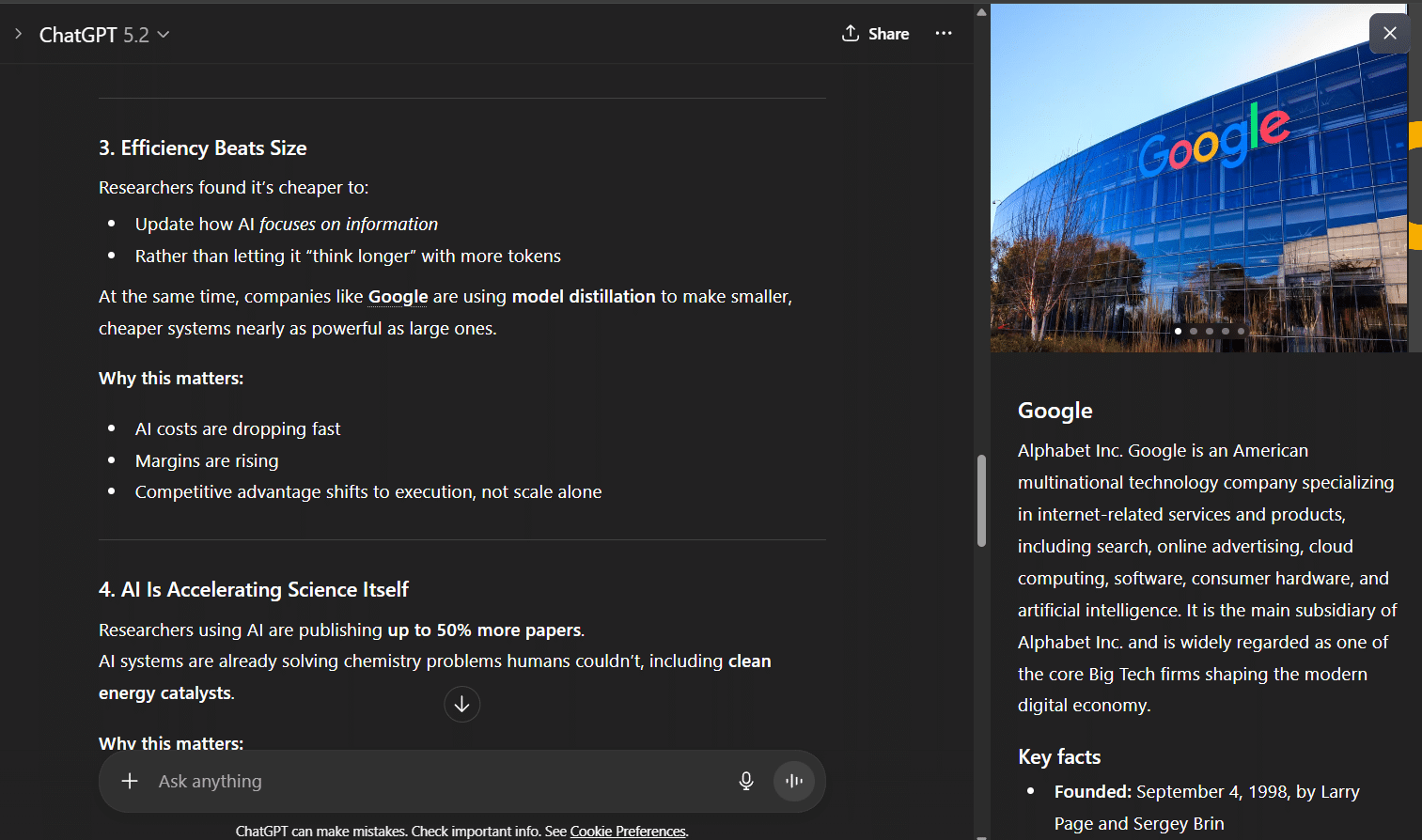
This Google result on the right side is new. It looks a lot like a search you would see in Google with it’s knowledge panel results. Here are a couple of examples of knowledge panel results you’d see in a Google search (again – look at the right site):
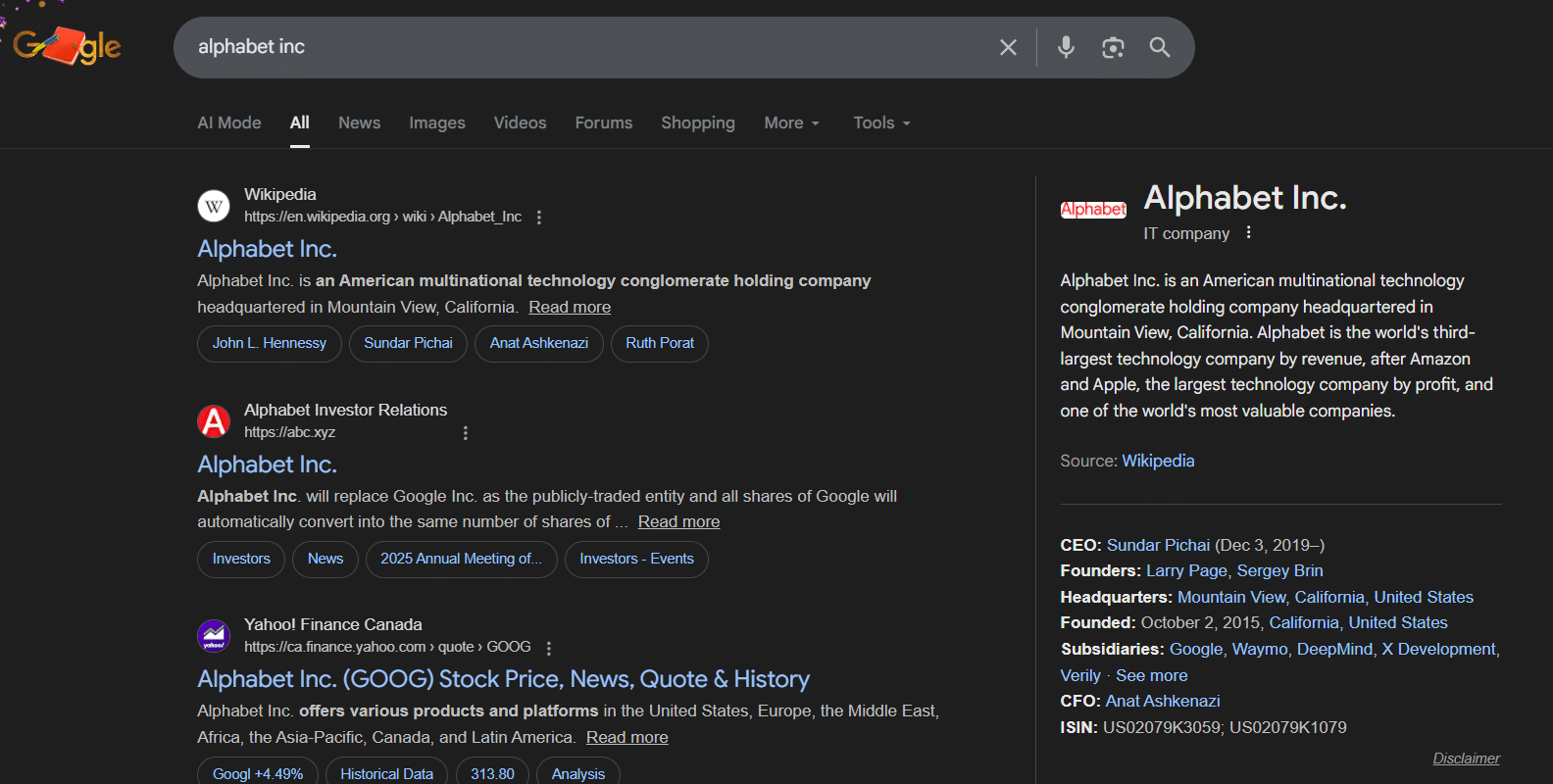
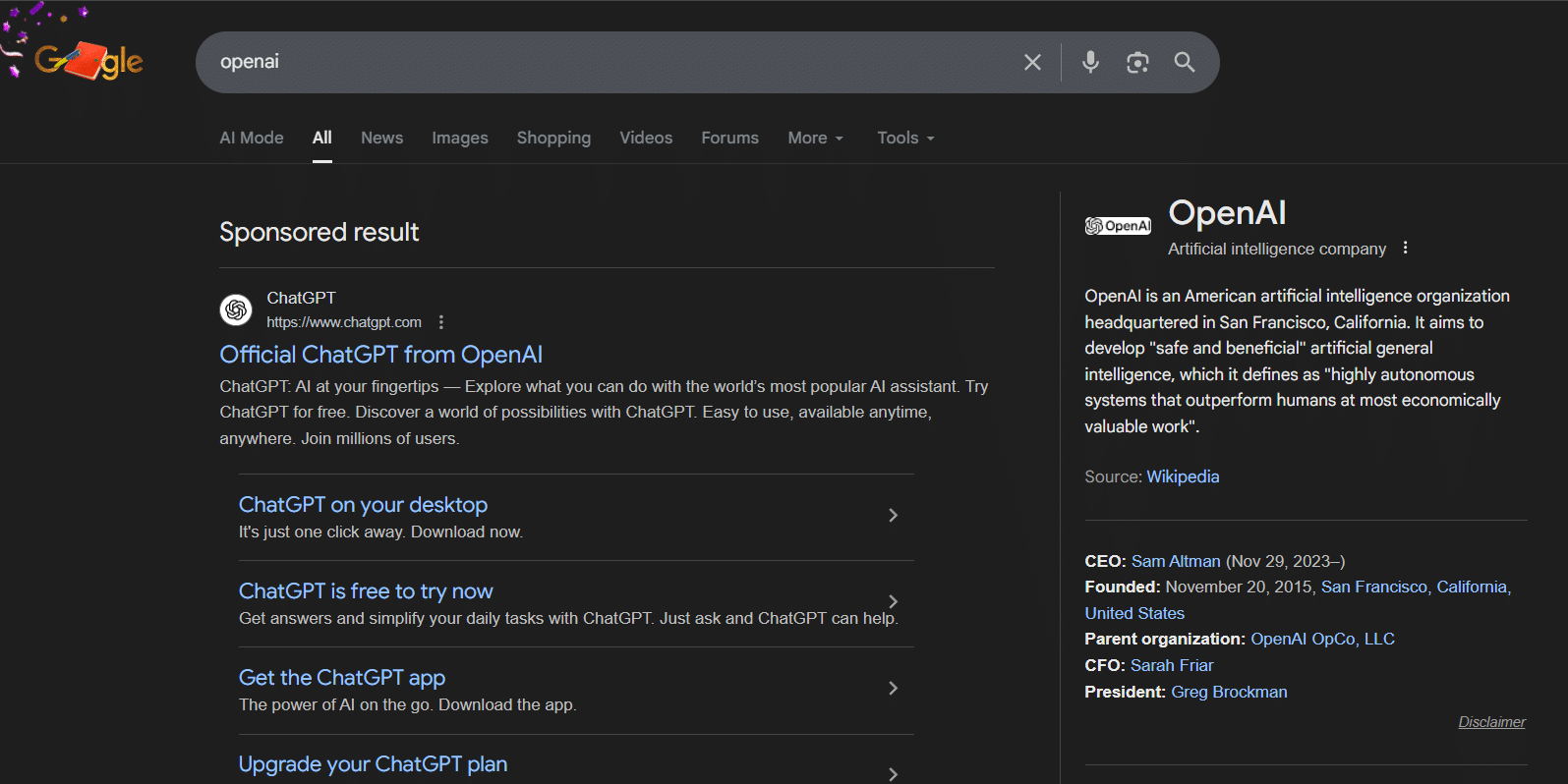
You’ll notice the standard structure of the right side panel: Image, Wikipedia link, sources, CEO, parent organization… etc. What you’re looking at is structured data about this entity.
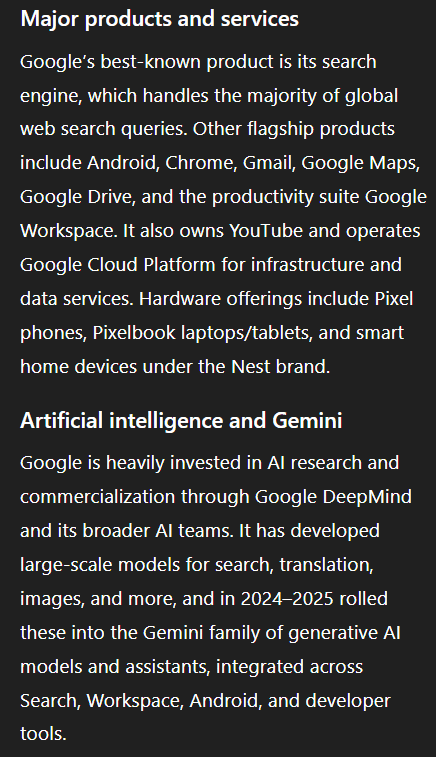
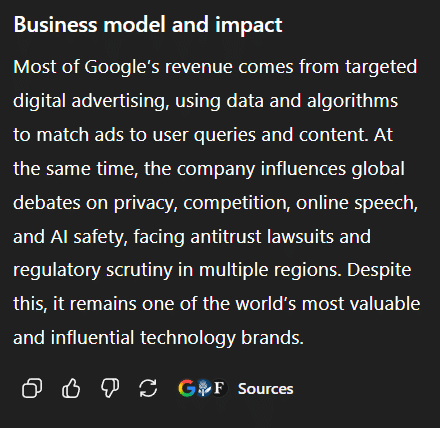
What I noticed today was the appearance of several links like this in ChatGPT. There was a highlighted hyperlink, like you’d see in a Google search result. Notice how the word Google is bold with a faint underline:

So when I clicked on it, that’s when the right side panel opened up:
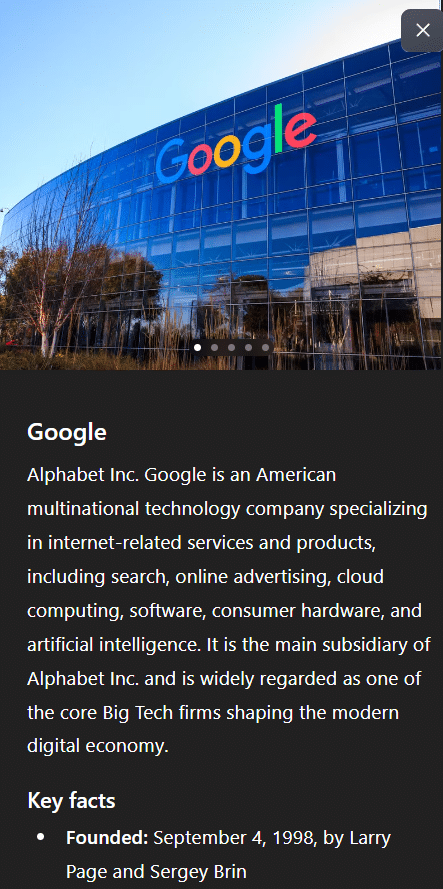
Along with detailed information about the company:

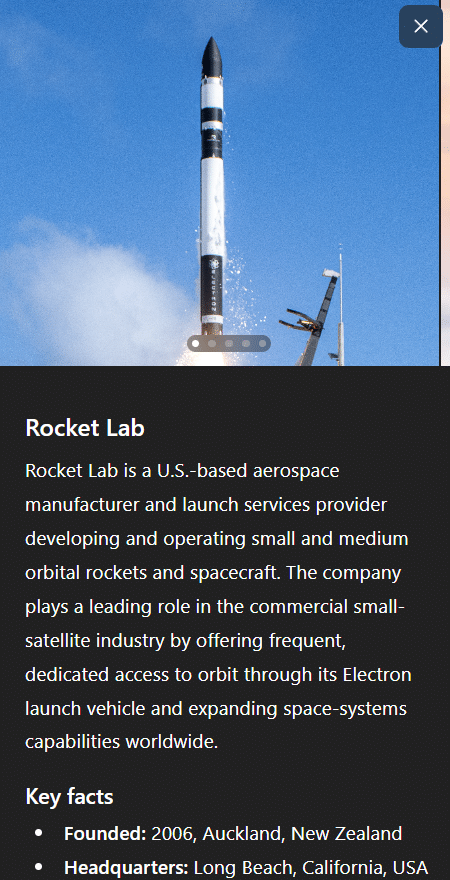
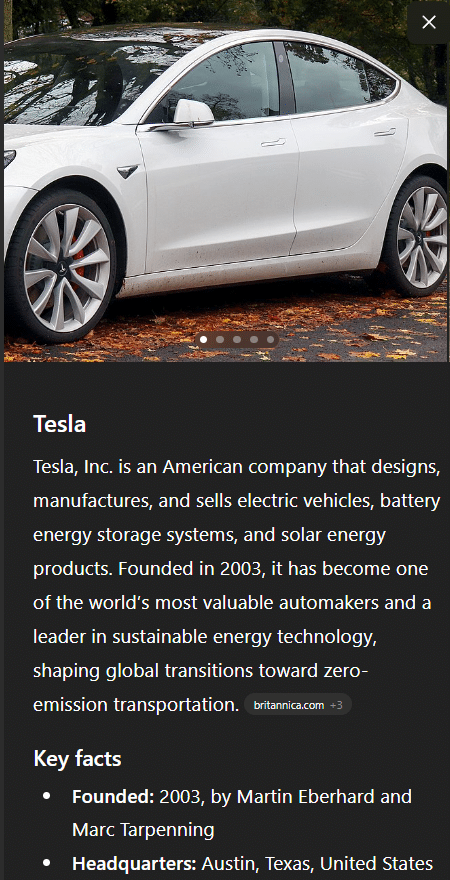
And there were other links in the response, not just Google. For example Tesla, and Rocket Lab.
Here’s the OpenAI Entity Panel:
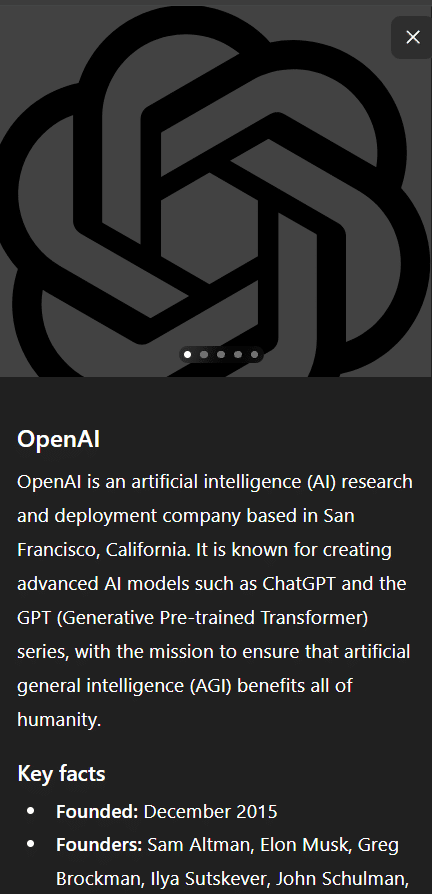
And there were a couple of interesting images in the OpenAI Entity Panel:



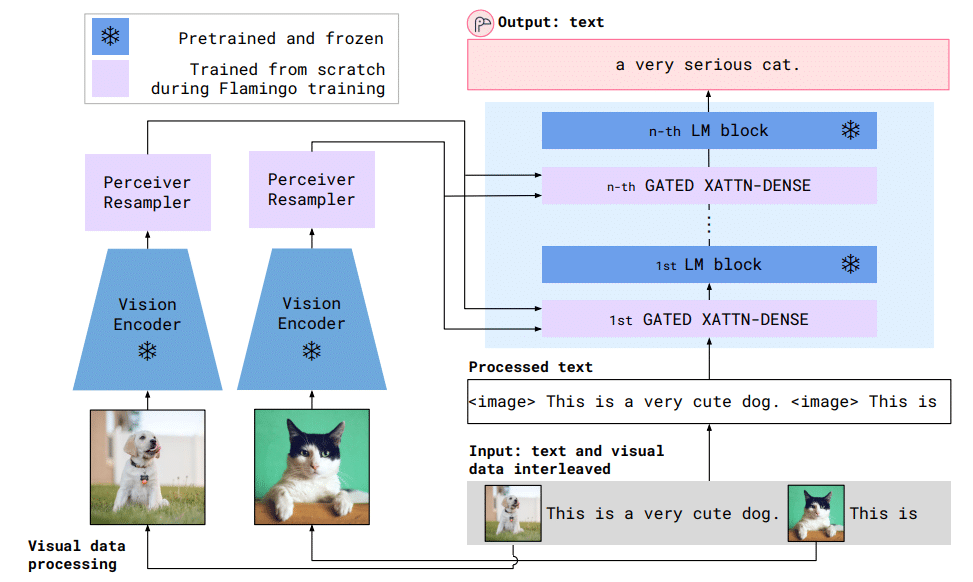
So this got me thinking: Where does the information that ChatGPT is referencing on the right side come from?
Well, those images are pretty unique, so lets see if we can find them (using a traditional Google Image search).
Success!
This image:
Originates in this Medium Post:
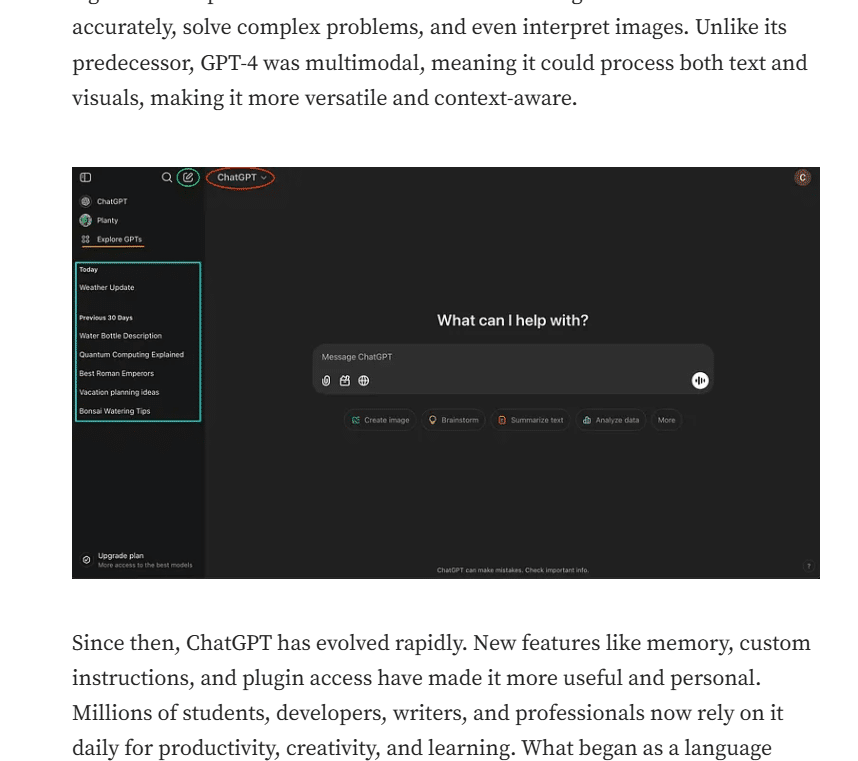
What about the others? This second one was harder to figure out. It’s all over the internet, and also on Medium, but it turns out it’s an image of DeepMind’s Flamingo Visual Language Model Demonstrating SOTA (Few-Shot Multimodal Learning Capabilities)
OK, so what about this third one? I mean, how many images of Teddy Bears playing video games under water could there be?
Turns out this one originates with Wikipedia:
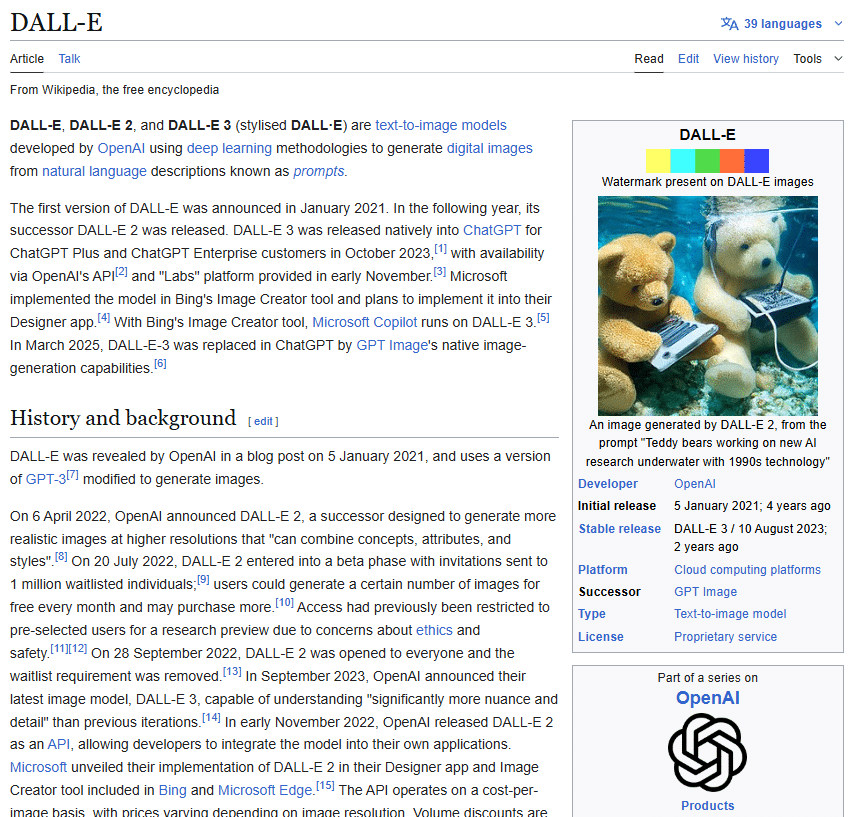
And the last one? It’s an image of office space from the building’s website at 550 Terry:

All of these images are related to OpenAI in some way. A Medium article about them. A Wikipedia article about them. A website of the office space they’ve leased.
The good news is below the Entity Panel, they also list the sources so you can dig in:
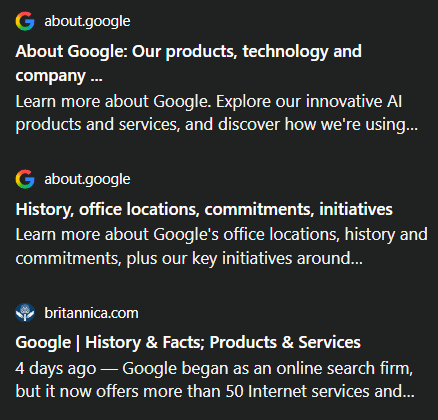
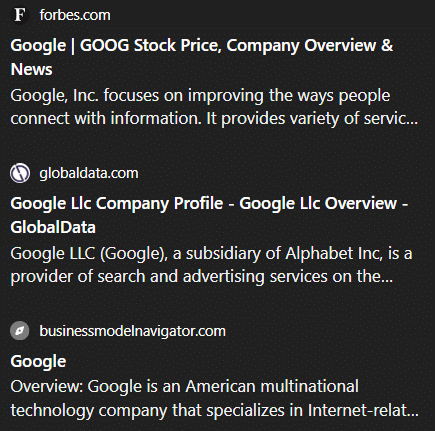
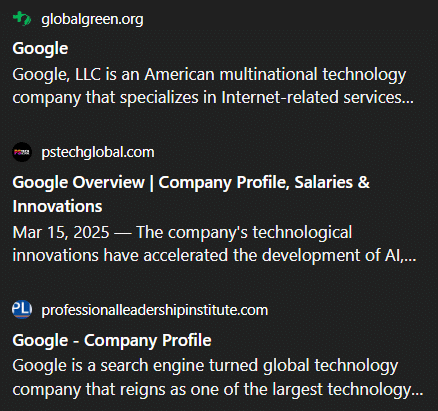
So why should you care?
1. This is where “search intent” is going whether we like it or not
People are already:
-
Researching companies
-
Comparing vendors
-
Validating legitimacy
-
Looking for background, trust signals, and “who is this?”
…inside ChatGPT, not just Google.
So what this means is the moment ChatGPT:
-
Recognizes your brand as an entity
-
Links it in the generated results
-
Opens a side-panel summary
You’ve crossed an important threshold:
Your brand is no longer just a website. It’s an AI-resolved entity.
That’s the same conceptual leap Google made when it rolled out Knowledge Panels in 2012–2013, and knowledge panels are a key feature in SEO.
2. This panel is the first impression layer, not your website
Key reality:
-
Users on ChatGPT may never click through to your site
-
They may never see your homepage, About page, or messaging
-
Their understanding of your brand may be formed entirely from:
-
AI-generated summaries
-
Third-party sources
-
Retrieved facts you didn’t write
-
This is zero-click SEO, but for AI.
What’s the risk? If the panel:
-
Gets your positioning wrong
-
Emphasizes outdated facts
-
Pulls weak or misleading sources
-
Omits your differentiators
You lose before the conversation with your prospect even starts.
3. You don’t “rank” here, your entity is resolved
Classic SEO question:
“How do I rank higher?”
AI-era question:
“How does the model understand what my entity is? (or for a person, what I am?”)
This is not page ranking.
It’s surfacing your entity in the generated prompt results. Otherwise known as entity resolution.
ChatGPT is deciding:
-
What kind of thing you are (company, product, platform, subsidiary)
-
What facts are stable vs incidental or unrelated
-
Which sources are authoritative about you
-
What relationships define you (parent company, founders, products)
If your signals are mixed, and that resolution is wrong or weak, everything downstream suffers:
-
AI answers
-
Comparisons
-
Recommendations
-
Vendor shortlists
-
Showing up in the answers to your best prompts
4. Brand authority is being recomputed by AI, not just Google
Historically:
-
Google Knowledge Graph
- Backlink Authority
-
Wikipedia / Wikidata
-
Google Business Profile
Now:
-
ChatGPT pulls from multiple web sources
-
It synthesizes and creates answers, not copies
-
It may weight sources differently than Google
That means:
-
Wikipedia dominance alone is no longer enough (but it does help)
-
Random “company profile” sites can influence perception
-
Poorly written third-party pages can contaminate summaries
This is a new authority stack, and most brands don’t have any idea how to optimize or ‘SEO’ this.
5. This affects trust, deals, hiring, and compliance, not just traffic
This matters far beyond SEO metrics. Think about who uses ChatGPT today:
-
Investors doing diligence
-
Journalists background-checking
-
Procurement teams
-
Partners
-
Candidates evaluating employers
-
Regulators and policy analysts
If your AI panel:
-
Misstates your founding date
-
Confuses your parent company
-
Overemphasizes controversies
-
Downplays credibility signals
That’s brand risk, not just SEO loss.
6. The cost of your inaction compounds quietly
Here’s the dangerous part:
-
These panels feel “informational”, but they are more than that. They are trust building.
-
They don’t scream “you’re losing traffic”, just “here’s some more info about us”.
-
There’s no Search Console warning
-
There’s no notification when facts drift
But over time:
-
The AI’s understanding of your brand hardens
-
That understanding propagates across answers
-
Fixing it later becomes much harder
This is exactly what happened with early Google Knowledge Panels:
-
Brands ignored them
-
Bad facts stuck for years
-
Recovery required legal requests, PR, and Wikipedia battles
Don’t get stuck in that loop.
7. SEO is becoming “Entity Operations”
For brands and agencies, the job is evolving:
Old SEO
-
Keywords
-
Content and Pages
-
Links
AI-era SEO
-
Entity clarity
-
Source control
-
Fact consistency
-
Authoritative references
-
Crawl permissions
-
Narrative alignment
The brands that win will:
-
Treat their brand like structured data, not just content
-
Audit what AI “knows” about them (with a tool like LLMtel.com)
-
Actively shape the sources AI trusts through proactive outreach and fixes
-
Monitor AI outputs the way they once monitored SERPs
8. Practical bottom line
You should care because:
-
This is how AI explains you to the world
-
You are being summarized whether you participate or not
-
Early movers get cleaner, more accurate entity definitions
-
Late movers inherit distorted narratives
Or, put bluntly:
If you don’t define your brand for AI, AI will define it for you using whatever it finds.
We’re keeping a close eye on this space, and we’ll keep you up to date as new discoveries happen.
About The Author