For the past few years, the conversation around artificial intelligence has sounded a lot like a warning siren.
AI is coming for your job.
AI will replace entire teams.
AI will make human workers obsolete.
It is a dramatic story. It is also an incomplete one.
Because in most workplaces, the real shift is not as simple as humans versus machines. It is not a clean battle between people and technology. The more immediate career risk is this: someone who knows how to use AI well may become faster, sharper, and more valuable than someone who does not.
AI may not take your job.
But a person who knows how to use AI might take the opportunity you wanted.
The real workplace shift is already happening
AI is not just a tool for tech teams anymore. It is showing up in marketing, sales, customer support, HR, operations, finance, design, research, and leadership.
People are using it to write first drafts, summarize long documents, analyze patterns, generate ideas, prepare reports, build presentations, review data, and speed up everyday decision-making.
That does not mean AI is doing the entire job.
It means AI is changing the pace and quality of work.
A marketer who uses AI can test more campaign angles in less time.
A salesperson can research prospects faster and personalize outreach at scale.
A manager can turn scattered notes into clear action plans.
A strategist can explore scenarios before walking into a meeting.
A writer can move from blank page to strong first draft faster.
In each case, the person still matters. Judgment still matters. Taste still matters. Experience still matters.
But the workflow is different.
The person using AI is not simply doing the same work with a new gadget. They are expanding their capacity. They are creating leverage.

AI skills are becoming career leverage
For a long time, career advantage came from being the person who knew the software, understood the system, or could move faster than everyone else.
The spreadsheet expert had leverage.
The person who knew how to automate reports had leverage.
The teammate who could turn messy information into a clear decision had leverage.
AI is becoming the next version of that advantage.
Not because it replaces thinking, but because it rewards better thinking.
The best AI users are not just typing random prompts into a tool and hoping for magic. They know how to ask better questions. They know how to give context. They know how to challenge the output. They know when to accept, edit, reject, or rebuild what AI gives them.
That is the difference between using AI as a shortcut and using AI as a multiplier.
A shortcut helps you avoid effort.
A multiplier helps you produce better work with the effort you already bring.
And that distinction matters.
The winners will not be the people who blindly trust AI
There is a misconception that becoming “good with AI” means letting the machine do everything.
In reality, the strongest professionals will be the ones who know where AI helps and where it does not.
AI can generate ideas. But it cannot always tell which idea is most relevant to your market.
AI can summarize a report. But it may miss the politics behind the decision.
AI can draft a proposal. But it does not automatically understand the client relationship.
AI can analyze patterns. But it still needs a human to ask whether the pattern actually matters.
This is why human judgment becomes more important, not less.
AI can accelerate output. But acceleration without direction is just noise.
The people who create the most value will be those who combine AI with context, experience, creativity, and critical thinking. They will not use AI to avoid thinking. They will use it to think better.
The gap will come from speed, quality, and confidence
The workplace has always rewarded people who can move ideas into action. AI simply raises the ceiling.
Imagine two employees with similar experience.
One starts every project from scratch. They manually search for information, build outlines, draft documents, and organize notes. They may still produce good work, but the process is slower.
The other uses AI to create a first structure, pressure-test assumptions, compare options, and refine the final output. They still review everything. They still make the decisions. But they arrive at stronger work faster.
Over time, that difference compounds.
The AI-enabled employee has more time to think strategically. More time to improve the work. More time to test alternatives. More time to communicate clearly. More time to focus on the parts of the job that actually require human insight.
That is where the advantage appears.
Not in one task.
Not in one prompt.
Not in one impressive demo.
But in the daily compounding effect of working with more speed, clarity, and range.
Refusing to adapt is the bigger risk
The danger is not that every job will disappear tomorrow.
The danger is assuming your role will stay exactly the same.
Every major technology shift has changed what employers value. Email changed communication. Search engines changed research. Spreadsheets changed analysis. Smartphones changed responsiveness. Social platforms changed brand building and customer engagement.
AI is changing knowledge work.
That does not mean everyone needs to become an engineer. It does not mean every professional needs to understand machine learning models or technical architecture.
But it does mean every professional should understand how AI can affect their own work.
What tasks can be made faster?
What processes can be improved?
What ideas can be explored more deeply?
What repetitive work can be reduced?
What decisions can be better supported?
These are no longer futuristic questions. They are practical career questions.
The people asking them now will have an advantage over those who wait until AI fluency becomes an expectation.
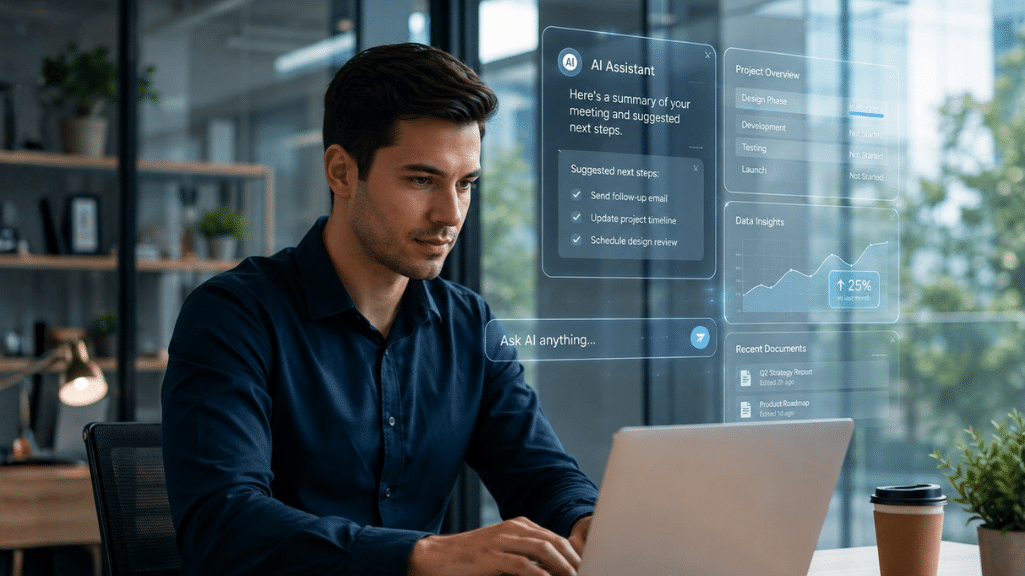
AI fluency is not about tools. It is about mindset.
The tools will keep changing.
Today it might be one platform. Tomorrow it might be another. New features will appear. New models will launch. New workflows will become standard.
So the goal is not to memorize one tool.
The goal is to build AI fluency.
That means learning how to work with AI thoughtfully. It means understanding how to prompt, evaluate, refine, and apply AI-generated output. It means knowing the difference between a useful draft and a finished deliverable. It means developing the confidence to experiment without outsourcing your judgment.
AI fluency is becoming a workplace language.
And like any language, the sooner you practice, the more natural it becomes.
The future is not human versus AI
The most important career shift is not that AI will replace people.
It is that people who use AI well will outperform people who do not.
This does not make human skills less valuable. It makes them more visible.
Creativity matters more when everyone can generate average ideas.
Judgment matters more when everyone can produce fast answers.
Communication matters more when everyone can create more content.
Strategy matters more when execution gets easier.
AI raises the baseline. Human excellence raises the ceiling.
So the question is not, “Will AI take my job?”
A better question is, “How can I become the person who knows how to use AI to create more value?”
Because the future of work is not human versus machine.
It is human with AI versus human without it.
And in that future, the people who learn, adapt, and experiment will not just protect their careers.
They will expand what their careers can become.
About The Author