A business account on X should do more than publish promotions and links. Every post, reply, Repost, image, and conversation contributes to how people perceive your brand. Good X etiquette helps businesses communicate clearly, participate in relevant conversations, and build relationships without overwhelming followers with repetitive or overly promotional content.
The platform has changed significantly over the years, and some older social media practices no longer make sense. Businesses now need a more thoughtful approach built around relevance, useful content, real interaction, and responsible automation. The following dos and don’ts provide a practical framework for using X professionally while keeping your brand approachable.
What Is X Etiquette?
X etiquette refers to the practical standards businesses follow when posting, replying, sharing content, and interacting with other accounts. These standards are not simply about being polite. They also influence whether an account feels useful, trustworthy, responsive, and worth following.
A strong presence should fit into a wider social media strategy rather than operating as a stream of disconnected updates. When every post supports a clear purpose, businesses can build awareness without making followers feel as though they are constantly being sold to.
Do: Give Every Post a Reason to Exist
Posting frequently does not automatically create engagement. A useful post should teach something, answer a question, share an observation, start a conversation, explain industry news, provide practical advice, or direct people to a genuinely helpful resource.
This starts with quality content. Businesses that focus on relevance and originality are more likely to create posts people want to read and share. The same principle applies to a broader content creation strategy: publish because you have something worthwhile to say, not because there is an empty space in the calendar.
Do: Keep Posts Clear and Concise
People move quickly through their feeds, so the main point should be easy to understand. Avoid long introductions, unnecessary jargon, and sentences that make readers work to discover what the post is actually about.
Concise does not mean vague. Give enough context for someone to understand why the information matters before expecting them to click a link, respond, or take another action. A clear sentence with a useful idea is more effective than a collection of buzzwords and promotional phrases.
Do: Use Hashtags Sparingly
Hashtags can help connect a post with a relevant topic or conversation, but adding several broad hashtags does not automatically improve visibility. X currently recommends using no more than two hashtags per post as a best practice, although the platform technically allows more. (Help Center)
Choose hashtags that directly relate to the subject, campaign, event, industry, or audience. A focused hashtag strengthens context; a crowded collection of unrelated hashtags makes the post harder to read and can make a business account look promotional.
Do: Participate in Conversations
Businesses get more from X when they treat it as a place for interaction rather than a one-way publishing channel. Respond to relevant questions, acknowledge useful feedback, add context to discussions, and participate when your experience can contribute something valuable.
Listening is just as important as posting. Following conversations around customers, competitors, industry developments, and common concerns can reveal useful insights for future content and campaigns. A structured social listening strategy can help turn those conversations into actionable marketing information.
Do: Credit the Original Source
Sharing another person’s research, insight, graphic, or post can add value to your own audience, but attribution should always be clear. Using a Repost preserves the connection to the original post, while a Quote post allows a business to add its own perspective before sharing.
If you create a new post based on someone else’s work, mention or identify the source where appropriate. Proper attribution strengthens credibility and shows that your brand respects the people creating useful content within its industry.
Do: Use Visual Content With a Purpose
Images, graphics, screenshots, and video can make posts more noticeable and easier to understand, but visual content should support the message. A useful chart, demonstration, product image, comparison, or original graphic provides more value than a generic stock image added simply to fill space.
Accessibility should also be part of the publishing process. X allows image descriptions, also known as alt text, to be added to images so people using assistive technologies can understand the visual content. Businesses using the same assets on their websites should also follow proper image SEO practices to improve accessibility and search performance.
Do: Make Calls to Action Specific
Generic requests for engagement rarely give readers a strong reason to act. A better call to action connects directly to the value of the post and tells people what the next step involves.
Depending on the content, a business can ask followers to:
- Read a complete guide or analysis.
- Share their experience with a specific issue.
- Compare two products, ideas, or approaches.
- Answer a relevant question.
- Register for an event or access a useful resource.
- Explore additional information before making a decision.
The action should feel like a natural continuation of the post rather than an engagement request added at the last minute. A clear next step also follows the same principles used in an effective call-to-action strategy.
Do: Use Direct Messages Appropriately
Direct Messages are useful when a public conversation needs to move into a private setting. Customer service conversations involving order details, personal information, account numbers, or other sensitive information should not continue publicly.
A business can acknowledge the issue in a reply and then invite the customer to continue privately. What should be avoided is using Direct Messages as an automatic cold-promotion channel for every new follower or account interaction.
Do: Let Your Brand Have a Personality
Professional communication does not need to sound corporate or stiff. Humor, conversational language, and personality can make a business easier to remember when they fit the audience and the situation.
The key is consistency. A playful brand can communicate differently from a financial, legal, or healthcare company while still following the same principles of respect and relevance. Strong personality should support digital brand building instead of feeling like an attempt to copy whatever style is currently popular.
Do: Respond to Genuine Engagement
Followers who ask reasonable questions, share constructive feedback, or mention your business deserve attention when a response is appropriate. Ignoring every interaction while continuing to publish promotional posts makes an account feel disconnected from its audience.
Businesses do not need to answer every comment or mention. Prioritize conversations where your response provides information, resolves a concern, strengthens a relationship, or contributes something meaningful.
Do: Use Automation as a Tool, Not a Replacement
Scheduling posts can make social media management more efficient, especially when a business operates across several channels. Planning content in advance also makes it easier to maintain consistency and coordinate campaigns.
Automation should not remove human oversight. Someone still needs to watch replies, review scheduled posts, respond to unexpected events, and stop content that has become inappropriate because circumstances have changed. A scheduled account can still feel human; an unattended account usually does not.
Don’t: Automate Aggressive Following
Following relevant people, publications, customers, and organizations can help businesses discover useful conversations. Aggressively following large numbers of accounts simply to attract attention is a different matter.
X states that automated proactive following and automated unfollowing are not allowed. Its guidance also warns against aggressive or indiscriminate following intended primarily to gain attention. (Help Center) Audience growth should come from useful content and genuine relevance rather than artificial follow-and-unfollow tactics.
Don’t: Send Duplicate Promotional Replies
Copying the same sales message underneath numerous unrelated posts is not engagement. It interrupts conversations and makes the account look automated.
X identifies repeatedly publishing duplicated and unsolicited replies to many accounts as spam behavior. Templates can help teams respond efficiently, but each reply should still address the actual person, question, or conversation.
Don’t: Turn Every Post Into a Promotion
Followers quickly lose interest when every post promotes the same service, offer, product, or company announcement. A business account needs enough variety to remain useful between promotional messages.
Educational content, industry commentary, useful resources, customer stories, original observations, and community discussions can all broaden the content mix. User-generated content can also introduce authentic customer perspectives instead of requiring the brand to remain the subject of every post.
Don’t: Chase Every Trend
Trending conversations can generate visibility, but not every trend belongs in a company’s content strategy. Joining an unrelated topic simply because it is receiving attention can make the brand appear opportunistic or disconnected from its audience.
The better question is whether the business has a relevant contribution. If the answer is no, skip the trend. The same principle applies to viral marketing strategies: meaningful reach is more valuable than attention from people who have no connection to the brand or its message.
Don’t: Get Pulled Into Unproductive Arguments
Disagreement is normal on social platforms, but a business does not benefit from turning every critical comment into a public debate. Legitimate complaints should be acknowledged and handled professionally, while misinformation can be corrected calmly when the issue is important enough to address.
Accounts that are clearly trying to provoke an argument rarely deserve an extended response. Knowing when to stop engaging is as important as knowing when to reply.
Don’t: Ignore Grammar and Readability
A casual platform still requires professional communication. Constant spelling mistakes, confusing sentences, unexplained abbreviations, and unnecessary jargon make posts harder to understand and weaken the impression a business creates.
Before publishing, read the post once as a customer would. Clear writing is not about sounding formal; it is about making the intended meaning easy to understand.
Don’t: Rely on Link Shortening as a Social Strategy
Shortened links once played a larger role in keeping posts compact, but a shortened URL does not make weak content more engaging. The context around the link matters far more than its appearance.
Tell readers what they will find when they follow the link and why the destination is worth their attention. A useful description creates a stronger reason to click than a bare URL surrounded by generic promotional language.
Don’t: Measure Success Only by Follower Count
A large audience has limited value when followers rarely interact with the brand, visit its website, become leads, or remember what the company does. Follower numbers can provide context, but they should not become the only measure of social media performance.
Look at meaningful interactions, referral traffic, responses, qualified inquiries, content engagement, customer conversations, and actions that support real business goals. This keeps X connected to the wider marketing strategy instead of turning audience growth into an isolated vanity metric.
How to Build Better Engagement on X
Strong engagement starts with understanding what your audience actually cares about. Businesses should pay attention to the questions customers ask, topics people discuss repeatedly, industry developments that create confusion, and content that generates thoughtful responses.
Use those insights to shape future posts rather than copying competitors or repeating the same formats indefinitely. Combining audience research with a broader online marketing plan also helps ensure that social activity supports SEO, content marketing, lead generation, brand awareness, and customer retention instead of existing in isolation.
Consistency matters as well, but consistency should describe the quality and character of your communication rather than simply how many times you post. A recognizable voice, useful subject matter, thoughtful responses, and reliable interaction create a stronger presence than publishing at a high frequency without a clear purpose.
X Etiquette Comes Down to Adding Value
Features, terminology, and platform trends continue to change, but effective X etiquette remains straightforward. Respect people’s time, publish useful information, credit original sources, participate in genuine conversations, respond when a response matters, and promote your business without turning every interaction into an advertisement.
The best business accounts do not behave as if every follower is a lead waiting for a sales pitch. They build familiarity and trust by consistently contributing something useful. When X becomes part of a coordinated digital marketing strategy, those interactions can support stronger brand recognition, better customer relationships, and more meaningful engagement.
Frequently Asked Questions About X Etiquette
How many hashtags should a business use on X?
X currently recommends using no more than two hashtags per post as a best practice. Choose hashtags that directly support the subject instead of adding several broad terms simply to increase exposure.
Should businesses respond to every comment on X?
No. Businesses should prioritize genuine questions, customer concerns, useful feedback, relevant discussions, and interactions where a response adds value. Spam, obvious provocation, and conversations that have become unproductive do not require continued engagement.
Is it okay to schedule posts on X?
Yes. Scheduling is useful for maintaining a consistent publishing calendar, but scheduled content should still be monitored by a person. Businesses need to review replies and adjust scheduled posts when news, events, or changing circumstances make the original message inappropriate.
Should a business use Direct Messages for customer service?
Direct Messages are useful when a customer conversation involves private account information, order details, or another issue that should not be discussed publicly. A brief public acknowledgment followed by a move to a private conversation can provide both responsiveness and privacy.
What makes a good business post on X?
A strong business post has a clear purpose and gives the audience something useful. It can answer a question, provide an insight, explain industry news, solve a small problem, invite a meaningful discussion, or lead readers to a helpful resource without relying on excessive promotion.
What should businesses avoid on X?
Businesses should avoid repetitive promotions, indiscriminate automated following, duplicate unsolicited replies, irrelevant trend participation, unnecessary arguments, and content that gives followers no practical value. A strong presence is built around relevance and genuine interaction rather than shortcuts.
Final Thoughts
Good X etiquette for businesses is not a complicated collection of social media tricks. It comes down to communicating clearly, respecting the audience, contributing to relevant conversations, and giving people a reason to continue following the account.
Treat each interaction as part of the brand experience. When your posts are helpful, your responses are thoughtful, and your promotional content is balanced with genuine value, X becomes more than another distribution channel—it becomes a useful part of your overall digital presence.
For WordPress, I recommend replacing the existing infographic rather than keeping it unchanged because its visible terminology and several recommendations are now outdated. The article itself is ready to paste, and the internal links are intentionally spread across relevant sections instead of being inserted just to hit a link count.
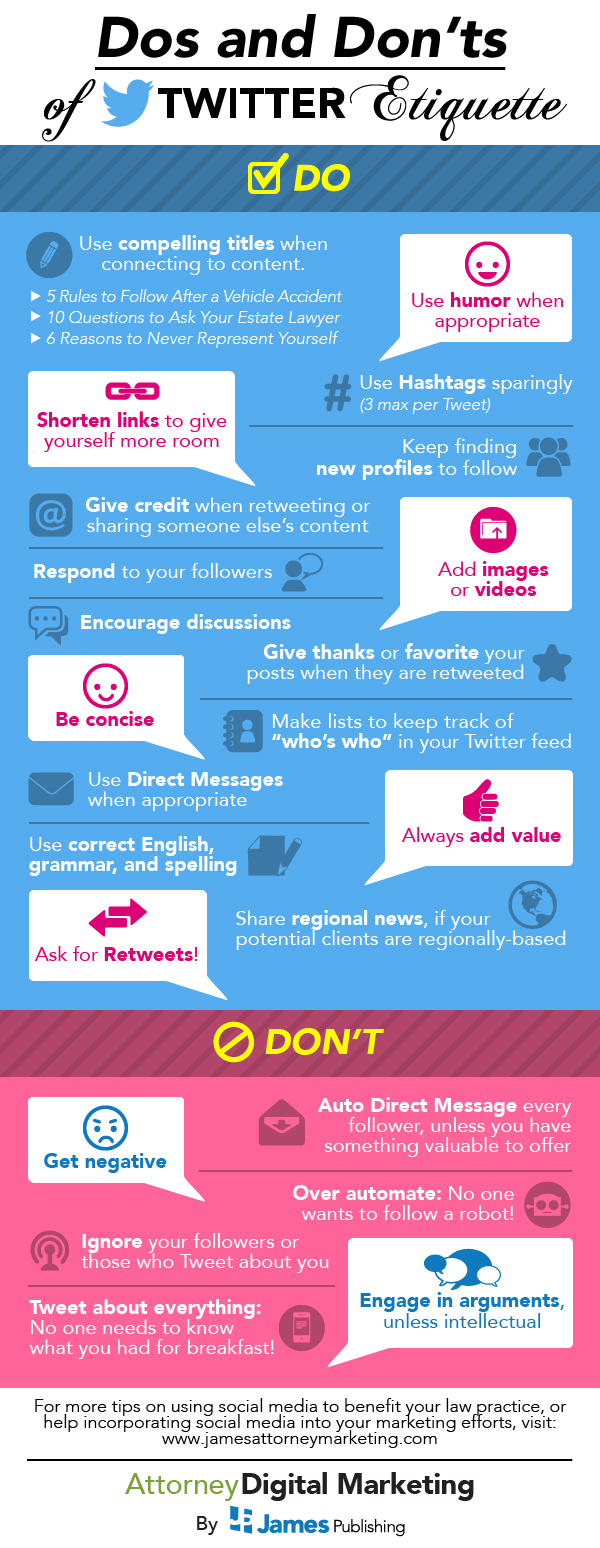
Source: http://www.jameseducationcenter.com/2013/twitter-etiquette/
About The Author