If you’ve ever searched for “Google+ Ripples” hoping to find a tutorial, here’s the short version: the feature is gone, and so is the platform it lived on. Ripples was retired in 2015, and Google+ itself shut down for good in April 2019. So if you landed here from an old bookmark or a “how to use Google+ Ripples” article, none of those steps will work anymore.
But the problem Ripples was built to solve hasn’t gone anywhere. Every brand still wants the answer to the same question: who is actually sharing my content, and how do I find more people like them? That’s genuinely useful information, whether it comes from a 2012-era Google feature or a 2026 analytics dashboard. Below is how to get it today.
What Made Ripples Useful in the First Place
Before writing it off as outdated, it’s worth understanding why marketers liked it so much. Ripples didn’t just count shares — it visualized the chain of shares. You could see who reshared your post, then who reshared their share, all the way out. That let you do three things most platforms still make surprisingly hard:
- Spot your most influential sharers — not just who has a big following, but whose shares actually triggered more shares downstream.
- See the timing pattern of when influential people were sharing, so you could time future posts around it.
- Build relationships with the people responsible for most of your organic reach, instead of guessing who they were.
None of that logic is obsolete. Only the tool is.
The Modern Equivalent, Platform by Platform
LinkedIn’s native post analytics show reactions, comments, and reposts, and clicking into “reposts” gives you the actual list of people who shared your post, not just a count. Cross-reference that list against people who repost you repeatedly and you’ve effectively rebuilt your own mini Ripples map. This matters even more if LinkedIn is a core part of your B2B strategy, since repeat sharers there are often the closest thing you’ll get to a direct sales referral.
X (Twitter) The native analytics dashboard shows retweets and quote-tweets individually. Quote-tweets are the more valuable signal, since they show you not just who shared it but what they said while sharing it, which tells you what angle resonated.
Facebook Meta Business Suite shows share counts per post, though individual sharer data is limited compared to LinkedIn. Facebook Groups are often a better source of this insight than the main feed, since group admins and active members tend to be the ones actually redistributing content.
Third-party tools Tools like BuzzSumo, were built almost specifically to fill the gap Ripples left. They track who’s sharing a given URL across multiple platforms at once, and can rank sharers by their own follower influence, similar to how Ripples sized bubbles based on downstream reach.
Turning “Who Shared It” Into an Actual Strategy
Finding the data is the easy part. The three original takeaways from the Ripples era still apply almost word-for-word:
Engage with the people who comment, not just the people who share. A share with zero context does less for you than a share with a comment attached, because the comment is what convinces their audience to click through. Reply to those comments the way you’d reply to a customer.
Use the reactions to guide your next piece of content. If the same handful of influential sharers keep resharing a specific type of post, angle, or format, that’s a signal worth acting on, not just admiring. This is part of the same logic behind using visual content strategically rather than posting visuals just to fill a calendar slot.
Say thank you publicly. Commenting on or resharing the post of someone who shared you first is a small action that has an outsized effect on whether they do it again. It’s the same relationship-building principle behind growing LinkedIn connections — consistency and reciprocity compound over time.
Timing Still Matters, Just Not in Isolation
Ripples also showed when influential people were sharing, which is a genuinely different question from “when should I post.” One is about your audience’s general activity; the other is about your specific influencers’ habits.
If you haven’t already looked at the broader question of scheduling, our breakdown of whether there’s really a best time to post on social media covers the audience-wide version of this. What Ripples added on top was influencer-specific timing, which you can now approximate by simply checking when your top repeat-sharers are typically active, using the native analytics on whichever platform they favor.
If you’re managing this across several platforms and don’t want to check five dashboards separately, scheduling tools that surface engagement timing automatically save a lot of manual tracking, similar to how Later’s Best Time to Post feature works for Instagram specifically.
Finding Influencers You Haven’t Met Yet
Ripples also worked in reverse: you could look at an influencer’s page, see what they were sharing, and figure out who they were amplifying, then build a relationship with that person before they ever shared your content. That outreach logic hasn’t changed even though the tool has:
- Identify people actively sharing content in your niche (via the platform-native tools above, or a listening tool).
- Engage authentically before asking for anything, comment on their posts, reference their work, add value.
- Once a relationship exists, sharing your content becomes a natural next step rather than a cold ask.
This is essentially the manual version of what a lot of B2B lead generation strategy already relies on: relationships with the right people outperform reach to the wrong ones.
When Organic Sharing Isn’t Enough on Its Own
Identifying your best organic sharers is valuable, but it’s also slow. If you already know a specific piece of content resonates with an audience segment because real people keep resharing it, that’s strong validation to put paid budget behind it rather than continuing to hope organic reach carries it further. That’s the core idea behind pairing organic proof of concept with paid social — let real sharing behavior tell you what’s worth amplifying.
The Bottom Line
Ripples is gone, and it’s not coming back. But “find out who’s spreading your content and build a relationship with them” is a permanent piece of social strategy, not a 2012-era gimmick.
The tools have just moved to LinkedIn’s repost list, X’s quote-tweets, and third-party share trackers instead of a single Google dashboard. The underlying instinct, treat your sharers like people worth knowing, not just numbers worth counting, is the part actually worth keeping.
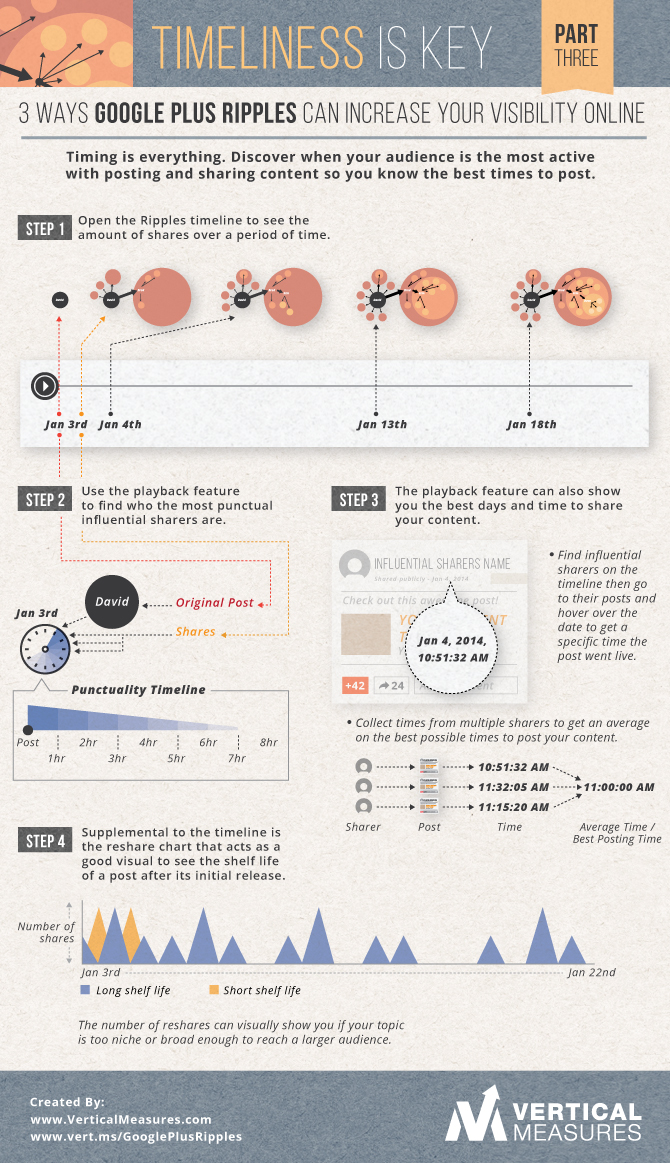
Source: http://www.verticalmeasures.com/
About The Author