Are you planning your social media marketing strategy for 2026 and wondering which network deserves your time and budget?
There is no single platform that works best for every business. Facebook may help one company reach a strong local audience, while LinkedIn may be more valuable to a business selling professional services. A visual retail brand may see better results from Instagram, TikTok, YouTube, or Pinterest.
The right decision starts with a simple question: where does your audience already spend time, and what do they do when they get there?
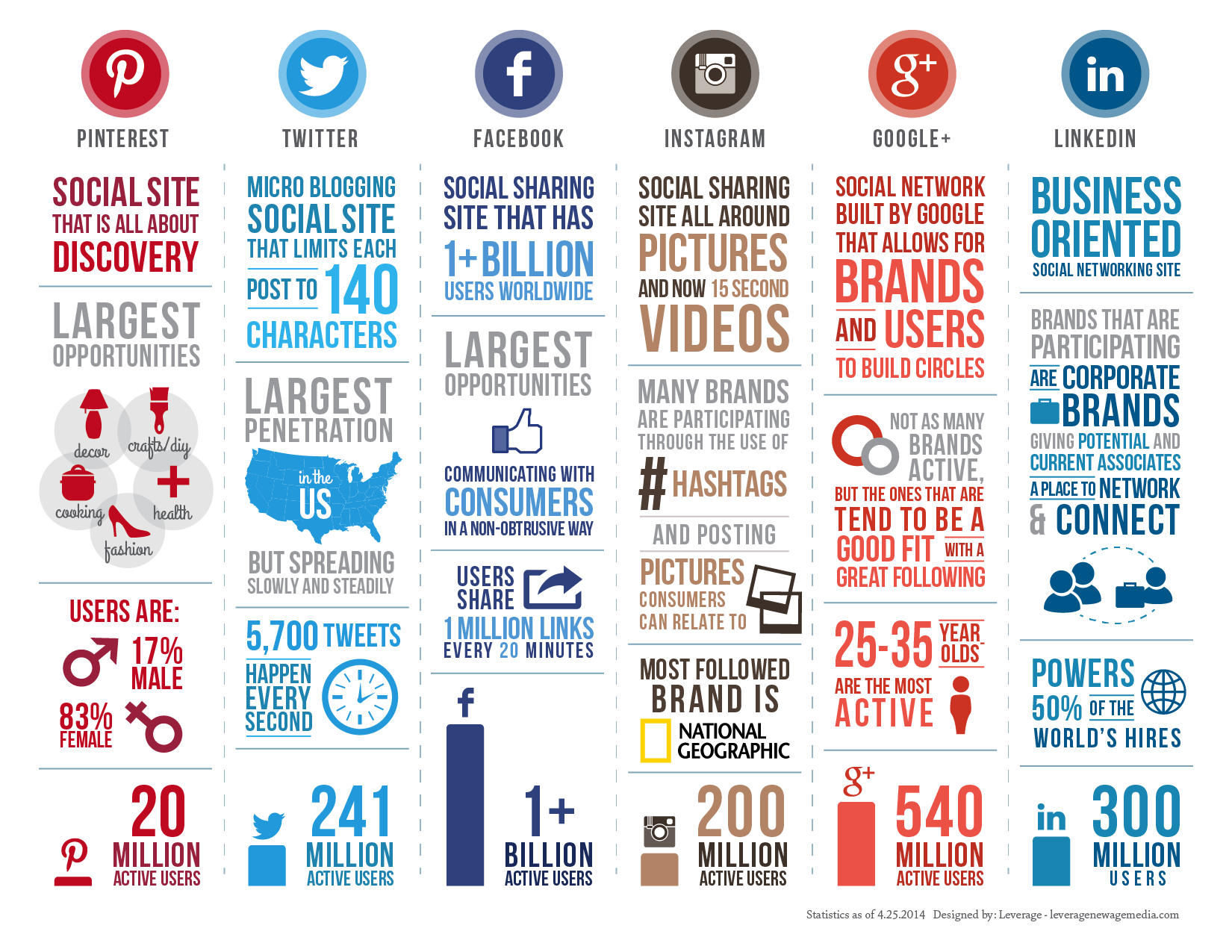
The original infographic on this page compared Facebook, Google+, Twitter, LinkedIn, Instagram, and Pinterest. It remains an interesting picture of an earlier social media landscape, but the platforms and user habits have changed. Google+ is no longer active as a consumer social network, Twitter is now known as X, and TikTok, YouTube Shorts, Threads, creator partnerships, social search, and AI-assisted advertising have become important parts of social media planning.
A useful social media strategy for 2026 should preserve the main lesson behind the infographic while updating the platform choices for the way people use social media today.
Why Social Media Planning Matters in 2026
Social media is now too important to manage through occasional posts and last-minute ideas.
More than six billion people use the internet, while social media has reached what DataReportal describes as “supermajority” status worldwide. That scale creates opportunities, but it also means businesses are competing with an enormous amount of content for attention.
Publishing more often is not always the answer. A business can post every day and still see little progress if the content reaches the wrong people or has no connection to a clear business goal.
A strong digital marketing strategy gives social media a defined role. It may be used to increase awareness, attract website visitors, answer customer questions, build an email list, generate enquiries, support sales, or keep existing customers engaged.
Without that purpose, it is easy to mistake activity for progress.
Begin With Your Audience, Not the Platform
A common mistake is choosing a platform because it is currently popular.
Popularity alone does not make a platform right for your company. The people using it must match the customers you want to reach, and the content format must suit what your business can create well.
Start by reviewing your existing customers. Consider their age range, location, interests, buying concerns, work roles, and preferred ways of researching products or services.
Then look at what they need from your business. A customer searching for professional advice may want detailed explanations and proof of experience. Someone shopping for clothing may prefer visual inspiration, reviews, demonstrations, and short videos.
Your audience may also use several platforms for different purposes. A business owner might use LinkedIn for professional information, YouTube for tutorials, Instagram for inspiration, and Facebook for local recommendations.
Your goal is not to find the one platform your customers use. It is to understand which platform best supports the type of interaction you want to create.
Audit What You Already Have
Before opening new accounts, review the social media presence you already manage.
Look beyond follower totals. Identify which posts generate useful comments, website visits, direct messages, enquiries, saves, shares, or sales. Check whether the audience matches the customers you are trying to reach.
An account with fewer followers may be more valuable when those followers regularly ask questions and purchase from the business. A larger account may add little value if most followers are inactive or located outside the service area.
Review the practical condition of each profile as well. Check the biography, profile image, links, opening hours, contact details, pinned content, and recent posts.
An outdated profile can make an active business appear neglected.
Professional social media management can help bring these accounts into one plan, particularly when several team members or locations are involved.
How to Choose the Best Social Media Platforms for Your Business
The best social media platforms for business depend on four factors: audience, content, goals, and available resources.
First, confirm that the platform reaches people who are likely to care about your offer. Then consider whether its main content formats suit your business. A company with useful expertise may be able to produce articles and educational videos, while a product brand may have more opportunities for demonstrations and customer-created content.
Your goal also matters. A platform that is useful for awareness may not be the strongest source of direct leads. Another may generate fewer views but bring in more qualified enquiries.
Finally, be realistic about your resources. It is better to manage two relevant accounts well than to maintain six accounts with inconsistent content and unanswered messages.
Facebook: Local Reach, Communities, and Existing Customers
Facebook can still be useful for businesses that serve local communities, established consumer audiences, families, groups, or customers who use the platform to find recommendations.
Local companies can share updates, customer stories, events, service information, and community involvement. Groups may also create opportunities to answer questions and participate in relevant conversations without turning every interaction into a sales pitch.
Facebook advertising can support awareness, website traffic, remarketing, leads, and sales. Meta continues to use AI to improve how ads and organic content are selected for users, making good creative work and accurate campaign data increasingly important.
Facebook is less useful when a company posts only generic promotions. The content should give customers a reason to follow the page after they have seen the first offer.
Instagram: Visual Discovery and Brand Personality
Instagram works well for businesses that can communicate through photographs, short videos, carousels, Stories, and direct conversations.
Retail, food, travel, property, beauty, fitness, design, and lifestyle companies often have obvious visual material. Service businesses can also succeed by showing their process, answering common questions, presenting results, and introducing the people behind the company.
Instagram’s official Best Practices hub now provides creators with guidance on posting frequency, capturing attention, Reel length, engagement, reach, and the connection between Reels and follower growth. This reflects how much the platform now depends on useful, watchable content rather than static promotional graphics alone.
A strong Instagram plan should include more than polished brand images. Customers also want helpful explanations, realistic demonstrations, customer experiences, and signs that real people are running the business.
LinkedIn: B2B Marketing and Professional Trust
LinkedIn is usually the strongest choice for B2B companies, consultants, recruiters, professional services, software providers, and businesses selling to decision-makers.
The platform gives companies and employees opportunities to share expertise, discuss industry changes, publish case studies, and explain how they solve practical problems.
LinkedIn’s 2026 guidance places growing importance on credible creators and employees who are close to the work. Its research also reports that 78% of B2B marketers use video, while 56% plan to increase their use of it.
This does not mean every LinkedIn post needs to be a video or lengthy article. A clear observation from someone with real experience may be more useful than a heavily designed corporate post.
Companies should make it easier for knowledgeable employees to contribute ideas without forcing them to repeat approved marketing language.
TikTok: Discovery, Personality, and Honest Content
TikTok can help brands reach audiences through short videos, search, entertainment, creator partnerships, product discovery, and behind-the-scenes content.
The platform is not limited to dancing or viral challenges. Businesses use it for tutorials, product demonstrations, customer questions, workplace stories, comparisons, and straightforward explanations.
TikTok’s 2026 trend report says audiences are responding to honest stories, communities, real processes, and behind-the-scenes moments rather than overly curated perfection.
That makes TikTok particularly useful for businesses willing to show how their products are made, how a service works, or what happens during an ordinary working day.
Trying to make every video look like a traditional advertisement may work against the platform’s natural style. Clear ideas, strong openings, and a human delivery often matter more than expensive equipment.
YouTube: Searchable Video With a Longer Life
YouTube is valuable when a business has information that people may continue searching for after the day it is published.
Tutorials, comparisons, interviews, product demonstrations, case studies, webinars, and frequently asked questions can all attract viewers over time. Shorts can support quick discovery, while longer videos allow a subject to be explained properly.
YouTube is also expanding its creator partnership tools, making it easier for brands and creators to find one another and manage sponsored campaigns. Its 2026 updates connect creator partnerships more closely with YouTube Studio and Google advertising tools.
A company does not need to publish long videos every week. One useful monthly video can be divided into shorter clips for LinkedIn, Instagram, Facebook, TikTok, and YouTube Shorts.
This approach gives the business more value from the same idea without posting an identical file everywhere.
Pinterest: Planning, Products, and Long-Term Discovery
Pinterest is often overlooked because it does not behave exactly like a traditional social network.
People commonly use it to save ideas and plan future purchases, projects, events, meals, trips, home improvements, outfits, and seasonal activities. This makes it relevant to retailers and businesses operating in visual, creative, educational, or planning-focused markets.
Pinterest’s 2026 resources include 21 predicted trends across areas such as fashion, travel, style, and consumer interests. Its business guidance also encourages brands to appear early because users often begin planning well before the event or purchase takes place.
Pinterest content may also remain discoverable longer than a post in a fast-moving feed. Clear titles, useful images, and relevant landing pages are essential because users often arrive with a specific idea or plan in mind.
X and Threads: Public Conversations and Timely Updates
X, formerly Twitter, may be relevant to businesses involved in news, technology, media, sports, public affairs, or fast-moving industry conversations.
Its value often comes from timely commentary, direct interaction, and participation in live discussions. It requires regular attention because conversations can develop quickly.
Threads offers another text-led space for public conversation and is connected to Instagram accounts. Meta introduced it as a platform for text updates, links, images, and videos, giving brands another place to share lighter observations and take part in public discussions.
Neither platform should be selected simply because competitors have accounts there. A business needs a reason to participate and someone who can respond in a natural voice.
What Happened to Google+?
The original infographic included Google+ because it was still an active social network when the graphic was created.
Google shut down the consumer version of Google+ on April 2, 2019, and removed content from consumer accounts and Google+ pages. It should therefore remain visible only as part of the infographic’s historical context, not as a recommended platform for a 2026 social media plan.
Businesses that previously associated Google+ with search visibility should now focus on useful website content, Google Business Profile activity where appropriate, and a well-planned Google SEO strategy.
Build a Social Media Content Strategy You Can Maintain
Once the platforms have been selected, decide what your business can say that customers will genuinely find useful.
A practical social media content strategy can be built around a few repeatable themes. These may include customer questions, product education, company experience, behind-the-scenes stories, industry news, customer results, and direct offers.
Not every post needs to sell something. A company that promotes constantly gives people little reason to keep following after they have seen the offer.
At the same time, content should not become so educational that customers never understand what the business provides. Helpful information and commercial purpose can exist together.
Professional content creation can help turn one useful idea into an article, video, carousel, email, and several social posts without making each version feel copied.
Use Creator Partnerships Selectively
Creators can help businesses reach established communities through a voice the audience already recognizes.
The right partnership is not always the creator with the largest following. Relevance, credibility, content quality, audience location, and genuine product fit are often more important.
A local restaurant may gain more from a respected regional food creator than from a national account with no meaningful local audience. A specialist B2B company may benefit from working with a smaller industry expert whose followers include the right decision-makers.
A structured affiliate and influencer marketing campaign can establish expectations around content, disclosure, approval, links, payments, and performance measurement.
Creators should still have enough freedom to communicate in their own style. A rigid script often removes the quality that made their audience trust them.
Use AI Without Losing Your Voice
AI tools can support planning, editing, research organization, caption variations, advertising, and performance analysis.
They can save time, but they can also produce content that sounds vague, repetitive, or disconnected from the business. Publishing an unedited AI draft is rarely a strong social media strategy.
Use AI to prepare ideas and handle routine work, then add the details only your company knows. Real customer questions, practical examples, staff experience, and honest opinions make content more useful and harder to copy.
Meta, TikTok, LinkedIn, and other platforms are also building more AI into targeting and advertising tools. This can improve efficiency, but businesses still need clear goals, reliable tracking, suitable creative work, and human oversight.
Automation can distribute content. It cannot decide whether the message deserves the audience’s attention.
Connect Social Media With Your Website
Social media accounts are rented spaces. Platform rules, reach, features, and audience behavior can change.
Your website provides a place where people can learn about the business in greater detail, review services, read useful content, join an email list, request a quote, or complete a purchase.
Social posts should therefore have a clear destination when an action is required. Sending every visitor to the homepage may create unnecessary work for the customer.
Relevant landing page development can create a direct path from a specific campaign to the offer, product, registration form, or service mentioned in the post.
The social message and landing page should match. A customer who clicks a post about one service should not arrive on a general page and have to search for it again.
Set Goals That Reflect Business Results
A social media marketing plan needs measurements that match its purpose.
Follower growth may be useful for an awareness campaign, but it does not show whether the audience includes potential customers. Video views can indicate reach, but they do not prove that viewers understood the offer.
A business focused on customer service may track response time, answered messages, and resolved issues. A lead-generation campaign should examine landing-page visits, enquiries, lead quality, and cost per lead. A retailer may focus on product views, purchases, repeat sales, and revenue.
Do not judge every post by the same standard. An educational post may build familiarity, while a promotional post may produce direct sales.
Review performance over a meaningful period and look for patterns. Individual posts can be unpredictable, but several months of activity can show which topics, platforms, and formats attract the right audience.
Relevant digital marketing case studies can help businesses see how awareness, engagement, traffic, and conversions work together.
Create a Realistic Social Media Plan
Your plan should be simple enough for the team to follow.
Choose the main platforms, define the audience for each one, and decide what role each platform plays. Set a sustainable publishing schedule rather than committing to a volume the team cannot maintain.
Assign responsibility for writing, design, filming, approval, posting, and replies. Decide how quickly customer messages should be answered and who handles complaints or sensitive questions.
Review the plan every month, but avoid changing direction because one post performed poorly. Look at broader patterns and make gradual improvements.
Social media changes quickly, but a clear understanding of your audience should remain the foundation.
Plan Around People, Not Platforms
The social media landscape in 2026 looks very different from the one shown in the original infographic. Google+ has disappeared, Twitter has become X, short-form video has grown, and TikTok, Threads, AI tools, social commerce, and creator partnerships have become part of everyday marketing.
Yet the most important planning principle has not changed.
Businesses still need to understand where their customers spend time, what information they need, and which content earns their attention.
Do not choose a platform because it is fashionable or because a competitor is using it. Choose it because it gives your business a realistic opportunity to reach the right people and support a meaningful goal.
For more help building a practical plan, explore AOK Marketing’s digital marketing resources.
Source: www.leveragenewagemedia.com
About The Author
Khalid Essam
Khalid is the Chief of Staff at AOK. He collaborates with a team of specialists to develop and implement successful digital campaigns, ensuring strategic alignment and optimal results. With strong leadership skills and a passion for innovation, Khalid drives AOK’s success by staying ahead of industry trends and fostering strong client and team relationships.